

OKLAHOMA CITY - Earlier this month, the Oklahoma Health Care Authority got into an ugly, public fight with the Oklahoma Hospital Association.
The issue was about money and the OCHA’s budget and what the OHA thought was a $218 million budget cut.
According to several players involved, the leaders of the Oklahoma House of Representatives and the Oklahoma Senate, the OHCA and the Governor’s office, all said the budget looked like a done deal. The plan would, for the most part, remain flat but, there were no provider cuts set for the next year.
Three days later, after OHCA officials spoke, it looked like the funding plan had come apart at the seams.
Sen. Paul Rosino, a Republican from Moore, said the process was pretty much a normal procedure — but marked with really bad communication.
“It looks like this is normal procedure that they do this every year, and it just wasn’t conveyed very well, or the communication wasn’t probably the best it could have been,” Rosino said.
Fast-forward to last week. After the dust from the budget issue settled, Clay Bullard, the head of the OHCA, announced last week he would step down from the agency and return to the private sector. Bullard was appointed as the director of the Oklahoma Health Care Authority on Oct. 3, 2025.
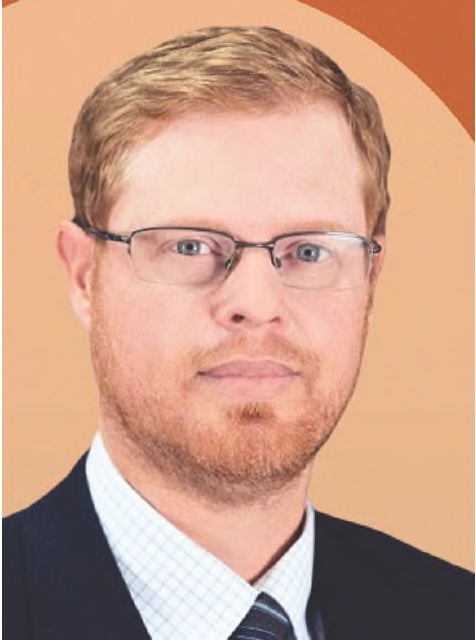
On July 15, Gov. Kevin Stitt issued a media statement announcing that Aaron Morris would become the next interim director of OHCA. Morris has served as the state’s chief financial officer since 2024.
Stitt said Morris brings with him more than 20 years of financial expertise in the public sector.
“Aaron has proved to be a steady leader through any challenge,” the governor said. “As CFO of the State, he has worked carefully to protect our state’s savings, navigate complicated budget issues, and assist agencies to increase accountability and transparency. He is a trusted member of my team, and I am grateful that he has agreed to step into the role at OHCA for the remainder of my term.”
Morris said he was looking forward to going back to the OHCA. Prior to this new post, Morris said he served as the agency’s CFO from 2018 through the end of 2024.
“Yes, I was there,” he said in an interview with Southwest Ledger. “Yeah, I kind of grew up in the Healthcare Authority, so it’s good to be back. It’s a privilege to be back. It’s hard, but it’s a privilege.”
Morris was chosen as the agency’s interim leader — due to the fact that Stitt terms out of office in January when the new governor is sworn in.
Morris said the agency faces a great deal of work to do right now.
“Somebody needs to hit the ground running,” he said. “For a transition to someone external to the agency who doesn’t have experience with the agency, I think it would have been a challenge. It would have been difficult.”
And while improving things at the OHCA is going to be a challenge, Morris said he felt like he could provide support, stability and continuity for the agency right now.
“Hopefully we can address some of these challenges that we’re seeing pop up,” he said. “I want this place to be successful, and I feel like it has been in the past, and it can be in the future. I want to be part of that.”
And while he hasn’t officially moved into the office yet, Morris said he is already contacting others to solve problems.
“We serve more than one million Oklahomans,” he said. “That’s 25% of the population. We also serve 80,000 service providers in the state. And so yeah, we have a really large footprint.”
In addition, Morris said he already has contacted the OHA to resolve issues there.
“I have a strong relationship with Rich Rasmussen, the executive director there, as well as some of the hospital leaders in Oklahoma,” he said. “I will absolutely sit down with Rich. I already called him and had a conversation with him. I want to really open those lines of communication, so there’s no surprises. I think that’s the key.”
The plan, Morris said, is that the agency must make sure it’s communicating better.
“A lot of you know the urgency around that issue,” he said. “We just need to make sure we’re communicating better and everybody’s on the same page. I don’t want there to be surprises when something new drops. Rich and I will work closely together.”
Another goal, he said, is to ensure that those who enroll in SoonerCare have access to health care in all parts of the state — both urban and rural.
“From my perspective, we need to ensure that our SoonerCare enrollees have access to care, whether that’s in the metro or rural areas,” Morris said. “There are experts in that field who can tell you where those gaps are. Right now, I’m not one of them, but I will learn. We need to have strong partnerships with our urban hospitals, our rural hospitals. We need to ensure that our patients can get seen and our members can get seen where they need to get seen.”
Morris said there is a rural health transformation grant that’s a part of federal legislation. He said his agency is working with the health department to implement pieces of that rural health transformation grant.
“We will continue to work on that,” he said. “And hopefully, we can impact rural health care in Oklahoma in a positive way.”
The goal he said, was to go back to the basics — focus on the agency’s tasks and run the agency well.
“The first thing I want to do is make sure that we do the fundamentals well,” he said. “We need to be able to answer phones. We need to process provider contracts. We need to pay providers fast and accurately. We need to make sure that we have a good handle on fraud.”
Along with that, Morris said the OHCA needs to manage its budget.
“So, I’m really focused on the fundamentals right now rather than big ideas,” he said. “I think that it’s important in our first 90 days that’s our angle of attack. We’re gonna get back and we’re gonna do the fundamentals well.”
M. Scott Carter is an award-winning political and investigative reporter with more than 40 years’ experience covering federal and state government and politics in Oklahoma. He can be reached at scott.carter@swoknews.com.