

OKLAHOMA CITY – Oklahomans who purchase medical marijuana and then sell it to someone without a medical marijuana card will face increased penalties under a new law sign by Gov. Kevin Stitt last week.
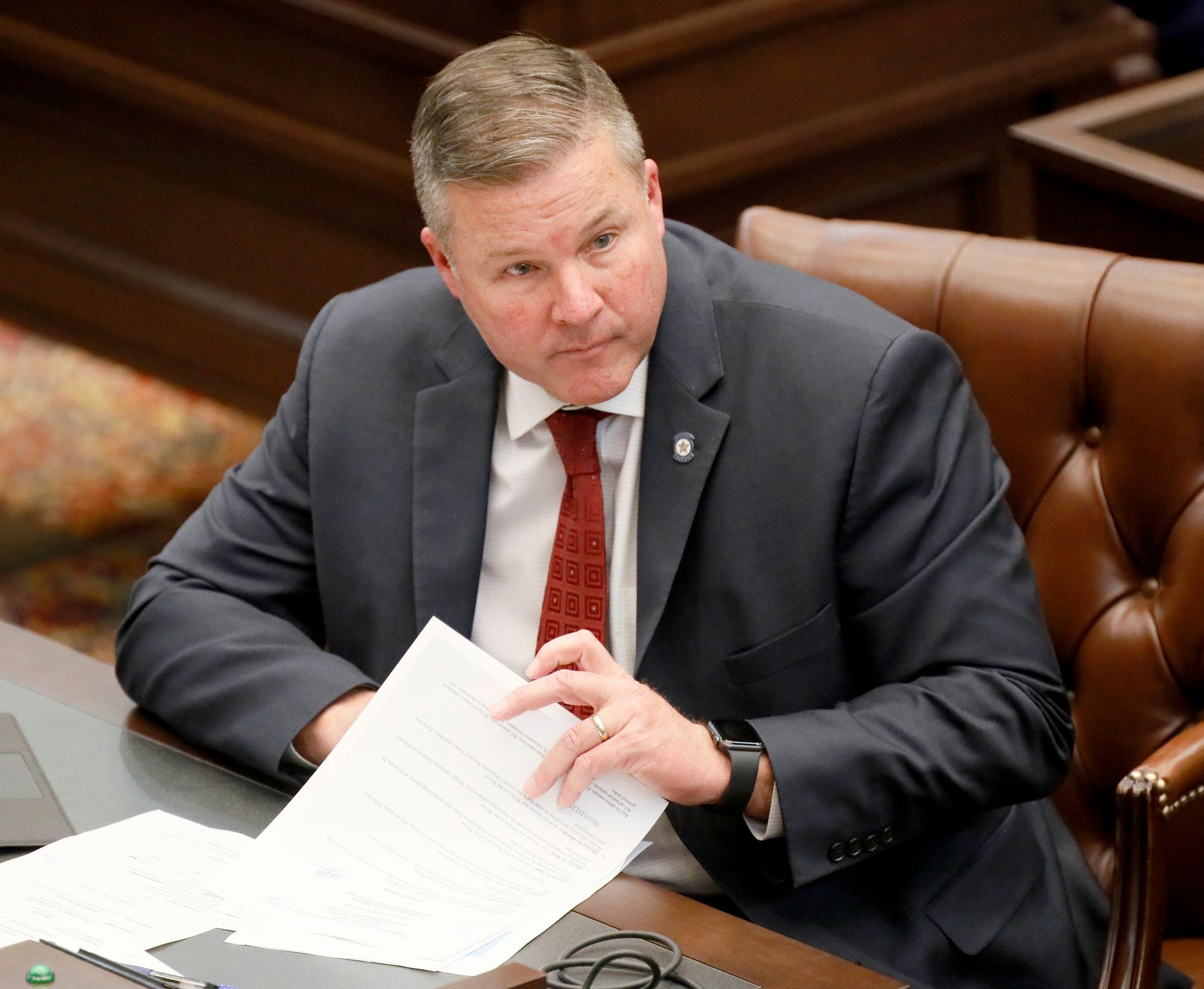
Outlined in Senate Bill 1367, the law doubles the penalties for those who purchase medical marijuana and then sell the product to non-cardholders from $200 to $400 on the first offense and from $500 to $1,000 on the second offense, said state Sen. Lonnie Paxton, the bill’s author.
A third offense, Paxton said, could cause the purchaser to lose their medical marijuana license. He said the new law also increases the fines for sales or transfers of medical marijuana to unauthorized persons to $5,000 for the first violation and $15,000 for subsequent violations.
The bill passed the House of Representatives on a 70-17 vote on April 27 and was endorsed by the Oklahoma Senate 39-0 on May 5. Gov. Stitt signed the bill on May 11.
Paxton said the measure fixes a loophole in existing law.
“As many Oklahomans know, when State Question 788 was passed to legalize medical marijuana, we were quickly thrown into a situation where we needed to create the framework and guidelines for this industry,” Paxton said in a media statement. “Unfortunately, this led to the inadvertent mixing of medical marijuana legislation and criminal justice reform legislation, resulting in the ability for someone to buy marijuana product legally, but then resell it to a child or someone who doesn’t have their card, with only an administrative fine.”
Paxton said the process was basically drug dealing, but “only with the equivalent offense of a traffic ticket.”
“I want to be very clear that we are going after the black-market medical marijuana industry and drug dealers with this bill – not college friends who are sharing marijuana product with no money exchanged,” he said. “These black-market dealers are targeting and selling marijuana to our kids and others who don’t have a medical card, and we are giving our law enforcement officials the ability to do their jobs and prosecute these offenders under criminal violation of the law.”
The new law will go into effect on Nov. 1, 2022.