

Group hosts town hall meeting ahead of March 7 vote
LAWTON — Under Oklahoma law, people who are convicted of using recreational marijuana could find it more difficult to land a job, get a credit card or apply for a student loan.
But Oklahoma will stop prosecuting people for minor marijuana offenses if voters approve State Question 820, which would make recreational marijuana legal, said Michelle Tilley, campaign director for Yes on 820.
“The heart of it (SQ 820) is the criminal justice aspect of it, in that we will stop putting people in prison for low-level marijuana offenses,” she said. “And we also provide a path for people who have been convicted of those in the past to have them easily removed off their record.”
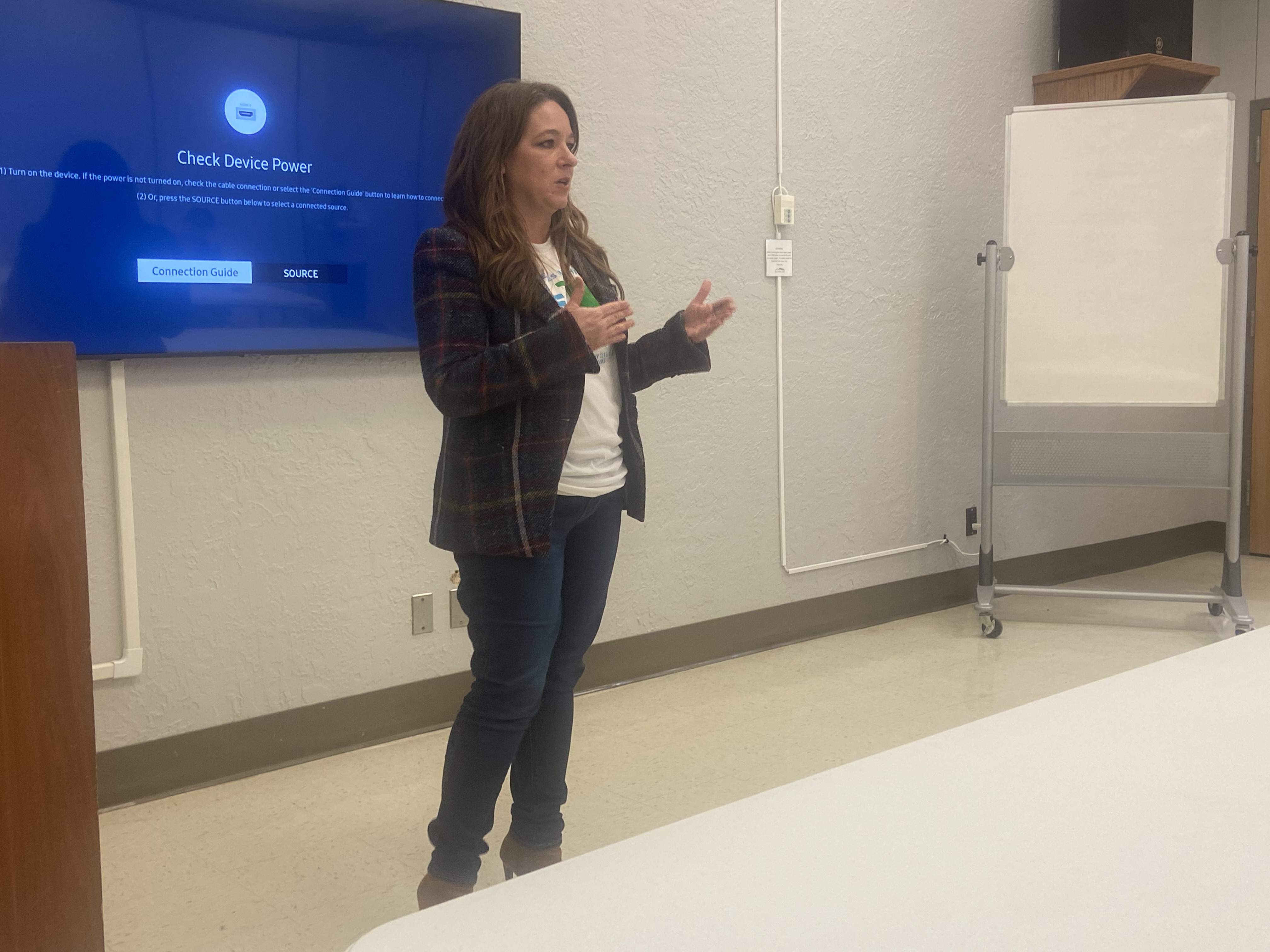
Tilley provided an overview of SQ 820 and fielded questions about the measure during a town hall meeting Wednesday at the Lawton Public Library. The meeting was designed to educate people about the state question before the March 7 special election.
If voters approve SQ 820, adults 21 and older could legally buy marijuana from a dispensary without a medical license, according to the news site nondoc.com. The Oklahoma Medical Marijuana Authority, which regulates the state’s medical marijuana program, would also oversee the recreational marijuana program.
The state would collect a 15% excise tax on recreational marijuana sales, on top of the current 8% sales tax on the product. Excise tax revenues would go to the OMMA to implement the law, and any surplus revenue would be divided among schools, the judicial system, drug addiction treatment programs and local governments.
The law would not affect employers’ ability to restrict their workers’ use of marijuana.
SQ 820 would eliminate jail sentences for minor marijuana possession. In addition, it would allow people who were previously convicted of low-level marijuana offenses to seek a new sentence or apply to have the conviction expunged from their record.
Tilley, who started working on the campaign to get SQ 820 on the ballot in 2019, said the measure will help people who have minor marijuana-related offenses in their past.
“I can’t tell you the number of stories I’ve heard of people who are arrested on one small issue and that has followed them their entire life, even if they don’t do marijuana anymore,” she said. “They’ve had trouble getting jobs, being able to rent an apartment and other things like that. And so, there is just, again, no reason why this plant should be ruining lives like this.”
Questions and answers
The meeting attracted a handful of people who wanted more information about what SQ 820 would accomplish.
One woman in the audience said she thought making recreational marijuana legal would do more harm than good.
“I can’t think of any good thing about this at all,” she said.
Tilley said the people who support legalizing marijuana for recreational use want to make sure it is properly regulated.
“None of us – no legitimate business operator that I’ve talked to in this state, no legitimate user – wants the bad guys here,” she said. “We want this to be legal, safe, regulated. And those are very important aspects of what we’re taking into account.”
Another woman, who did not give her name, said she did not necessarily object to recreational marijuana. But she wanted to know whether the state could restrict the use of marijuana in public places.
“Is it, like, open to use wherever?” the woman said.
Tilley said if SQ 820 becomes law, state and local governments could develop regulations governing marijuana use in public. She added that supporters of SQ 820 have learned their lesson from State Question 788, a 2018 ballot initiative that authorized medical marijuana in Oklahoma.
“There is not ‘open to use wherever,’” Tilley said. “And I think that’s one of those problems that we have learned from 788. We’re going to keep learning, and I think that’s going to keep changing.”
SQ 788 gave the state only 60 days to establish the Oklahoma Medical Marijuana Authority, which oversees the state’s medical marijuana program, according to a February 2022 report from the Legislative Office of Fiscal Transparency. LOFT said the measure did not give the state enough time to develop an adequate framework for addressing public safety and other issues related to medical marijuana.