

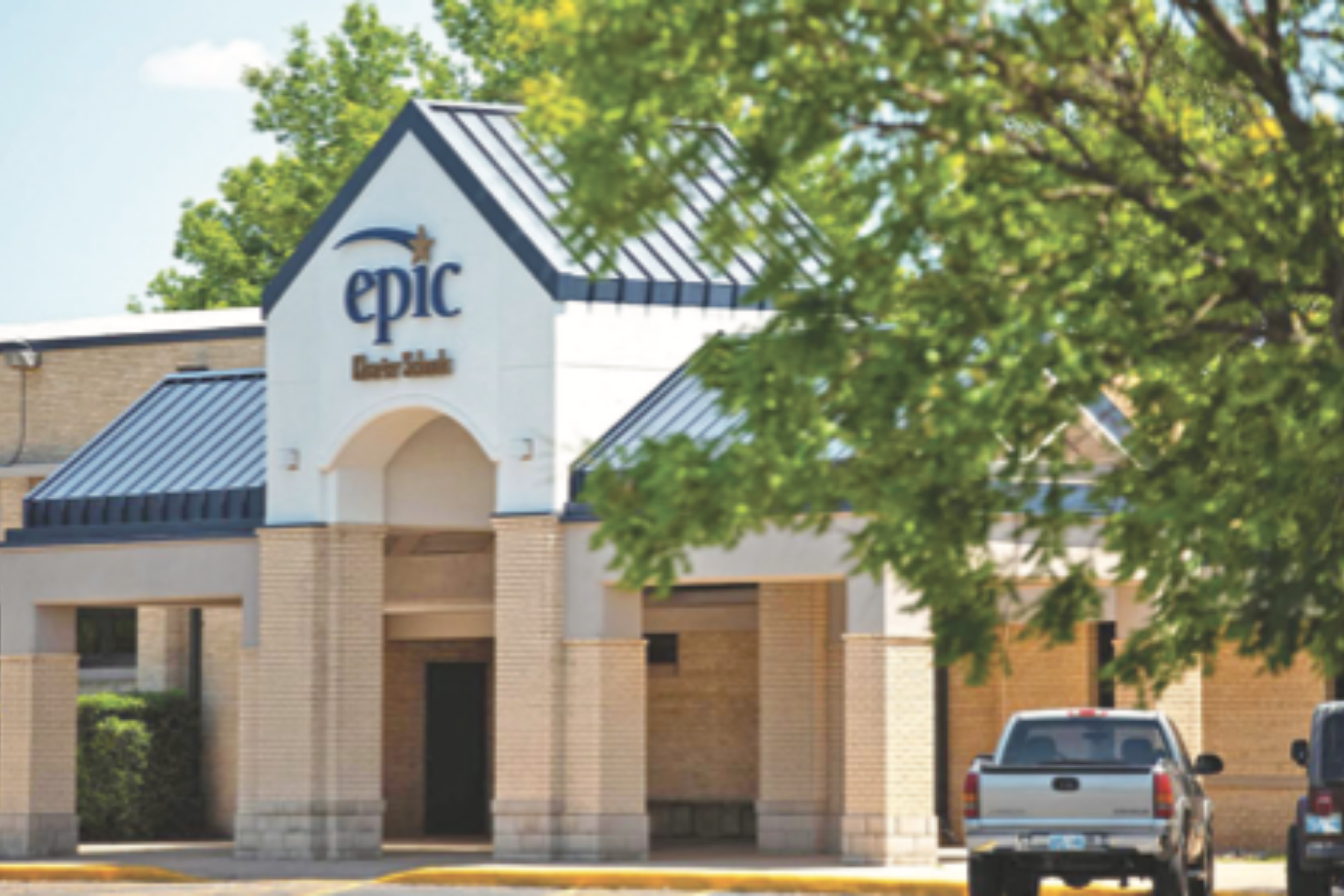
OKLAHOMA CITY — Citing the findings of a recently completed forensic audit, the state Virtual Charter School Board voted 3-1 Tuesday afternoon to move forward with potentially terminating its contract with Epic One-on-One’s governing board, Community Strategies, Inc.
Walking the school board members through its contract with Epic One-on-One Tuesday afternoon, Assistant Attorney General Maria Schuble laid out multiple allegations from an audit released Oct. 1 by State Auditor and Inspector Cindy Byrd that if proven, could constitute a breach of contract and grounds for sponsorship termination.
Among the potential reasons Schuble cited from the audit as grounds for moving forward with contract termination include financial mismanagement, breaking state laws and not cooperating with a state audit.
“It is important that Epic be able to speak to those things,” State Secretary of Education Ryan Walters said. “At the end of the day, these obligations are extremely important not just for this particular charter, but for all schools. Stuff we’ve all been held accountable for decades and decades and decades.” Phyllis Shepherd cast the lone dissenting vote, citing a desire to hear Epic’s side of the argument at that time rather than a hearing as laid out in board policy.
Board member Matthew Hamrick was absent. Earlier this year, Hamrick was censured by the board and stripped of his position on the board’s audit committee after he signed an affidavit in support of Epic Youth Services’ legal position that the tax dollars used for the charter schools’ learning fund are private funds and therefore not subject to state scrutiny.
Gov. Kevin Stitt requested the forensic audit of the charter school and its for-profit management company in July 2019 after learning that the school’s financial practices were under investigation by state and federal law enforcement agencies. Among the audit’s findings were that almost one-fourth of the state funds allocated to Epic Charter Schools over the last six years wound up going to Epic Youth Services, a for-profit management company.
Litigation is still pending in state court over access to some of Epic Youth Services’ financial records, including almost $80 million that was allocated to Epic’s learning fund, which is issued to parents to pay for supplies, instructional curriculum or supplemental activities.
Tuesday’s vote does not mean the online charter school will automatically shut its doors. As per the Virtual Charter School Board’s procedural rules, at least 90 days’ notice must be given for a hearing, at which time Epic One-on-One will be able to present its case.
Its superintendent, Bart Banfield, asked the board Tuesday during the public comment period to refrain from making a hasty decision.
“It’s no secret that we dispute the material findings of the state’s audit,” he said, noting that they have a records request pending for the audit’s work findings. “I’m not asking you today to ignore a state audit. I’m asking you to take it under advisement and...prove that we are fully compliant with the terms of our contract and with the law.
“An emotional rush to judgment creates more uncertainty for families at the very time they need stability and security from their government. It would hurt more than 61,000 students and their families who have chosen Epic Charter Schools this year. In addition, 2,100 employees who depend on Epic for their livelihood would be impacted.”
Epic Charter Schools, which now claims to be the largest school in the state, has an all-virtual option, known as Epic One-on-One, and blended learning centers in Oklahoma City, Midwest City and Tulsa. The state Department of Education has not released 2020-2021 enrollment counts to allow for independent verification of the claim.
The former is sponsored by the state Virtual Charter School Board while the latter is sponsored by Rose State College in Midwest City. In order to operate, state law requires a charter school to have a sponsor, such as a school district, university, tribe or state board of education.
Brenda Holt, the audit manager for the special investigative unit of the State Auditor and Inspector’s Office, reiterated to the Virtual Charter School Board Tuesday that the audit was about the actions of Epic’s leadership and not a referendum on charter schools or virtual education.
“Epic is a public school,” Holt said, prefacing her presentation to the state Virtual Charter School Board. “They are fully funded by the state, just like brick-and mortar-schools. They’re accountable for those same funds just like a brick-and-mortar district.”
The day before, the state Board of Education voted unanimously to require Epic to repay $11.2 million in state aid within 60 days.
That figure includes $8.3 million in underreported administrative costs from the last six fiscal years, $2.6 million that should have been paid as a penalty in 2016 for exceeding Oklahoma’s limit on administrative costs and $203,000 that was transferred to Epic’s charter school in California.
The latter, which was only discovered through cooperation with a California-based investigative unit, drew incredulous questions from school board member Kurt Bollenbach while listening to Holt’s presentation on the audit findings.
“Oklahoma taxpayer money is the only thing that should be in Epic’s bank account, correct?” he asked.
“Correct,” Holt replied. “And you’re telling me it’s being pledged as collateral for something in California?” “Right,” Holt replied.