

LAWTON – Natural waste and toilet paper can be flushed down your toilet, but flushable wipes belong in your trash can.
That’s the message from Glenn Hinton, wastewater collection supervisor for the City of Lawton.
“No wipes down the pipes,” he said. “Throw them in the trash.”
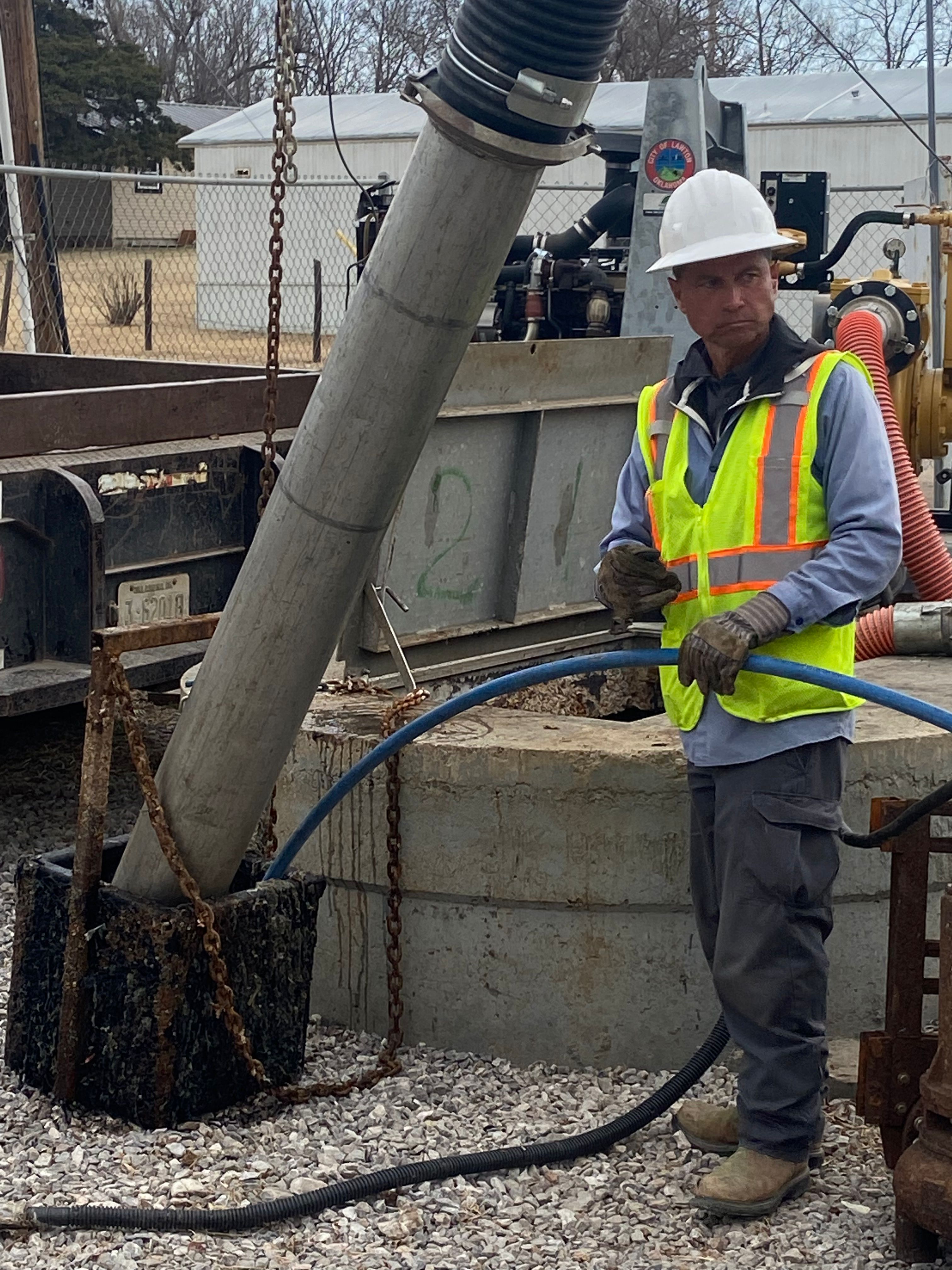
To educate people about the problems that flushable wipes can cause, the wastewater collection division hosted a “Wipes in the Pipes” press event March 17 at the city’s lift station at Sixth and Belmont streets. The lift station is equipped with a grinder and a catch basket for flushable wipes and other nonbiodegradable items.
Behind Hinton, a crew from the wastewater collection division hauled the catch basket out of the lift station and set it on the ground. The crew vacuumed out the basket, clearing it of debris, then put it back in the lift station.
Flushable wipes and other nonbiodegradable debris – including cooking grease – can clog the sewer system and cause a sanitary sewer overflow, also known as an SSO.
Cleaning up after SSOs is expensive for cities and taxpayers alike, Hinton said.
“It’s hundreds of thousands of dollars,” he said. “It’s not just us coming out here, the cost of the vehicles and manpower. It’s just the constant cleanups.”
The cost to taxpayers
The wastewater collection division responded to 358 debris-related sewer calls in the past 12 months, Hinton said in a March 16 press release. Of those calls, 322 – about 90% -- concerned blockages in the city’s main line due to flushable wipes.
“Currently, the average cost associated with one sewer call that is due to a blockage in the city’s main is $222.62,” Hinton said. “The 322 calls associated with ‘flushable wipes’ cost approximately $71,683.64.”
Hinton’s division responded to 160 sanitary sewer overflows due to flushable wipes from February 2021 to February of this year. The division is responsible for cleaning up after each SSO, which costs taxpayers about $585.39 on average.
Over the past year, cleaning up after SSOs has cost about $93,662. That figure does not include the price of the chemicals used for cleanups, which cost more than $8,000 per year.
The Oklahoma Department of Environmental Quality may also impose fines on cities for SSOs, costing taxpayers thousands of dollars.
When Lawton’s wastewater collection division responds to a sewer call for which the city is responsible, the division runs the sewer segment for preventative maintenance, according to the news release. The procedure can last anywhere from 24 hours to one week after the original call.
“On average, the cost for one follow-up PM (preventative maintenance) is $210.96,” Hinton said. “In the past year, the 322 calls due to flushable wipes cost approximately $67,929.12 in follow-up PMS alone.”
Backing up
Blockages from flushable wipes can cause sewage to back up into someone’s house. If the sewage backup results in damage and there is a history of such problems, the city may have to pay a damage claim depending on the outcome.
Several years ago, the city received a damage claim from a church that resulted in approximately $100,000 worth of damages, Hinton said in the press release. He noted that taxpayer dollars cover part of the cost of an approved claim.
“In the past year, it has cost the city of Lawton $139,612.76 for Wastewater Collections to run calls and preventative maintenance due to the ‘flushable wipes,” Hinton said. “The cleanup jobs and maintenance claims from March of 2021 cost taxpayers $104.734.95. This makes a minimum of $244,347.71 it has cost taxpayers in one year from issues caused by the falsely advertised ‘flushable wipes.’”
He said that amount does not include any other damage claims due to flushable wipes the city may have paid.