

m
OKLAHOMA CITY – With more than 523,000 tribal members living in Oklahoma, the meeting last week between the federal Housing and Urban Development agency and Oklahoma Congressman Tom Cole wasn’t a big fight.
The meeting was, instead, held to solve a simple problem – finding ways to help more tribal leaders buy a house.
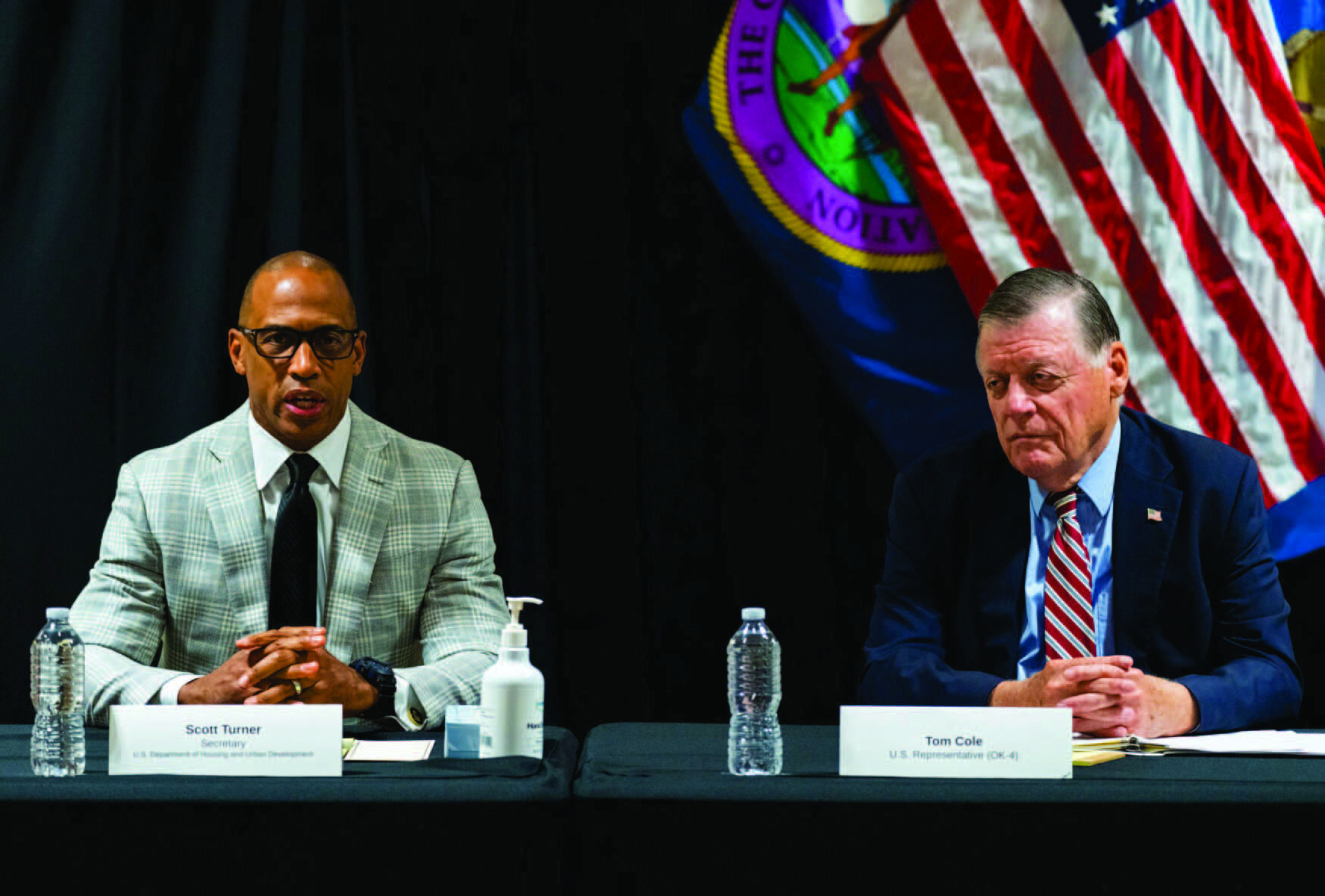
Held Thursday at the Chickasaw Nation Community Center, the meeting featured Cole and HUD Secretary Scott Turner and examined ways to increase affordable housing, better access to financing and ways to streamline federal requirements tribes encounter when they want to purchase a home.
Turner described the meeting as productive.
“Today we had a very productive discussion about some of the needs, some of the issues that the tribes do have, but also some of the victories that they’re having to promote self-sufficiency,” he said.
For Cole, who is a member of the Chickasaw Nation, the meeting was the chance to hear about the problems.
“We had a lot of tribes here talking about their concerns,” Cole said. “A lot of our tribes raised with the secretary just the need for flexibility in the regulatory framework that they operate.”
And the big issue of the day – money.
Cole, chairman of the House Appropriations Committee and probably the second most powerful congressman in the
country, said money remains the big concern raised by tribal leaders.
“The big complaint I always hear about is money,” Cole said. “In this case, we had a good answer.”
Cole said tribal housing once accounted for about 2.8% of HUD spending but, in recent history, had fallen to approximately 1.8%. To counter that fall, Cole said Congress restored funding to the earlier level in recent years.
“We’d honestly gone about 20 years and had not done very much,” Cole said. “It didn’t matter what the administration was.”
In addition, the House Appropriations Committee’s bill for FY 2027 calls for an additional 15% increase for tribal housing. Cole said the measure has cleared the committee but has not received a House vote.
“We’re making good progress,” Cole said. “It’s out of committee.”
In the Senate, however, the process is much slower. Cole said the Senate had not produced its version of funding legislation as of last week. He said the delay is not limited to tribal housing or HUD.
“They haven’t passed a single appropriations bill out of the 12 we have,” he said.
Both Cole and Turner also talked about regulations, the “number one thing,” Turner said, that is causing problems for Native Americans.
Turner told the group regulatory fees account for about $100,000 of the final price of a typical new single-family home nationally. He said the median home price is approximately $426,000, making those regulatory costs unsustainable.
“These are not mandates. These are recommendations,” he said. “It’s a culmination of research from our team at HUD about what are the best practices being utilized and executed around our country to help builders build and construct affordable housing.”
Turner said tribal leaders have echoed similar concerns about federal requirements that can slow housing projects. He said tribes also want greater freedom to decide how federal housing money should be used in their communities.
“When we’re talking about red tape, we’re talking about those things that hinder building — things like paperwork, fees, duplicative processes and unnecessary burdens that builders and developers and localities face,” he said. “That was the number one thing.”
Federal agencies such as HUD and the Indian Housing Block Grant program help make funds accessible. In addition, the department administers Section 184 Indian Home Loan Guarantee Program, which helps encourage mortgage lending to Native American borrowers by guaranteeing loans.
The program offers low down payments and more flexible underwriting than many conventional mortgages. Cole said by combining federal funds with private money, the program can help more tribal members.
“When they get federal dollars — and, of course, they quite often combine their own money with federal dollars — you get a lot of bang for the buck,” Cole said.
Still work remains. Cole said tribes contribute substantial amounts of money to housing projects and are regularly seeking federal partners. Tribes, the congressman said, are not looking for a handout.
“They’re looking for a way to leverage money that they’re bringing to the table themselves,” he said.
Cole also said Congress needs to update the Native American Housing Assistance and Self-Determination Act of 1996, which established the Indian Housing Block Grant program and gave tribes greater authority to design housing programs around their own needs. He said NAHASDA’s authorization expired in 2013, though Congress continues to provide money for its programs through annual appropriations bills.
“It’s supposed to be reauthorized every five years, and we continue to appropriate a lot of good things,” Cole said.
The 2026 session of Congress is expected to adjourn in early December.