

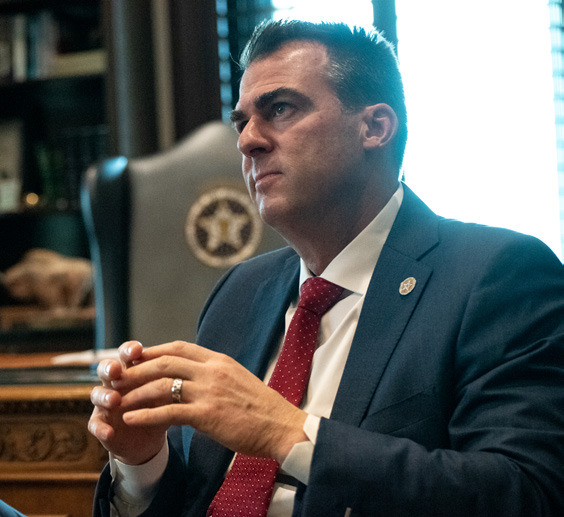
OKLAHOMA CITY – Last week, Gov. Kevin Stitt issued an executive order declaring that a state question regarding minimum wage be put to voters on the June 16, 2026, ballot, in conjunction with the primary elections.
A ‘yes’ vote will increase the state minimum wage to $12 per hour in 2027, $13.50 in 2028, $15 in 2029 and then future increases will be adjusted based on changes to inflation. Oklahoma has adhered to the federally mandated minimum wage of $7.25 per hour which was set in July 2009.
The governor’s executive order also stated that a ‘yes’ vote would remove certain exceptions from the Oklahoma Minimum Wage Act that previously did not include certain workers, such as part-time employees, students, minors, farm and agricultural workers, domestic service workers, newspaper vendors and carriers and feed store employees.
Controversy still surrounds the initiative petition, with critics on both sides of the issue. The Oklahoma Farm Report published an article a few days after the governor’s order stating that agriculture groups remain opposed to the question. Both Oklahoma Farm Bureau and the Oklahoma Cattlemen’s Association confirmed their opposition to SQ 832 with the publication.
“Earlier this spring, OCA adopted policy opposing the passage of State Question 832. While the main push of the question is to set a higher minimum wage and then tie it to annual increases based upon a federal index, OCA’s main opposition is to striking the language protecting agriculture workers.
“The question ignores the unique nature of working in agriculture which everyone in rural Oklahoma knows is not tied to a clock. SQ 832 will have devastating impacts on agriculture therefore OCA is strongly opposed,” said OCA Executive Vice President Michael Kelsey.
Oklahoma Farm Bureau President Rodd Moesel said their board has been very concerned.
“The word we have been hearing from our members is not so much the $15 an hour at the start … but it’s setting a permanent increase that will be tied each year based on a federal cost of living index,” he said.
In addition, Moesel noted that the general farm group is also worried that the measure will remove all of the ag labor exemptions at the state level for overtime and that may cause problems at harvest and more.
Oklahoma Farm Report also contacted the governor’s office and was told that Stitt’s decision to put SQ 832 on the June 2026 state primary election ballot would save $1.8 million dollars for the cost of a standalone statewide election.
Supporters of SQ 832, after collecting and having petition signatures verified by the Secretary of State’s office, expected to see the question on the November 2024 ballot, which includes the election for U.S. President, which normally draws a larger voter turnout. However, the governor has discretion to call a special election or place the vote on any statewide election.
The Oklahoma State Chamber of Commerce and Oklahoma Farm Bureau initially filed a formal protest challenging the legality of the proposition. The legal challenge, which was filed at the state Supreme Court, argued that the proposed state question is unconstitutional under state law because it unlawfully delegates the Legislature’s power to federal administrative officials, according to a press release from The State Chamber of Oklahoma.
However, in March 2024, the Oklahoma Supreme Court ultimately ruled that SQ 832 could continue to move forward.
“State Chamber member companies have no interest in artificially holding down wages, and in today’s labor market, they could not stay in business if they tried to do so,” said ChadWarmington, president and CEO of The State Chamber, in the press release dated Nov. 21, 2023.
“Let’s be clear, most of our members already pay well above the current minimum wage hourly rate to their non-salaried employees,” he said. “What is a major concern to us is the automatic, open-ended increase being linked to a federal government produced index that is based upon cost-of-living rates in cities like New York or San Francisco. Those areas are not reflective of the actual cost of living in Oklahoma.”