

OKLAHOMA CITY — The federal government has stripped the State of Oklahoma of its regulatory authority over coal mining and abandoned mine reclamation operations throughout “Indian Country” in eastern Oklahoma.
The federal Office of Surface Mining Reclamation and Enforcement (OSMRE) notified state officials last year that the federal government would assume control from the state over surface coal mining and reclamation operations on lands within the boundaries of the Muscogee (Creek), the Cherokee and Choctaw Nations.
The “practical effect” of the OSMRE decision is to “disapprove Oklahoma’s entire state program,” because all of the surface mining previously regulated by Oklahoma” under the Surface Mining Control and Reclamation Act (SMCRA) “now takes place on Indian land,” federal District Judge Stephen P. Friot pointed out in an opinion issued Dec. 22, 2021.
Sixteen Oklahoma counties previously had or still have coal mining operations. They are LeFlore, Pittsburg, Haskell, Muskogee, Rogers, Nowata, Craig, Mayes, Tulsa, Wagoner, Okmulgee, McIntosh, Sequoyah, Latimer, Coal and Atoka. All those counties lie within the boundaries of the Choctaw, Cherokee and/or Creek Nations.
Glenda H. Owens, deputy director of the OSMRE, an arm of the U.S. Department of the Interior, cited the U.S. Supreme Court ruling in McGirt vs Oklahoma on July 9, 2020, as justification for the administrative transfer from the State of Oklahoma to the Interior Department.
The Surface Mining Control and Reclamation Act (SMCRA) allows a state “to achieve the primary responsibility … for the regulation of surface coal mining and reclamation operations on non-Federal, non-Indian lands within its boundaries,” Ms. Owens related. The SMCRA is a regulatory program designed to ensure that surface coal mining operations in existence after the Act went into effect in 1977 are conducted in in an environmentally sound manner.
The State of Oklahoma received full approval of its regulatory programs on Jan. 14, 1986.
McGirt changed regulatory landscape in Oklahoma
However, after the McGirt decision, OSMRE “determined that Oklahoma is exercising its state program regulatory authority … on lands that are within the exterior boundaries” of the Creek, Cherokee and Choctaw Nations’ reservations,” Owens wrote.
Consequently, the State of Oklahoma “may no longer administer a SMCRA regulatory program” on Creek, Choctaw and Cherokee lands, Ms. Owens informed Kenneth E. Wagner, Oklahoma’s Secretary of Energy and Environment, in letters dated April 2 and June 17, 2021. OSMRE “is now the SMCRA … regulatory authority.”
Nearly identical letters from Ms. Owens advised Trey Lam, executive director of the Oklahoma Conservation Commission, that the OSMRE “will assume authority over Oklahoma’s Abandoned Mine Land reclamation program.”
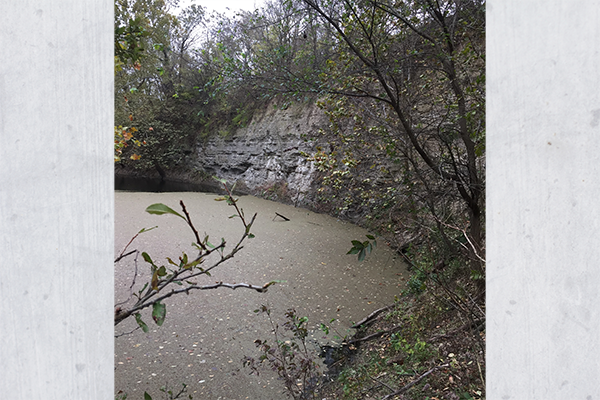
The AML reclamation program is financed with fees that operators pay on each ton of coal produced, to reclaim land and water resources adversely affected by coal mines abandoned before Aug. 3, 1977.
Oklahoma has been receiving a $3 million grant annually from the AML Trust Fund, according to Robert Toole, director of the Abandoned Mine Land reclamation program in the Conservation Commission. Oklahoma is considered a “minimum program” state because of its relatively small amount of current and historic coal production, he said.
Almost two years ago Oklahoma identified more than 32,000 acres of abandoned surface coal mines and approximately 40,000 acres of abandoned underground coal mines, Toole reported.
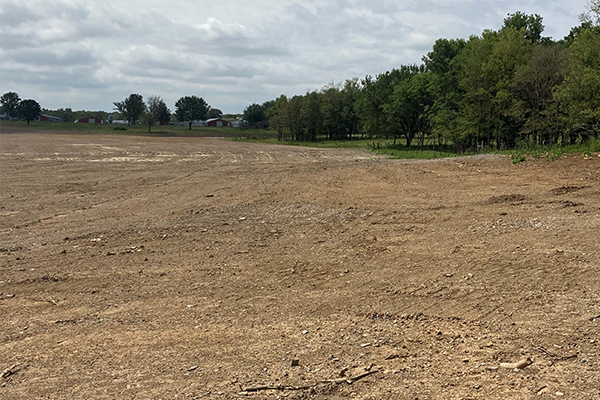
One reclamation project alone cost $997,480, and another cost $672,977, Toole related; both abandoned coal mines were northeast of Porum, in Muskogee County. One project in Rogers County entailed reclamation of a strip pit on approximately 100 acres, at a cost of about $1 million, he said.
“We have more than $120 million of unreclaimed abandoned mine lands still on inventory,” Toole said in February 2020.
Feds gave State 30 days to make the transition
The OSMRE gave state agencies 30 days to make the transition of operations, and subsequently cut off federal funding for both programs.
The Conservation Commission was notified by email on July 8, 2021, that its Fiscal Year 2021 grant application for the AML program “has not been selected for funding.”
Similarly, the Oklahoma Department of Mines was informed that the OSMRE “does not intend to authorize the distribution of the remaining $657,679 of ODM’s $1,319,217 federal grant award” for calendar year 2021.
Consequently, Mary Ann Pritchard, director of the Department of Mines, wrote in a June 30, 2021, letter that her agency’s chief financial officer, Suzen Rodesney, said the department “has only enough funds available to pay employee salaries for two months.” Without those funds “the agency will be required to take emergency actions, including laying off or furloughing employees, closing offices, and selling assets.”
The Southwest Ledger left a voice mail message with Ms. Rodesney at 10:41 a.m. Monday, asking whether any of those dire circumstances had transpired, but received no response.
In her letters to state officials, Ms. Owens urged the Department of Mines and the Conservation Commission to continue their “routine” administrative, inspection, enforcement, and reclamation program activities “to the extent permitted by law…” without violating the SMCRA.
Governor, state agencies sue Interior Dept., OSMRE
Gov. Kevin Stitt and the State of Oklahoma, the state Department of Mines and the Oklahoma Conservation Commission filed suit against the U.S. Department of the Interior; Interior Secretary Debra A. Haaland; the Office of Surface Mining Reclamation and Enforcement, and OSMRE Deputy Director Glenda Owens on July 16 and a similar suit on Aug. 16, 2021. Both lawsuits were filed in Oklahoma City’s Western District federal court.
In the absence of a preliminary injunction, the federal “incursion” will harm Oklahoma “by inviting further efforts … to expand McGirt beyond its narrow and express limitations,” the state argued. Oklahoma’s “non-criminal authority” is already under assault in “numerous contexts, including taxation, oil and gas regulation, and the jurisdiction of its courts.” The actions of the Interior Department constitute “another significant threat to Oklahoma’s sovereignty and proper regulatory authority,” the state asserted.
But U.S. District Judge Stephen P. Friot splashed cold water on Stitt’s application.
After reading the legal briefs submitted by the state and the federal governments, Friot wrote that he was “compelled to conclude that Oklahoma has not shown a likelihood of success on the merits of its claims, and it is therefore not entitled to a preliminary injunction.”
In reaching his conclusion, Friot wrote that he was “mindful” that the Surface Mining Control and Reclamation Act has become one of the federal civil statutes McGirt suggested could be ‘trigger[ed]’ by its finding that the Creek Reservation persists today.”
In McGirt, the majority of the Supreme Court “candidly recognized that the Creek ‘reservation’, as an Indian reservation in the commonly accepted sense, has been thoroughly hollowed out by more than a hundred years of legal, extra-legal, economic and demographic events,” the judge wrote.
“Thus, the Creek reservation, even as found by the Supreme Court to exist, is essentially a perimeter, a line zig-zagging around a major swath of eastern Oklahoma (including most of Tulsa), within which Oklahomans of all races are born and live their lives, oblivious to any notion” that those lands “are in a category apart from the lands on which their fellow citizens would live their lives in any other state (or in the western half of Oklahoma).”
McGirt put the State of Oklahoma, “and millions of its citizens, in a uniquely disadvantaged position as compared to the other 49 states,” Friot write.
Core functions of state government, relied upon by all Oklahomans for over a hundred years, are called into question even though only a very small portion of land within the newly recognized reservation is owned by tribes or individuals with a tribal affiliation.”
‘Havoc flowing’ from McGirt
The result of the high court’s ruling “is a prime example of the havoc flowing from the McGirt decision,” the judge wrote. Nevertheless, Friot said his ruling is “a legally unavoidable consequence of the application of federal statutory law in light of that decision.”
Friot emphasized that the dispute between the State of Oklahoma and the federal Office of Surface Mining Reclamation and Enforcement “is not about whether McGirt was correctly decided.” Nor is the case about “whether inhabitants of the newly confirmed Creek Reservation should enjoy immunity from local regulation.” And the case is not about “whether McGirt’s holding should apply generally in the civil context.”
Instead, Friot wrote, “this case turns on a much narrower issue: the interpretation and application of a federal statute.”
For example, the SMCRA “significantly limits” to 60 days the time frame within which a plaintiff may seek judicial review of actions taken pursuant to that Act.
Oklahoma was notified by the OSMRE of its decision to assume regulatory and reclamation jurisdiction in letters dated April 2, 2021. The state didn’t file the first of its two lawsuits until more than three months later, on July 16, 2021.
Oklahoma’s arguments “collide directly with the plain language of federal legislation governing surface mining on the newly recognized Creek Reservation,” Friot wrote.
“It is … telling that Oklahoma’s state laws implementing its state SMCRA program specifically exclude Indian land from its regulatory jurisdiction,” he wrote, pointing to two sections of the Oklahoma Administrative Code.
Furthermore, because the SMCRA “treats Indian tribes as equivalent to states,” Friot wrote, “there is no reason to think that a state may operate its own regulatory program on Indian land.”
The State of Oklahoma argued that the Creek Reservation “does not qualify as one because the land is not held in trust by the federal government.” The Supreme Court’s holding in McGirt that the land at issue meets the definition of “Indian Country” under the Major Crimes Act “compels a finding that the land also meets the definition of ‘Indian lands’ under SMCRA,” Friot declared.
The Major Crimes Act defines “Indian Country” to include “all land within the limits of any Indian reservation under the jurisdiction of the United States Government,” he noted.
The result of the high court’s decision “is a prime example of the havoc flowing from the McGirt decision,” the judge wrote. “[T]here can be little argument that McGirt’s recognition of the ongoing existence of the Creek Reservation will disrupt significant and justified expectations concerning the character of the land,” he acknowledged.
Nevertheless, Friot said his ruling is “a legally unavoidable consequence of the application of federal statutory law in light of” the McGirt decision.