

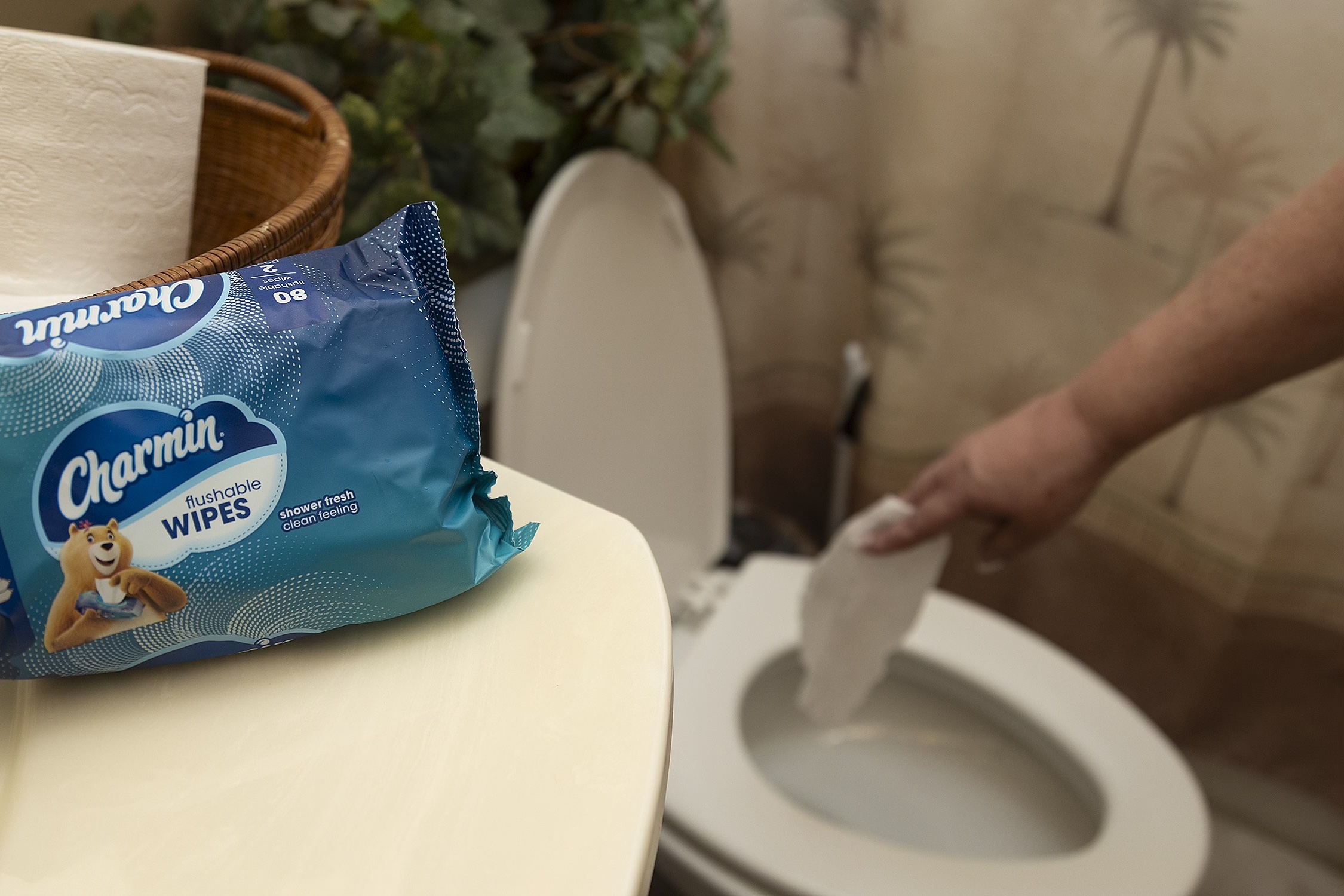
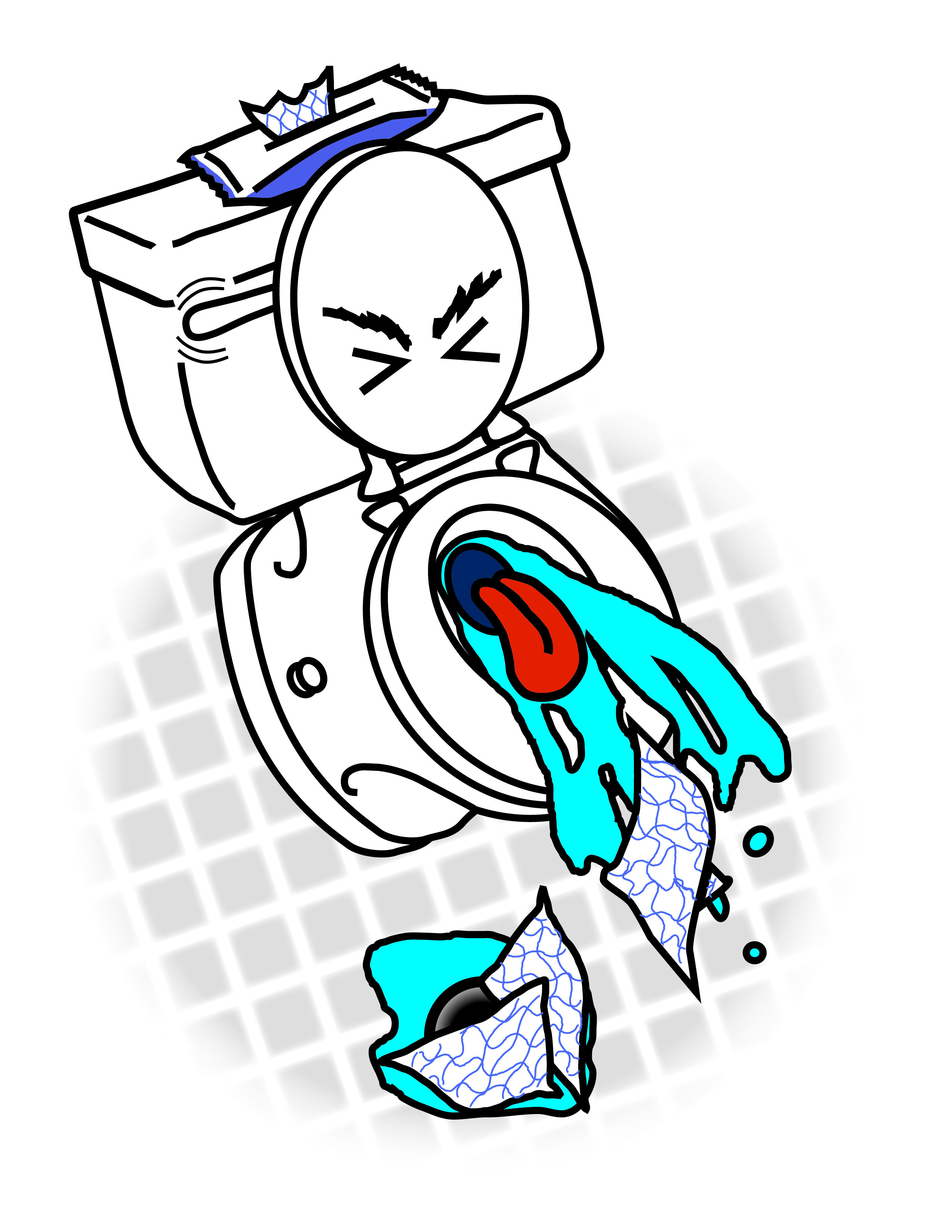
So-called flushable wipes are causing a big mess for homeowners, businesses and public sewer systems as they get clogged and require major repairs.
In some cases, the repairs are wiping out the budgets at some public works departments. Some repairs, depending on the level of damage, can cost cities anywhere from $4,000 to $20,000 with each instance. In one extreme case, a Lawton church spent $100,000 because the sewer backup was so severe, said Lawton Public Works Director Rusty Whisenhunt.
“There are some wipes that can be flushed but there are others that cannot be flushed,” he said. “Those wipes are the ones that do not break down once they’re in the service lines. They catch on roots or barbs in the line and twist into a knot and block the system. That causes us to dig into the main line and unclog that area.”
But that’s only part of the problem. The clogs also cause backups into homes, businesses and churches, which causes untold damages that are not counted by a city’s public works department.
“As a general rule, if the wipes are pre-wetted, they should not be flushed. Baby wipes should go in the trash can and the wipes that are used to clean with should not be flushed. Because of all these problems and lawsuits, some companies have removed the word flushable from their packaging,” Whisenhunt said.
Lawton’s public works department reported about 200 overflows a year in their sewer system and 75% are attributed to flushable wipes.
Whisenhunt provided a tip for consumers before flushing wipes down the toilet: Take a cup of water, drop a wipe into it and if the wipe breaks down in about 15 minutes, it likely won’t cause a problem. If it doesn’t break down, it’s not biodegradable. He made the suggestion to prevent homeowners from spending money on plumbers.
“If a plumber comes out and it (sewer line clog) is under the slab, it gets really expensive,” he said. “The water cup test will tell them (homeowners) what they need to know.”
Southwest Ledger reached out to representatives from flushable wipes makers SC Johnson and Kimberly-Clark, but did not receive a response.
Nationwide problem
The issue isn’t just in Lawton or southwest Oklahoma, according to Mary Elizabeth Mach, a water and wastewater engineer with GarverUSA, which has an office in Oklahoma City. Mach also serves as the city engineer for Elgin.
“This is a prolific problem throughout the industry, and education on the topic is one way we are trying to reach American households. Don’t flush wipes. Regardless of the terminology shown on the package, they cause great problems. Flushable wipes should never be flushed,” she said.
Despite the marketing by corporations like Kimberly-Clark and SC Johnson, Garver maintains there are no products that are truly flushable.
“There is no such thing,” Mach said. “They wreak havoc on sewer systems, lift station pumps, and wastewater treatment systems and equipment. Tissue paper is designed to dissolve when it is flushed; wipes, however, maintain their structural integrity and the sewer systems are not designed to handle material that does not break apart. The problems are significant.”
There is a public service campaign as well as lawsuits against the use of the term ‘flushable’ on wipe manufacturers, Mach said.
“Just because it can go down the toilet, doesn’t mean it should. The cost to cities is overwhelming maintenance for city staff, replacing pump motors, seals, and impellers that burn or bind up because of wipes,” she said.
Legal issues sprung up across the country from Wyoming, Minnesota, to Charleston, South Carolina, where plaintiffs alleged the makers of flushable wipes are responsible for damage caused to city sewer systems.
In 2015, Wyoming, Minnesota, sued six makers of wet wipes arguing that so-called flushable wipes clogged sewer lines and cost the city an exorbitant amount of money.
Seven years later, Kimberly-Clark agreed to pay $20 million to nationwide consumers of its flushable wipes in a separate federal lawsuit filed in New York. The settlement ended claims made in a pair of class-action lawsuits alleging the flushable wipes caused damage or clogged sewer and septic systems.
In 2021, a federal judge ruled that major retailers like Costco, CVS, Walmart and Target could not escape a class-action lawsuit alleging they also manufactured flushable wipes that reportedly caused major problems for wastewater systems.
In some instances, flushable wipes makers agreed with the Federal Trade Commission to stop promoting its products as flushable. One of the companies, Nice-Pak Products Inc., also manufactured flushable wipes for private labels marketed by retailers Costco, CVS and Target.
In its complaint against Nice-Pak, the FTC alleged that the company violated the law by claiming the wipes were safe for sewer systems, septic systems, broke apart shortly after being flushed and were safe to flush.
Big league issues
In Oklahoma City, the utilities department operates and maintains 3,000 miles of sewer line and 68 lift stations. Because of wipes, the department must perform more preventative maintenance to help lessen the potential for sewer backups, according to utilities spokeswoman Jasmine Sievert.
“Our goal is to educate the public about the impact of wipes and their tendencies to cause blockages and backups. We encourage the public to toss them in a wastebasket or trash bin, so they don’t go down their pipes and into the sewer system,” Sievert said.
The biggest contributor to clogs are sanitary wipes which are made of polyester, wood pulp, rayon fibers and even polypropylene (a thermoplastic polymer).
“These materials are not meant to break apart, and wipes are manufactured in such a way as to retain moisture for long periods of time, which means that they don’t disintegrate when introduced to water in the same way toilet paper does,” Sievert said. “It’s not about the wastewater system so much as the composition of the wipes, along with what we call FOG – fats, oils and grease – that together, can form large clogs. FOG includes any household food scraps, including butter, creams, meat scraps, coffee grounds, vegetable peels etc., that can also create problems in our sewer lines, and when combined with the wipes, that’s where we see most issues.”
Meanwhile, Jorge Rodriguez, owner of Imprint Construction in Comanche County, said older homes create the most difficult issues for plumbers.
“The cast iron sewer lines are the worst. The newer homes with 3” to 4” PVC pipes at the house” are better equipped to handle the wipes, he said.
Rodriguez also owns rental property and sees firsthand the problems tenants create when using flushable wipes.
“When people flush those things down the toilet and don’t see them anymore, they think everything is good. But it’s not,” he said. “These companies have marketed the flushable wipes to the point where people don’t think it’s a problem.”