

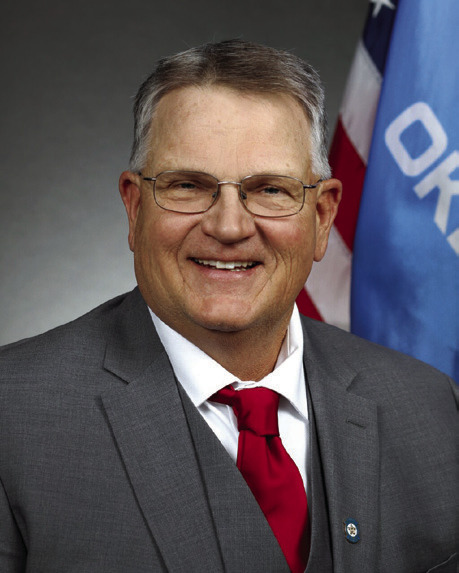
OKLAHOMA CITY – A state representative wants to know why Service Oklahoma uses two separate statutes to determine the value of each vehicle for tax purposes.
Rep. Jim Grego (R-Wilburton), who is also the Assistant Majority Whip of Oklahoma’s House of Representatives, filed a request for an interim study, IR-24-008, to be able to ask the question. The request is on an approved list of studies but hasn’t been assigned to a committee as of press time.
Vehicle excise tax is a topic that has been floated around the state Legislature for at least 25 years, according to a Senate brief. In February 2023, Rep. Steve Bashore (R-Miami) proposed House Bill 1389 to amend a current state statute to establish the value of any motor vehicle, except manufactured homes. The measure proposed that value would be determined as of when the person applying for a certificate of title obtained ownership or possession. The value of any vehicle for purposes of the excise tax would be the actual sales price before any discounts or credits are given for a trade-in. Rep. Brad Boles (R-Marlow) co-sponsored the measure that died in the Senate Finance Committee in 2023.
In 2022, Sen. Darcy Jech (R-Kingfisher) proposed Senate Bill 1486 that would have changed how the state collects sales tax of vehicle purchases. It would have modified the formula used to calculate how much sales tax is owed on the purchase of a vehicle, according to a press release, even if a trade-in allowance is used to lower the cost of the total purchase.
Jech’s legislation would have modified this calculation and base sales tax only on the difference of the price of the new vehicle and the value of the tradein. The proposal also died in committee at the time.
The Oklahoma Policy Institute confirms that Oklahoma levies two taxes on motor vehicles: selective sales taxes on the purchase of vehicles and ongoing taxes on the value of the vehicles. In 2016, OPI reported, these two motor vehicle taxes produced $728 million or 5% of all tax revenue in the state. Beginning in 2017, Oklahoma established a 1.25% sales tax on vehicle purchases in addition to motor vehicle taxes.
OPI also reported that in 2000, voters approved a reduction in vehicle taxes, which had the most effect on used vehicles. The Oklahoma Tax Commission estimated that government revenue decreased by $50 million from this change.