

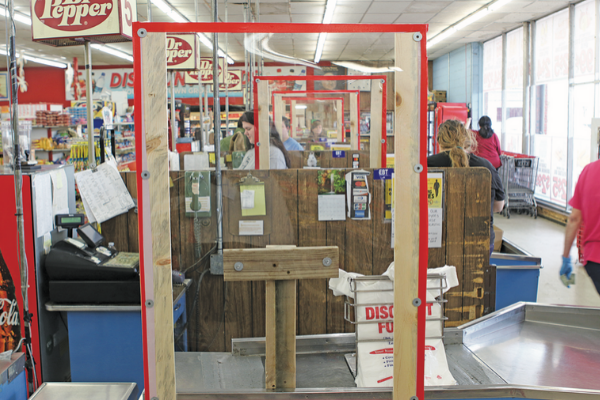
Elgin’s Williams Foods has been “hammered” like other grocery outlets the past two weeks but the store’s shelves should be near 85 percent capacity by mid-April.
Jeff Williams, chief executive officer of Williams Foods, said life in the grocery business has been a rollercoaster since the COVID-19 virus struck Oklahoma and a run on some foods, toilet paper, and cleaning products began.
“We’re getting bigger trucks (in) every day with more and more products,” he said.
Toilet paper and sanitizers are being shipped on every truck that comes to the Williams grocery stores.
Still, those items and more have been “gone almost before they hit the shelves,” Williams said.
Initially, the company was caught off guard when customers made their way to the stores in droves, which in turn, forced grocers like Williams to buy “everything the suppliers had.”
Keeping the shelves stocked isn’t the only problem facing grocery stores. Williams said all of the stores in the Williams chain have either hired more workers or given their current staffs overtime.
“It’s crazy,” he said. “When you have that type of volume you’ve got to hire more people. One store hired 12 new employees. Some of the others maintained with the staff they had.”
In Elgin, store employees began earning overtime with the added amount of stocking and cashier work, Williams said.
“They’re getting a lot of OT,” he said. “Overtime is never fun but we’re glad our employees were willing to work.”
HAC, Inc., the parent company for grocery store brands Cash Saver and Country Mart in Lawton, has been hiring more employees for jobs created by the virus.
Dennis Maxwell, director of marketing for HAC, said some of the new workers are sanitizing every cart before it’s brought into the store and constantly disinfecting and “wiping everything down.”
At the same time, Cash Saver and Country Mart employees are garnering plenty of overtime as the virus persists.
“We were just overwhelmed as it took place,” Maxwell said. “People were buying and continue to buy food that they would have eaten at school or work. Plus, we’re getting more business from an increase in the SNAP benefits.”
Maxwell expects the new staffing levels to remain as long as the current business volume continues.
The initial week of the grocery-buying influx resembled holiday shopping that lasted an entire week.
“We’re down to levels that are manageable thanks to the Homeland warehouse in Oklahoma City and our own warehouse,” Maxwell said. “Right now, we expect this to continue at least into June.”
Meanwhile, YUM! Brands, Inc., owners of KFC, Taco Bell, and Pizza Hut, has launched a global medical relief fund to provide financial support for restaurant employees who are diagnosed with or who are caring for someone diagnosed with COVID-19.
The company will pay employees who are required to stay at home, or who work at a restaurant that is closed, for their scheduled or regularly scheduled hours during their time away from work. According to the company website, YUM! is working with its franchise partners to encourage a similar pattern.
Still, restaurants and their employees are feeling the effect of the pandemic. Since March 1, the industry has lost more than three million jobs and $25 billion in sales, according to the National Restaurant
Association. In addition, about 50 percent of all restaurant operators expect to lay off more people this month, the association projected.
In Comanche County, 33 cases of the virus have been reported with no deaths, according to the Oklahoma State Health Department. Stephens County has reported eight confirmed cases and one death as of April 2.
Gov. Kevin Stitt’s amended executive order forced all non-essential business- es to close until April 30. In addition, the order requires restaurants in all 77 counties to provide take-out and delivery options only and closes all bars through April 30.
A shelter-in-place order allows some exceptions for Oklahomans, such as trips to the grocery stores and pharmacies.