

As a kid growing up in and around Lawton, Oklahoma, we hung out like most people from southwest Oklahoma, in theWichita Mountains. One area we frequented was a beautiful, small impoundment called Lake Elmer Thomas.
One of many lakes created in theWichita Mountains Wildlife Refuge, Lake Elmer Thomas sits partly on the refuge and part of the shoreline is on Fort Sill. The refuge was a vision that started with a trip that President Teddy Roosevelt made to Tillman County for the Great Wolf Hunt with then U.S. Marshall “Catch Em’ Alive” Jack Abernathy in 1905.
Now, don’t get sidetracked; that’s another unbelievable story for another day. Today, I want to tell you a story that quite literally fell into my lap, about a long-forgotten U.S.
Senator from Lawton who was in a position to secretly provide funding for the first atomic bomb.
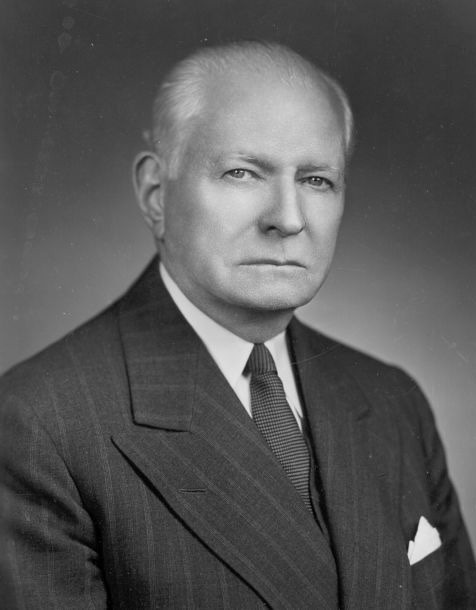
Thomas was born Sept. 8, 1876, in Indiana. At the age of 25 he moved to the Oklahoma Territory in 1901.
(Oklahoma wouldn’t become a state until 1907). He practiced law in Lawton. After statehood he was elected to what would be the very first state Senate representing the Lawton area. In 1922, he ran for the U.S. House of Representatives. He then ran for the U.S. Senate in 1926 and served until 1950. He practiced law in Washington, D.C. and moved his practice back to Lawton in 1957 before passing away Sept. 19, 1965. He is buried in Highland Cemetery. I’ve attended dozens of graveside services there and had no idea.
By now, most of you have probably seen the movie Oppenheimer, about J. Robert Oppenheimer, the U.S. theoretical physicist who was the was the director of the laboratory at Los Alamos, New Mexico, during the development of the first atom bomb. It was called “The Manhattan Project” after the site of Columbia University where much of the initial research had been done. It’s really difficult to practice blowing stuff up at Columbia, as you might imagine.
So, off to the desert the team went to develop the atomic bombs that were dropped on Japan in an effort to end Japan’s effort in World War II. The first bomb was dropped on Hiroshima on Aug. 6, 1945.
A second was dropped on Nagasaki three days later. What piqued the interest of a New York Times congressional correspondent named Catie Edmondson, was simply, how in the world did Congress pay for this top secret project and keep it top secret?
I was sent a link to a podcast calledThe Daily by a friend and colleague who said “I know you like local history. You’re going to love this!” I was mesmerized from the very start. Edmondson had written a piece in the Jan. 17, 2024, issue of The New York Times entitled “A Reporter’s Journey Into How the U.S. Funded the Bomb.”
Edmondson is responsible for digging into thousands of pages of bills in Congress that appropriate money for all kinds of things. God bless her. I, as most of us, would rather have poison ivy than to dig through an 1,100-page bill to see what is hidden in the fine print.
But without Edmondson on the case, Elmer Thomas would still just be the name of a local lake for many of us in southwestern Oklahoma.
Edmondson asks the burning question: “How in the world did they pay for this $800 million top secret project?” In her best estimation, this would be the equivalent of $13 billion dollars today—an astronomical figure to not only pass through Congress, but to pass quietly—and without a day’s worth of debate.
Edmondson started with research into Sam Rayburn, who was the Speaker of the House in 1944. His memoirs had not been digitized, so it was hard to glean much from them. She did however find a name of a little known Senator from Oklahoma named Elmer Thomas. A copy of his book “Forty Years A Legislator” was housed in the Library of Congress. At that point, the clouds began to part.
Sen. Thomas was the Chair of the Appropriations Committee that oversaw military spending. Not a stretch, since he represented Fort Sill Army Post.
Getting pushed for funding of the secret project that only he and a few key leaders even knew existed, President Roosevelt sent a memo toVannevar Bush, who oversaw the administration of the Manhattan Project and asked, “Do you have the money? Roosevelt reached out to Secretary ofWar Henry L.
Stemson, who called a very quiet meeting of a small number of House leaders and did the same on the Senate side. Thomas, who had been in the room at the Senate meeting, was floored by what was being proposed, but, as any patriotic American would be, he was all in.
Edmondson found a line item in the appropriations bill that simply read, “To expedite production.”
In a throughs of a world war, who could vote against giving our troops what they needed in the war effort?
With the appropriations bill passed, the $800 million in funding was in place.
Oppenheimer and his team then developed that first atomic bomb that changed the course of world history and brought a welcome end to World War II.
Had it not been for a young New York Times congressional correspondent’s burning desire to find answers to how the first atomic bomb was funded, this fascinating story of Sen. Thomas, and his pivotal role bringing an end to World War II would have continued to fade with each passing generation.
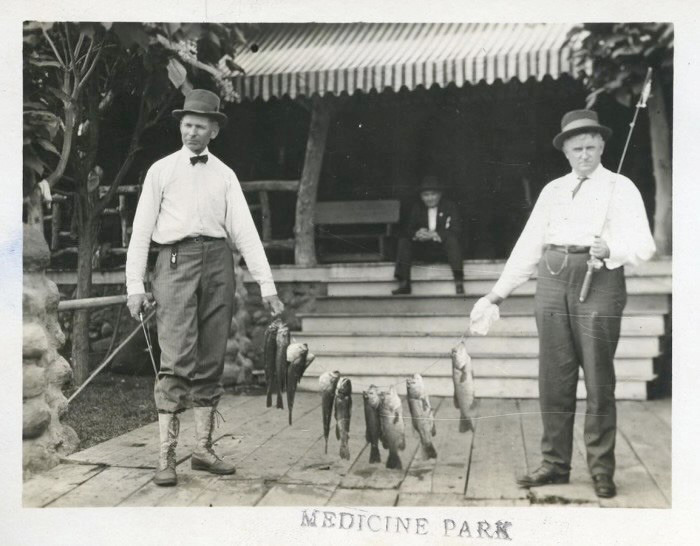
As you might imagine, there are dozens of proverbial rabbit holes one can pursue while researching Sen. Thomas. I went down several, like the fact that he developed Medicine Park where theThomas house still stands.
I strongly encourage you to listen the Jan. 23, 2024, episode of The Daily podcast and read Edmondson’s article in The New York Times to get the full story.
Here’s the podcast link: https://www.nytimes. com/2024/01/23/podcasts/ the-daily/oppenheimer- congress.html.
My wish is that my short, very amateur attempt to bring some local history to life will pique your interest as much as it has mine.
There is almost always more to the story when there’s a name on a sign.
In addition to being an auctioneer and lifelong ag producer in southwest Oklahoma, Don Armes is a former ag teacher and ag broadcaster and has served as state Representative for Oklahoma House District 63 from 2002 to 2014.