

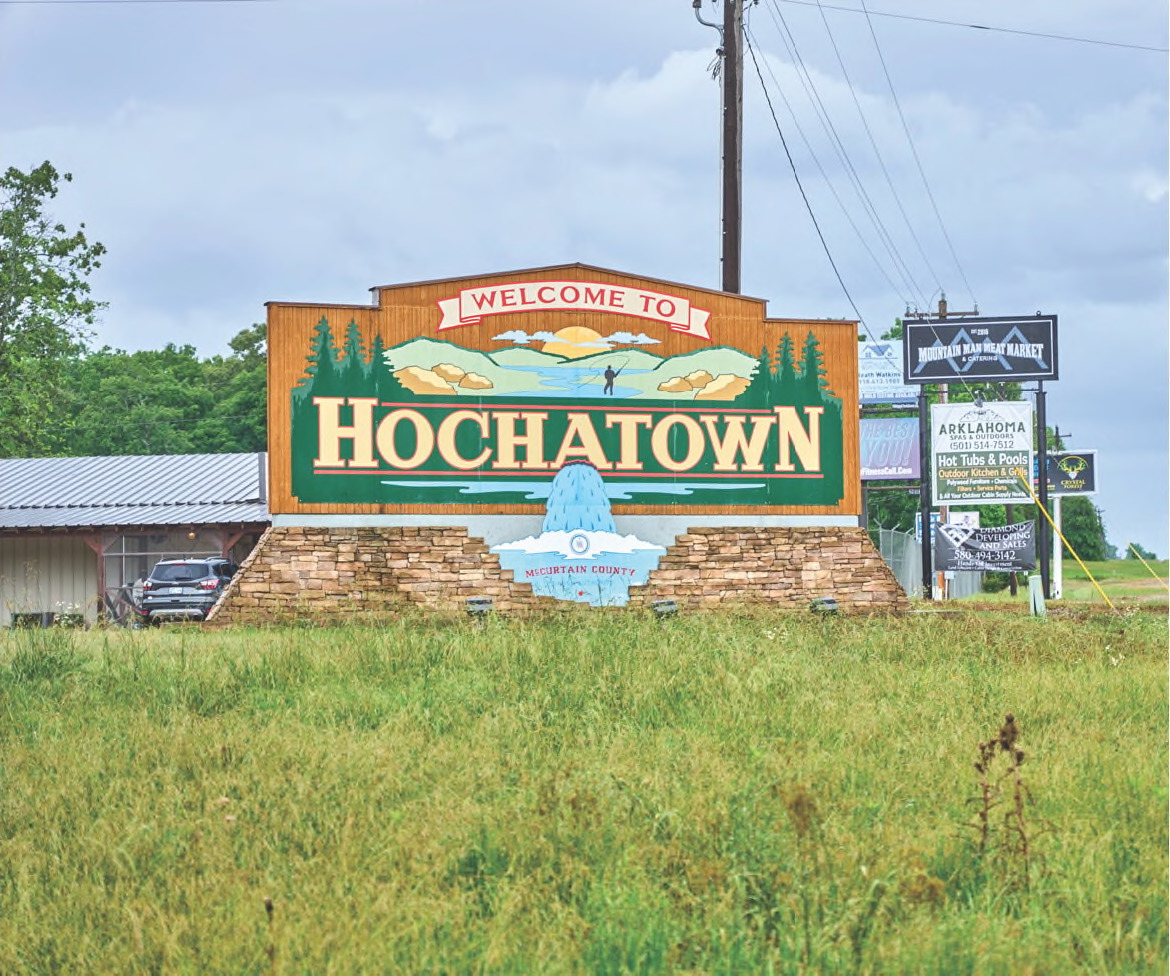

HOCHATOWN - The fight over Hochatown and its government continues. And this time they’re going back to court.
Last week, the Town of Hochatown filed a lawsuit in McCurtain County District Court over how tax revenue was being allocated and spent.
Hochatown is considered one of the state’s most successful tourist spots. Located in far Southeastern Oklahoma, records show Hochatown has generated more than $22 million per year in tourism revenue.
The town, which restored its official status in November of 2022, filed a lawsuit against the company Airbnb Inc., the City of Broken Bow, and the Oklahoma Tax Commission. Hochatown’s lawsuit says that municipal sales and lodging taxes generated by short-term rental properties in Hochatown have been improperly allocated and the funds sent to the city of Broken Bow.
According to the petition, Hochatown said that numerous vacation rental properties physically located within Hochatown’s municipal boundaries were incorrectly assigned to Broken Bow within Airbnb’s tax collection and remittance system. As a result, municipal tax revenues that the town contends should have been distributed to Hochatown were instead remitted to Broken Bow.
“We want it to be clear that this litigation was a necessity to protect and ensure the appropriate allocation of this community’s tax dollars,” Hochatown attorney Liz George said in a media statement. “The Town places no blame with Broken Bow and understands that the actions of Airbnb have put them in a very difficult position as well. We are hopeful that we will be able to work together to reach a permanent resolution to this problem in favor of both communities.”
The lawsuit alleges that the misallocation stems from inaccurate jurisdictional mapping, defective GIS integration, ZIP Codebased assumptions, and other administrative and technological errors used in Airbnb’s tax remittance process.
Hochatown has been in an ongoing fight with the federal government to get its ZIP Code restored. That fight continues.
The town further alleges that it notified Airbnb of the issue and requested corrective action. According to the filing, Airbnb acknowledged mapping and address-related issues but failed to implement adequate system-wide corrections.
George said the lawsuit also alleges that the Oklahoma Tax Commission possesses authoritative municipal boundary data capable of accurately identifying municipal jurisdictions for tax purposes, yet the disputed tax revenues have continued to be distributed based on the allegedly incorrect property assignments.
Because the full extent of the alleged misallocation is not yet known, George said the town is requesting discovery and a complete accounting to determine the amount of tax revenue involved.
Among the relief requested, Hochatown is asking the court to:
•Determine which municipality is legally entitled to the disputed tax revenues.
•Require the proper allocation and redistribution of any misallocated municipal sales and lodging taxes.
•Order temporary injunctive relief placing disputed tax revenues into escrow while the case is pending.
•Require Airbnb to cease assigning municipal tax jurisdictions using allegedly inaccurate mapping or jurisdictional methods.
•Award any additional legal and equitable relief deemed appropriate by the Court.
The lawsuit includes claims for unjust enrichment, conversion, negligence related to tax administration, declaratory judgment, and requests for temporary injunctive relief.
Town officials emphasized that the lawsuit is intended to ensure that municipal tax revenues generated within Hochatown are properly allocated in accordance with Oklahoma law and municipal boundaries.
A hearing has not yet been set in the case.