

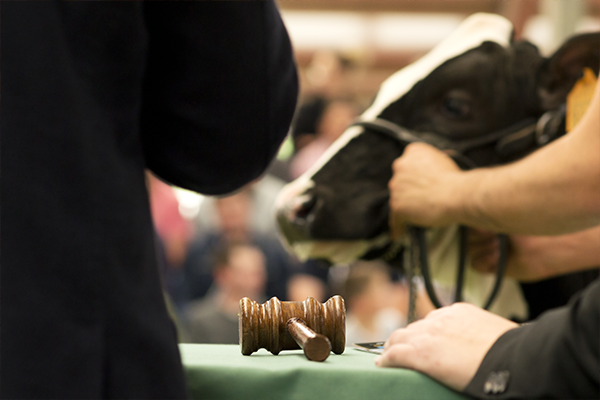
A measure to improve transparency and pricing for ranchers nationwide could also benefit both new and existing meat processors.
Co-sponsored by U.S. Rep. Frank Lucas, R-Cheyenne, who won re-election to the U.S. House last Tuesday, the bill, known as the Price Reform In Cattle Economies (PRICE) Act, should bring solutions to problems created by the 2019 Holcomb, Kan., meat processing plant fire and the COVID-19 pandemic, which caused some plants to reduce their work schedule or shut down altogether.
“People (at processing plants) couldn’t work because of COVID and outbreaks that occurred at the plants,” a Lucas aide said. “It just shows why we need a system of smaller (and regional) facilities versus larger facilities.”
Speaking on behalf of the Oklahoma Cattlemen’s Association, Michael Kelsey, executive vice president, said the PRICE Act is a “good bill in our opinion.”
The top four meatpackers control 90% of the packing facilities in the U.S. The measure would allow state inspections of live cattle, give livestock producers the ability to move beef across state lines, and help provide grants and loans for smaller, regional processing plants instead of depending on fewer, larger facilities.
In addition, the act would allow the creation of an online contract library for the sale of live cattle, which helps livestock producers gain a better price for their cattle.
“It (contract library with prices) would be timely,” said Kelsey. “It would be reported by the USDA and would be cataloged by certain packers. With a library of contracts, producers can decide the best way to market their cattle, but first, they need good information and data.”
The PRICE Act would add the U.S. Secretary of Agriculture to a board that reviews international investments, including agriculture. In April, Lucas co-sponsored the Agricultural Security Risk Review Act, which would formally place the Secretary of Agriculture as a member of the Committee on Foreign Investment in the United States (CFIUS). The secretary currently does not serve on that board.
The Agricultural Security Risk Review Act ensures that CFIUS is operating effectively and efficiently to determine if transactions – including agricultural – threaten national security.
A research component was added to the PRICE Act ensuring industry audits to determine ways to assist cattle producers.
Earlier this summer, Lucas reviewed the results of a USDA investigation and a parallel probe by the U.S. Department of Justice into anti-trust allegations, monopolistic behavior, and the disparity between boxed beef and fed cattle prices. Typically, there will be some difference in prices, but cattle producers alleged industry entities colluded to drive up boxed beef prices while keeping fed cattle prices down.
In July, the USDA released its “Box Beef & Fed Cattle Price Spread Investigation Report,” identifying a number of systemic issues in the cattle market.
The findings – although not specific to criminal or civil violations – does not preclude the possibility that individual entities or groups violated the Packers and Stockyards Act during the aftermath of the Tyson Holcomb fire and the COVID-19 pandemic.
The USDA has engaged in discussions with the Justice Department about allegations of anti-competitive practices in the meatpacking industry. The USDA acknowledged in its report that should investigators find a violation of the Packers and Stockyards Act, they would report those violations to the Justice Department for prosecution.
Lucas said in July that he looked forward to the conclusion of both federal investigations into “any ongoing or isolated violations of the Packers and Stockyards Act or anti-trust law."
“The market strain of the past year has exposed many vulnerabilities within the beef supply chain,” said Lucas in a prepared statement. “These events have forced many cattlemen and women across the country to seriously question the future of their often family-owned operations. This is deeply concerning to me due to the fact that these operations serve a vital role in local communities across the country and are a key part in securing the national food supply chain. I look forward to continuing to work with other Members of Congress, USDA, and cattlemen and women across the country to fix these issues.”
Part of the solution comes within the PRICE Act, which would eliminate regulatory barriers for cattle ranchers and increase resources for cattle producers, the congressman said.
Lucas joined Republican Congressmen Dusty Johnson of South Dakota and Mike Conaway of Texas in introducing the PRICE Act in early October, which also provides comprehensive risk management solutions.
“Cattle country is hurting and has not fully recovered,” said Johnson. “USDA laid out several areas where Congress can implement real solutions to improve the market – the PRICE Act is the answer to many of the issues our ranchers have faced for years. Our producers want a fair market and fair prices and that’s what this bill delivers. Congress needs to deliver for cattle country.”
Kelsey believes the PRICE Act will have a better chance of passing the House and Senate once Congress begins its lame-duck session in December. The bill reportedly has bipartisan support in the Senate. Kelsey said the proposal should be included in an omnibus bill that includes several topics such as transportation and other national infrastructure needs.
“I think it would be difficult for this bill to move forward by itself,” said Kelsey. “I reserve the right to be wrong because we’re talking about Washington, but it does have bipartisan support. We need friends in the rural states and urban areas.”
In October 2019, Lucas, Johnson, and U.S. Rep. Liz Cheney (R-WY) introduced the Livestock Risk Management and Education Act, a bill that would provide grants to certain state land-grant universities to better equip livestock producers with risk management training.
The bill authorized the National Institute of Food and Agriculture to provide resources to improve livestock producers’ knowledge of futures markets to better manage market volatility. An understanding of futures contracts and risk management strategies will allow producers both large and small to better anticipate cattle prices. This new authority would allow land-grant universities, such as South Dakota State University, to partner with grower associations to reach producers more directly.