

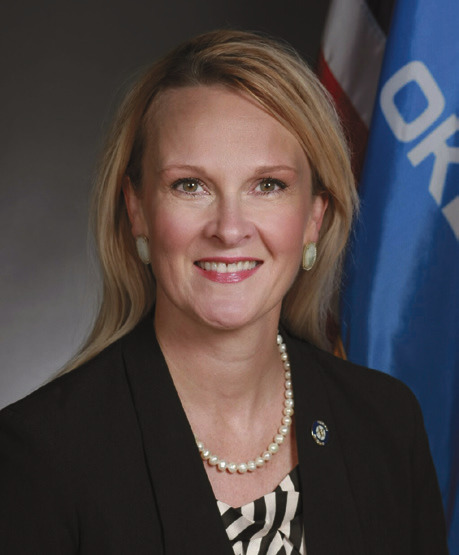
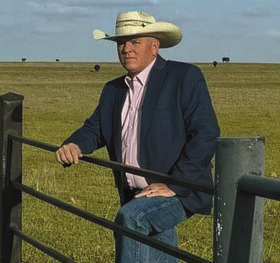
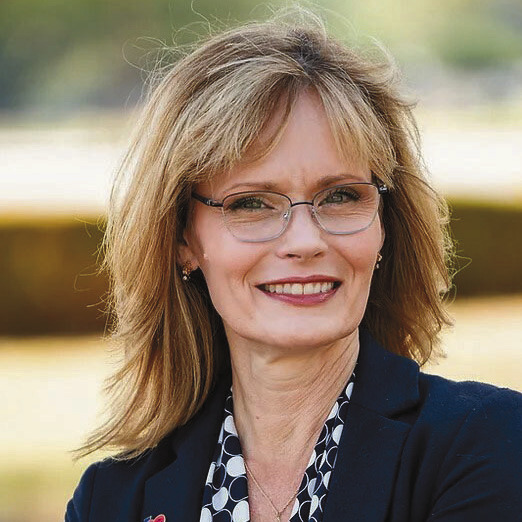
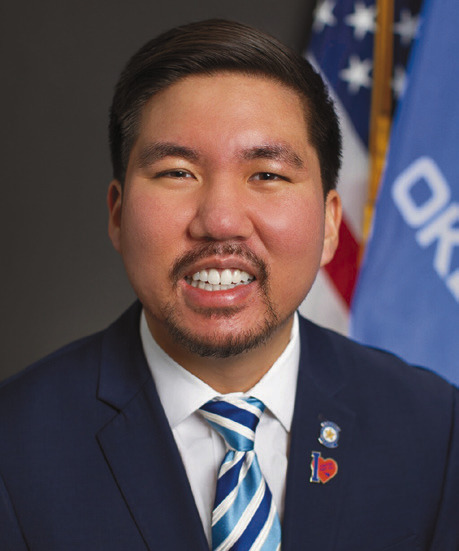


LAWTON – Eight legislative candidates fielded questions from voters during a recent town hall meeting at VFW Post 5623 in Lawton.
Comanche County Veterans Council hosted the event to give voters a chance to meet the candidates and hear their positions on state issues.
Participating candidates were:
• Rep. Daniel Pae, R-Lawton.
• Pae’s Democratic opponent, Allison Offield of Lawton.
• Lawton Democrat Shykira Smith, who is running against Republican Rep. Trey Caldwell in House District 63.
• Lawton Democrat Tom Sutherlin, who is competing against GOP Rep. Rande Worthen in House District 64.
• Rep. Toni Hasenbeck, R-Elgin.
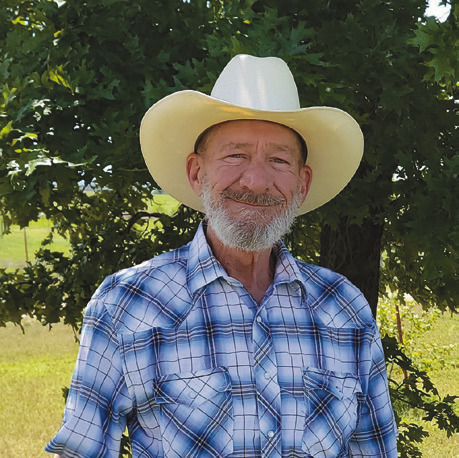
• Hasenbeck’s Republican opponent, William Ratley of Fletcher.
•GOP candidates Rick Wolfe and Spencer Kern, who are competing for the District 31 seat in the state Senate.
Caldwell and Worthen did not attend the event. Pamala Mc-Nall-Granier, a Republican who is running against Wolfe and Kern in SD 31, also did not attend.
After the candidates introduced themselves, the event’s moderator read aloud questions that had been submitted by audience members covering a variety of topics, including education spending, immigration and behavioral health.
Education spending One audience member said the Legislature seemed more interested in funding private schools than in providing additional dollars for public education, and they wanted to know how the candidates stood on that issue.
Pae said the Legislature added about $25 million to the school funding formula for fiscal year 2025.
“Between 2018 to 2024, the formula’s gone up by about $1.5 billion,” he said. “Keep in mind that number, because the previous 25 years is how long it took to get that increase.”
Pae noted that lawmakers also boosted funding for CareerTech programs, colleges and universities for FY 2025.
Hasenbeck said the state’s budget for public schools has risen by 50% over the past six years, which set an all-time record for spending on common education. She added that local education officials determine how many textbooks and teachers their schools will have, among other decisions.
“Local control – these things that happen in your school – are controlled by a school board and the administration in your school,” Hasenbeck said. “And they are making those decisions with more money than they have ever had, historically, in the state of Oklahoma.”
Sutherlin agreed that local school boards are responsible for deciding to spend their district’s money, but they base those decisions based on the funds they have available.
“When we get into our rural schools in particular, they don’t have the rural income in their tax base that the cities have,” he said. “So it’s not an equal deal.” Immigration Another question concerned the candidates’ positions on immigration.
Smith said the United States’ immigration system is broken, but lawmakers aren’t willing to fix the problem.
“Our own Lankford – Senator Lankford – brought up a bill that had all types of reforms and ways we could get this under control,” she said, referring to U.S. Sen. James Lankford. “The GOP shot it down, so they’re not serious about fixing this.”
Ratley said immigration has been a problem for a long time, but it has gotten worse in recent years.
“That’s why everybody’s worried about it now,” he said. Behavioral health Another member wanted to know how the candidates would improve Oklahoma’s services for people with behavioral health issues.
Offield said she has spoken to several people in this area who need behavioral health services, but they are going to Oklahoma City to get the assistance they need.
“Obviously, we have a system that is in need of help,” she said. “I will say I don’t know how to fix it. That’s where I have to defer to others that have more information on that.”
Kern said the state reduced spending on behavioral health programs 25 years ago, and now lawmakers are trying to undo those cuts.
“I think sometimes, we need to look a little farther down the road at what our actions have right now,” he said. “We may cut a program. We may do something. Maybe it helps our budget this year. What does it do 10 years, 20 years down the road?”
Wolfe said when one of his family members needed social services they couldn’t find the help they needed in Oklahoma. He added that the state needs to do more to assist people who require behavioral health services.
“That’s something at the state level that we can’t fix immediately,” Wolfe said. “But it’s something that needs to be addressed, and there needs to be some real conversations about it.”
William Ratley