


LAWTON – Memorial Health System of Southwest Oklahoma is expanding access to advanced heart care in Southwest Oklahoma.
With the addition of the Watchman procedure, certain patients with arterial fibrillation could see an alternative when long-term use of blood-thinning medications poses a significant bleeding risk.
The procedure is a part of MHS’s growing structural heart program, an area of cardiology that uses catheter- based techniques to treat conditions that historically could require more invasive approaches.
For patients with atrial fibrillation, commonly known as AFib, Watchman addresses one of the condition’s most serious concerns, a stroke.
AFib is an abnormal heart rhythm that becomes more common with age and can significantly increase a person’s risk of developing a blood clot and suffering a stroke. Anticoagulants (blood-thinning medications) are commonly prescribed to reduce that risk, but those medications may not be the right long-term solution for every patient.
Some patients experience serious bleeding while taking anticoagulants. Others may have recurrent falls or other conditions that place them at an increased risk of bleeding. Bruising can also be a persistent problem, particularly among older patients.
That’s where the Watchman device can offer another option.
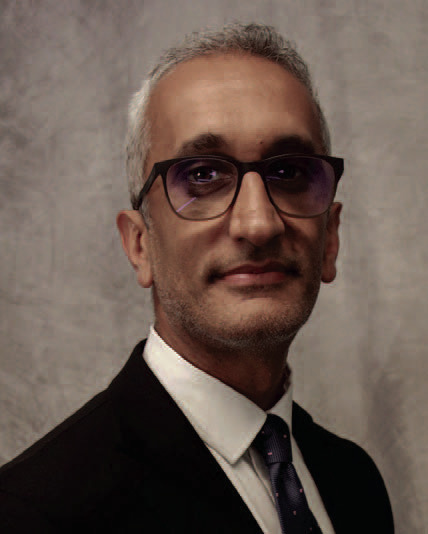
“People with atrial fibrillation, which is not uncommon with aging, develop an abnormal heart rhythm called AFib,” said MHS Dr. Ahmed Elkaryoni, a board-certified interventional cardiologist specializing in complex coronary and structural/valvular heart interventions. “Atrial fibrillation increases the risk of stroke.”
Traditionally, Elkaryoni explained, physicians reduce that stroke risk by prescribing anticoagulants. However, it is not uncommon for older patients to have difficulty remaining on the medication because of bleeding or a high risk of bleeding.
The Watchman procedure targets a small structure in the heart called the left atrial appendage, a pouch extending from the upper left chamber. In patients with AFib, blood can collect there and form clots. If a clot leaves the heart and travels to the brain, it can cause a stroke.
The Watchman procedure is designed to close off that appendage. By placing the Watchman device at the opening of the appendage, physicians can seal the area from the rest of the heart’s circulation.
Elkaryoni explained that rather than relying indefinitely on medication to prevent clots from forming in the appendage, the procedure closes off the area where those clots are likely to form.
The Watchman does not, however, cure atrial fibrillation or correct the abnormal heart rhythm.
Elkaryoni emphasized that patients sometimes assume implanting the device means their AFib has been treated. The Watchman instead addresses the stroke-prevention component of AFib care in select patients.
The “Watchman is not superior to blood thinners,” he said. “It’s an alternative to someone who cannot handle being on one.”
Elkaryoni said the distinction is particularly important because of ongoing discussion in the medical community about the role of Watchman compared with anticoagulants.
For patients who can safely take blood thinners, medication remains an established method of reducing AFib-related stroke risk.
Elkaryoni said MHS has treated patients who previously returned to the hospital because of bleeding while taking anticoagulants such as Eliquis.
After undergoing the procedure and eventually being taken off anticoagulants, Elkaryoni said a percentage of Watchman patients were relieved of significant bleeding episodes and no longer needed blood transfusions. “It decreased the risk of bleeding, decreased the risk of blood transfusion,” he said.
The Watchman Procedure
Despite being performed in the heart, the Watchman procedure does not require opening the patient’s chest.
The procedure generally takes about 45 minutes, with physicians gaining access through the groin as they advance catheters through the blood vessels to the heart using imaging guidance. Once the catheter reaches the appropriate location, the Watchman device is positioned in the left atrial appendage. The device remains there permanently, while catheters and other equipment are removed.
Elkaryoni said that the Watchman is intended as a one-time procedure and normally does not need to be repeated. Recovery can also be relatively quick.
At MHS, he said approximately 70% of Watchman patients have been able to leave the hospital the same day. “
We don’t keep people overnight,” he said of many of the cases. “Same-day discharge is about 70%.”
When asked what could go wrong with the device, Elkaryoni said one potential issue is the development of a blood clot on the Watchman device itself. That possibility is monitored through follow- up imaging.
If a clot is detected, he said, the patient may temporarily be placed on a blood thinner for two or three months, depending on the patient’s condition and follow-up evaluation.
Regional Necessity
MHS’s experience with Watchman suggests there is a substantial need for the procedure in the region.
Elkaryoni said the hospital had performed approximately 45 Watchman procedures in about eight months, with another 10 to 15 patients in waiting.
While the numbers are significant for a program that has only recently been established, he said they reflect the size of the hospital’s service area and the limited availability of some advanced cardiac procedures in Southwest Oklahoma.
“We have a big catchment area,” Elkaryoni said. “We have a lot of people who don’t have access to care.”
During the broader discussion about MHS’s structural heart program, Elkaryoni said he has encountered patients for whom traveling outside the area is a genuine obstacle. Some do not have reliable transportation. Others lack the financial resources or family support needed to make several trips to a larger city for testing, consultations, procedures and follow-up appointments. Some older residents of smaller Southwest Oklahoma communities are simply uncomfortable navigating larger metropolitan medical centers.
“They don’t like to go to the city,” he said. “They don’t know where to park. They don’t know where to go. They don’t know how to navigate there. And it’s a real thing.”
The Watchman procedure represents only one part of MHS’s larger investment in structural heart care.
For decades, many heart problems requiring mechanical repair could only be addressed through cardiac surgery. Advances in catheter- based technology have increasingly allowed specialists to reach the heart through blood vessels and implant devices without opening the chest.
“Over the last 10 years, we have a new kind of subspecialty from cardiology,” he said. “It’s called structural heart disease.”
The Watchman procedure was among the first structural heart procedures the program offers. The hospital also has worked to expand into other catheter-based cardiac procedures, including transcatheter aortic valve replacement, or TAVR, and Elkaryoni said the long-term vision includes additional treatments for mitral and tricuspid valve disease and closure of certain holes in the heart.
The Watchman procedure fits into MHS’s broader effort to make advanced cardiovascular care available without requiring Southwest Oklahoma patients to leave the region.
For a patient with AFib who has experienced serious bleeding or cannot safely remain on long- term blood-thinning medication, that means an additional treatment option is now available closer to home.
___
Ena Banduka is a medical, legal and political reporter for Southwest Ledger. Her coverage ranges from the county fair to hospital board meetings and the politics shaping the community. With a background in political science and previously working as a paralegal at a large law firm, Ena brings a strong understanding of government and the legal system to her reporting. She can be reached at ena. banduka@swoknews.com.