

OKLAHOMA CITY – It’s time to put a wrap on the Second Regular Session of the 59th Oklahoma Legislature. Gov. Kevin Stitt approved and signed the FY 2025 budget into law on June 12. Focus is shifting to state primary elections this week and summer agendas.
Before the session is totally in the history books, here’s a statistical snapshot from the Legislature of what happened (and maybe didn’t happen) over the last four months.
For starters, more than 5,000 bills were introduced by members of the state Senate and House of Representatives – 5,433 to be exact. That compares to 3,275 from last year, but this year’s total isn’t the most in recent history. It comes in a close second to 2022’s total of 5,638 bills, of which 1,120 were completed. That’s roughly a 20% approval rate of measures being signed into law. This year’s approval percentage is roughly 16%, with 870 bills completing the process from bill to governor’s approval.
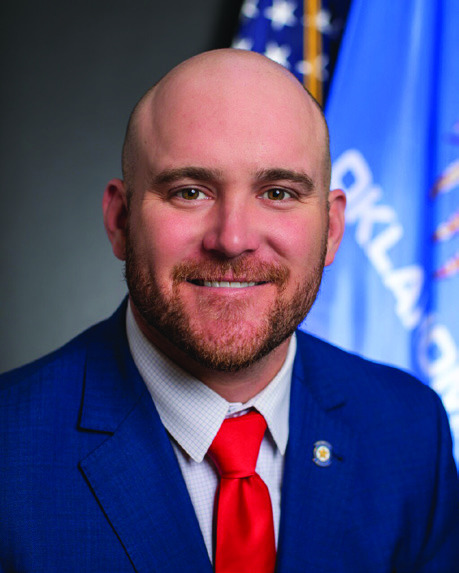
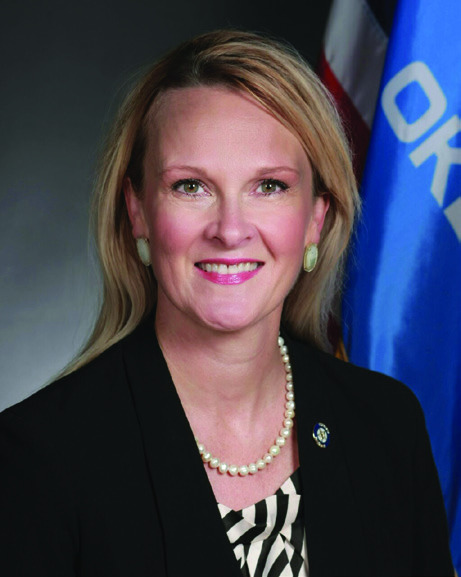
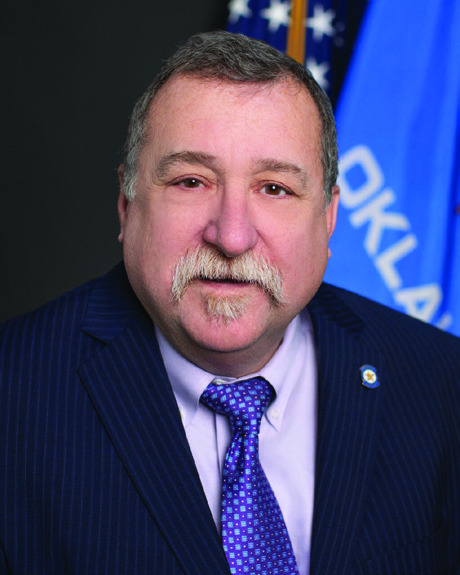
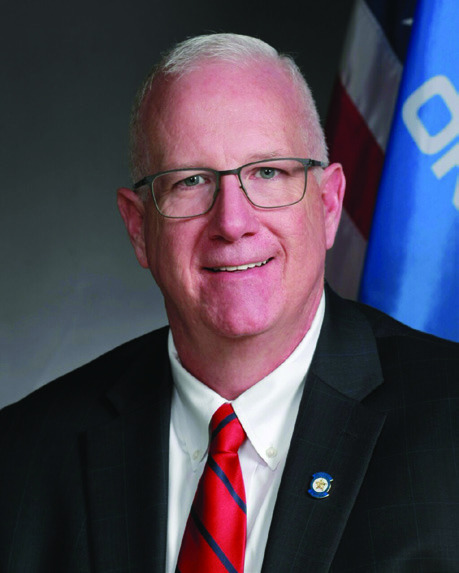
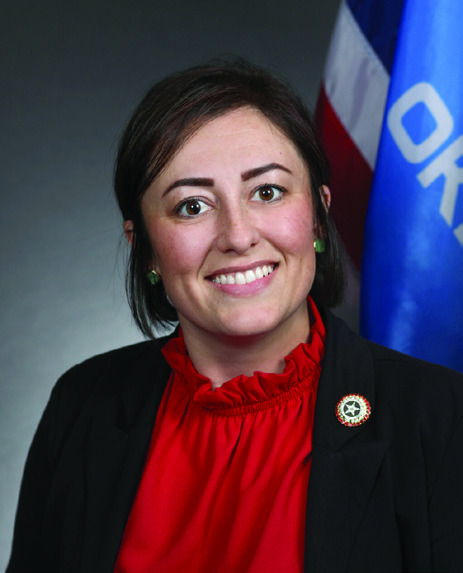
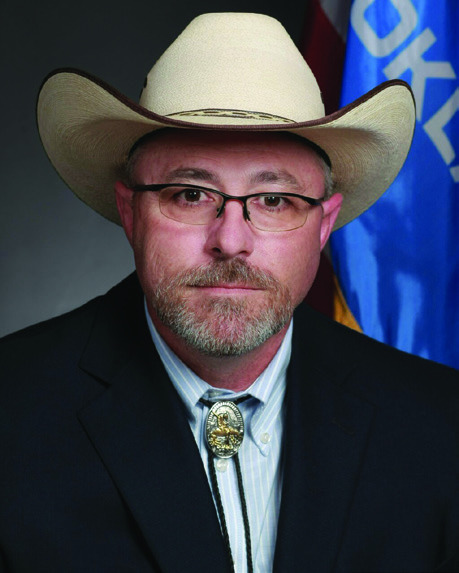
Rep. Trey Caldwell Sen. Jessica Garvin Two southwest Oklahoma legislators ranked in the top five for bills sponsored. The state Senate is made up of 48 members and the state House of Representatives is the larger chamber with 101 members. Rep. Trey Caldwell (R-Lawton) authored or co-sponsored 164 bills and Sen. Jessica Garvin (R-Duncan) authored or co-sponsored 245 proposed measures.
Part of the legislation sponsored by Caldwell included the appropriations bills for the general budget, but other significant legislation with his name attached included House Bill 4901, which pertains to fire districts and provides for agreements for fire protection services by municipalities and procedures for disagreements over service areas. All disputes will be arbitrated by the Fire Marshal’s Commission and the measure goes into effect July 1.
Garvin recently wrote in her weekly column that about 20 bills she has authored or co-sponsored have been signed into law by the governor. One of the most recent includes HB 1449, which is the Women’s Bill of Rights she worked on with Rep. Toni Hasenbeck (R-Elgin) over the past two years. The law updates state statutes to define the word “sex” to mean a person’s biological sex at birth and will become effective Nov. 1.
Most viewed bills Another interesting area of statistics from the Legislature includes a list of the most viewed bills online this session. At the top of the list is HB 3084, which pertains to schools and recommends prohibiting certain students from participating in school curriculum or activities. It was authored by Rep. Justin Humphrey (R-Lane) and did not make it out of the Appropriations and Budget Education Subcommittee last February.
In part, the bill text states that students who purport to be an imaginary animal or animal species, or who engage in anthropomorphic behavior commonly referred to as “furries” at school shall not be allowed to participate in school curriculum or activities. A parent or guardian of a student in violation of this section shall pick the student up from the school, or animal control services shall be contacted to remove the student.
Other topics on the most viewed list include state employee compensation, obscenity and child pornography, immigration, abortion and the Teacher’s Retirement System.
Bills that died Most bills introduced during session do not make it to the governor’s desk to be signed into law. A little more than 80% of measures introduced died this session, including some of the following by southwest Oklahoma legislators.
Artificial Intelligence The Oklahoma Artificial Intelligence Bill of Rights was authored by Rep. Jeff Boatman, (R-Tulsa) and co-sponsored by Rep. Daniel Pae (R-Lawton). Although passing the House 89-0 on a third reading, the measure never made it out of the Senate Judiciary Committee. In today’s technological age, the bill, HB 3453, sought to provide guidelines for recognizing interaction with a “real” person or artificial intelligence.
Another measure related to AI was authored by Pae, HB 3577, and also did not advance through the session. The bill would have established the Artificial Intelligence Utilization Review Act and would have required healthcare insurance companies to disclose any use of artificial intelligence- based algorithms in their utilization review process to healthcare providers, covered persons and the general public. It passed the House Government Modernization and Technology Committee 10-0 but did not proceed from there.
Three other AI-related bills also did not advance. They were HB 3825, HB 2828 and HB 3073. Hemp Sen. Chris Kidd (R-Waurika) introduced two hemp-related bills this session, with one not making it out of the House Rules Committee and one making it to the governor’s desk.
The Oklahoma Industrial Hemp Program was addressed in Senate Bill 1934 and addressed modifying definitions and modifying the amount of allowable delta-9 tetrahydrocannabinol concentration. It would also allow animal consumption of industrial hemp within certain criteria. The measure passed the third reading in the House Rules Committee by a vote of 38-3, with seven representatives abstaining from voting, but it did not advance from there.
Another hemp-related bill, SB 3011, did survive the process and was signed into law by the governor on May 3. In part, the bill modifies current state statutes addressing the growth, cultivation, handling or processing of industrial hemp. Proposed Oklahoma-Israel Exchange Commission Two southwest Oklahoma legislators, Reps. Dick Lowe (R-Amber) and Caldwell co-sponsored SB 729, authored by Rep. Mark McBride (R-Moore), which pertains to reestablishing the Oklahoma-Israel Exchange Commission.
The purpose of the commission, according to a legislative press release, would be to promote trade, joint action on policy issues, exchanges, economic support and other opportunities of mutual benefit. As of press time, the bill was sent to Stitt’s desk but is still pending action. Per law, the governor has 15 days from sine die adjournment to approve or veto bills.
The measure establishes that the commission would be located in Jerusalem and made up of nine members who would not all have to be in Israel. Commission members will be required to be a representative of either an Oklahoma public institution of higher learning, the Israeli-American community in the state, an Oklahoma industry engaged in or seeking to engage in trade with Israel or a trade association engaged in or seeking to engage in trade with Israel.
“Israel is one of the United States' best allies, and Oklahoma has had a longstanding relationship with the Israeli people,” McBride said in the press release. “This bill would help us better facilitate economic exchange with this important trade partner, including in the technology sector, which would greatly benefit our state.”