


OKLAHOMA CITY – Alternative sources for powering municipal vehicle fleets are being tested in Oklahoma.
The City of Lawton, for example, has no electric vehicles but does own several trash collection trucks that are powered with compressed natural gas, City Manager Michael Cleghorn reported.
The city also has “a few” hybrids that were purchased before Cleghorn arrived in 2019, but “it’s less than a handful,” he added. Those vehicles are used by code enforcement staff “and for other City Hall office-related functions,” Cleghorn said.
In Nichols Hills, city officials have taken an initial step toward electrification of some of their municipal fleet.
Nichols Hills received a $266,121 grant from the Association of Central Oklahoma Governments that will be used to buy four fast-charging electric vehicle charging stations, a Tesla sedan and a CNG sanitation truck.
The grant will pay for the charging stations and much of the cost of the electric car and the new trash compactor, which has a price tag of $299,000, City Manager Shane Pate said.
“We have three sanitation trucks: two in operation and a backup,” Pate said. “We will surplus one of our older sanitation trucks and sell it at auction after we receive the new CNG truck; those proceeds will help offset the costs.”
Two of the charging stations will be constructed in the police and fire department parking lots at the City Hall complex, and the other two will be installed at the town’s Public Works facility, Mayor Peter Hoffman said.
Although Nichols Hills does not have any total-electric vehicles, two police cruisers are hybrids and the city plans to buy two electric vehicles for the Police Department, officials said.
The Tesla sedan has been ordered but is not expected to be delivered until late this year. The EV will be issued to the police chief “but we will put the vehicle on some patrols as a test run to see if electric vehicles are a good fit” for the Nichols Hills Police Department, Pate said.
“Due to the size of our city, just two and a half square miles, our police department is perfectly suited for this experiment,” Hoffman said.
“We’ll keep our gasoline-powered vehicles, but we’ll use this new technology in a couple of our police vehicles. It’s important to try some of these things and see whether they work. We have to be visionary, but we also have to be pragmatic and practical.”
Growth in the electric vehicle industry “is going to continue to grow,” Hoffman said. And Russia’s invasion of Ukraine, and the accompanying spike in prices at the gas pump, are “probably going to accelerate that transition.”
Oklahoma City’s General Services Department has an electric-powered SUV, two EV cars and two hybrid automobiles. “We plan to upgrade our motor pool vehicles with newer hybrid or EV models in the near future,” OKC Public Information and Marketing Director Kristy Yager said. “We also will continue to review available EV and hybrid options for our general fleet that are operationally and economically feasible.”
The city has two EV charging ports for public use at the Santa Fe train station, and ports at three other locations for city use only, she reported. According to the Association of Central Oklahoma Governments, the OKC metro area has 37 fast-charging stations and 36 Level 2 charging stations in operation or in the planning stage.
EMBARK, Oklahoma City’s public transit system, has seven electric streetcars, one electric bus and another on order, an electric hybrid, 52 electric-assisted bikes (launching this spring), and two charging stations for buses, Yager said.
Trash collection trucks operated by OKC’s Public Utilities Department are powered by compressed natural gas, she said.
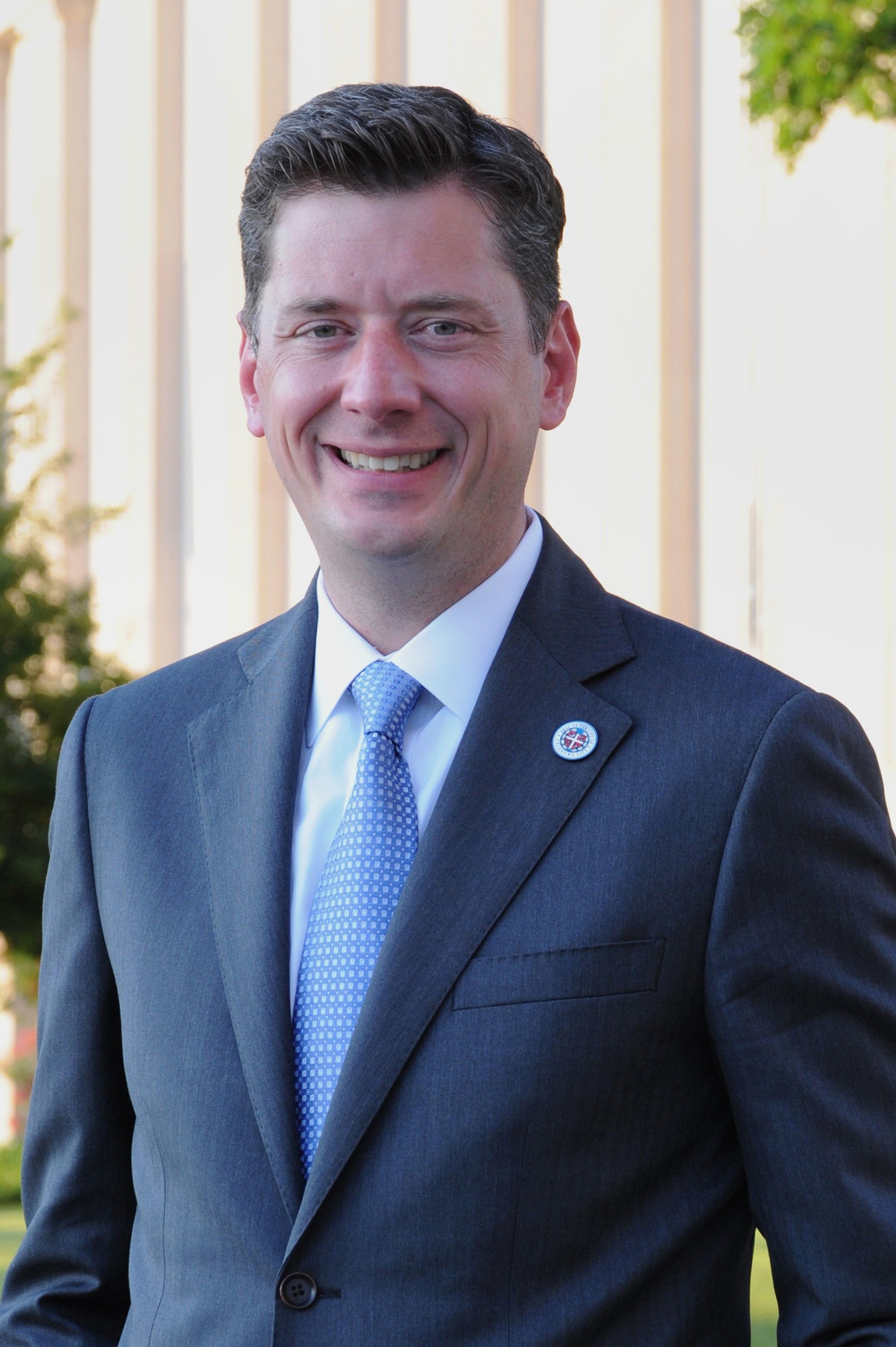
In a related matter, Oklahoma City Mayor David Holt co-chairs the U.S. Conference of Mayors’ new task force on electric vehicles.
“My community is not immune to the growth in electric vehicle use,” Holt said. “It’s important that we’re all thinking about what the future may hold regarding this issue.”
Formation of the task force “reflects the rising importance of EVs in the mayors’ plans for modernizing transportation systems, said USCM President Nan Whaley, mayor of Dayton, Ohio. The task force will focus on ways to accelerate the transition to vehicle electrification and build out infrastructure needed to support EVs, Whaley said.