


Oil isn’t the only industry pumping millions of dollars into Oklahoma’s economy. A recent press release from the Oklahoma Film + Music Office estimates that $65.7 million was reeled into the state in 2025 and contributed to the creation of 5,336 jobs.
In addition, the Oklahoma Department of Commerce announced OF+MO added six towns to the Oklahoma Film Friendly Community Program last year, bringing the total to 43 communities. Southwest Oklahoma communities of Lawton, Duncan and Chickasha are included in that count.
“Our goal is for every community in Oklahoma to be certified film-friendly/’ said Jeanette Stanton, director of OF+MO. “Being film-friendly is the best way to show potential film and television clients that your city is primed and ready with critical support and processes in place to host productions in Oklahoma.
“More film and TV projects are choosing Oklahoma than ever before, and this is one of the best ways communities can take advantage of and participate in Oklahoma’s booming film industry while also showcasing the unique locations and assets which make their communities so special.”
Industry not new to SW Oklahoma
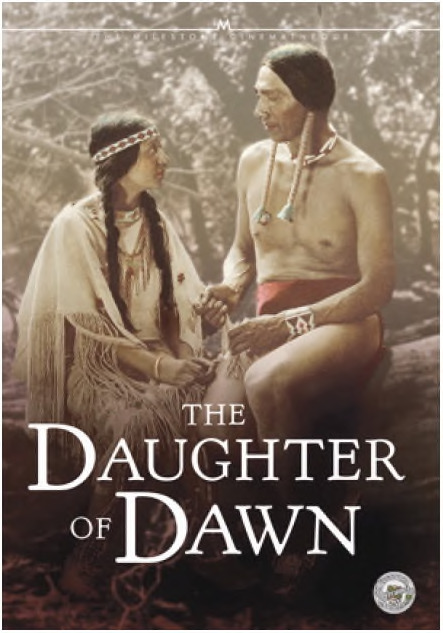
Making movies in southwest Oklahoma isn’t a new venture. In 1920, “The Daughter of Dawn,” a silent movie, was filmed in the Wichita Mountains. According to the Oklahoma Historical Society, it only screened a handful of times before disappearing “without a trace” for almost 90 years.
Once found, the film was restored with funding help from the Lawton Community Foundation, McMahon Foundation, Oklahoma City University, the Oklahoma Historical Society and the National Film Preservation Foundation.
The movie is an 80-minute, six-reel silent film produced in May, June and July of 1920. It includes a significant tipi given by Cheyenne Chief Nikkose-vast to the Kiowa Chief Dohausen. Information at okhistory. org noted that in 1916 the tipi from the movie was renewed with images painted by Haungooah (Silverhorn) and Stephen Mopope, one of the Kiowa Five, and then given to OHS in 1928.
White Parker, a son of Comanche leader Quanah Parker, played the lead role, with a supporting cast of about 300 Kiowas and Comanches. The plot is a four-way love story that includes scenes from a village, dances, bison hunts and battles. At the time of filming, the Native Americans had been on the Kiowa, Comanche and Apache reservation for less than 50 years and, according to the historical society, brought their own tipis, horses, clothing and material culture to be used in the movie.
Actually, “The Daughter of Dawn” wasn’t the first silent movie filmed in southwest Oklahoma. In 1908, famed Oklahoma Deputy U.S. Marshal Bill Tilghman filmed “The Bank Robbery” in Cache. The short, silent motion picture was considered unique due to the use of actual lawmen and robbers playing the characters.
The cast, according to an online encyclopedia, included A1J. Jennings, an attorney in Oklahoma Territory who at one time robbed trains; Frank Canton, an American Old West fugitive; Quanah Parker, Comanche leader; Heck Thomas, frontier lawman and Lawton’s first police chief; and William “Bill” Tilghman. The movie is credited with being one of the first Western movies to have a plot and include a shootout.
Modern movies
According to OF+MO, Lawton has been featured in several films, including “Around the World in 80 Days” and “The Adventures of A.R.I.: My Robot Friend.” A few years ago, Chickasha became the fictional town of Crystal Springs, and a section of a neighborhood was constructed to resemble the aftermath of a tornado in the movie “Twisters.” The 2024 movie was a sequel to the original “Twister” movie filmed in Oklahoma in 1996.
An article at okfilmmusic.org said Duncan is looking forward to more opportunities for film and television production. The city previously hosted the Trail Dance Film Festival from 20062017. Former festival director Anthony Foreman noted that independent film credits for Duncan include the documentaries “The Jolly Jills Social Club” and “The Toy Shop” and a short film titled “Moving On.”
Top 10 Oklahoma movies In October 2025, ranker.com listed the 40-plus best movies filmed or partially filmed in Oklahoma, out of a total of about 90 films. Ranked at No. 1 is “The Outsiders,”1983, adapted from S.E. Hinton’s novel; No. 2, “Twister,” 1996; No. 3, “Killers of the Flower Moon,” 2023; No. 4, “Oklahoma!,” 1955; No. 5, “Silkwood,” 1983; No. 6, “True Grit,” 1969; No. 7, “August: Osage County,” 2013; No. 8, “Far and Away,” 1992; No. 9, “Twisters,” 2024; “Hang ‘Em High,” 1968.
Legislative support
Oklahoma was one of the first states to establish a local film incentive program in 2001. Information at OF+MO shows that an initial offering of $150,000 kick-started the effort but was overshadowed by millions of dollars in incentives offered
in states like New
Mexico and Louisiana. In 2005, the Oklahoma Legislature upped the ante to a $5 million dollar cap each fiscal year. To date, four films had used the Oklahoma rebate program. The new cap turned the incentive program into a revolving fund and allowed productions with much larger budgets to be considered.
Over the last 10 years, the Oklahoma Film Enhancement Rebate Program has incentivized film and television productions to contribute over $300 million to the state economy, while the state has paid out less than $40 million, according to the OFMO article.
In addition to pumping millions of dollars into the Oklahoma economy, the film incentive has created thousands of part-time and full-time jobs for Oklahoma residents.
“We’re incredibly proud to be able to bring continued opportunities for work, education and relief resources to our local industry members, and grateful to our city and community partners, small businesses, filmmakers and talent for their efforts and collaboration as we continue building the future of Oklahoma’s film, television and music industries,” said OF+MO former Director Tava Maloy Sofsky.
Debi DeSilver is an award-winning, third-generation Oklahoma journalist whose writing career now spans 50years. She can be reached at silvercitypublishing@gmail.com.