

Should it become law, a newly filed bill in the Oklahoma Legislature would have a significant effect on how public bodies conduct their meetings.
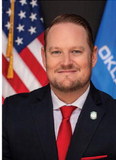
Senate Bill 1252 by state Sen. Brian Guthrie, R-Bixby, would amend the Oklahoma Open Meeting Act by requiring public bodies to provide “a reasonable opportunity” for public comment on every agenda item before any official action could be taken on that item.
The proposal applies to public bodies subject to the Open Meeting Act. Those include city and town councils and their committees, boards of county commissioners, state agencies such as the Oklahoma Corporation Commission, and other agencies that routinely handle matters related to energy development, utility regulation, infrastructure, and environmental oversight.
SB 1252 decrees, “A public body shall provide a reasonable opportunity for public comment on each agenda item prior to taking any official action on the item. A public body may adopt written rules governing the time, manner, and order of public comment. Such rules shall allow an individual an opportunity to speak on an item appearing on the agenda. A public body may limit the duration of individual comments, limit total comment time for an agenda item, or require commenters to sign up prior to the item being heard, provided that such limits are applied uniformly and are reasonably related to the efficient conduct of the meeting. Nothing in this subsection shall be construed to require a public body to permit comment on matters not appearing on the agenda.”
In announcing his proposal, Guthrie said the bill is intended to address situations where decisions are effectively made before the public has an opportunity to weigh in.
“Too often, public matters are discussed and effectively decided without public input,” he said. “This legislation strikes a balance between transparency and efficiency, ensuring the public has the opportunity, ahead of any action, to express their views on an agenda item and share how potential action on that item may impact their communities, home, or livelihoods.”
SB 1252 will be eligible for consideration during the 2026 legislative session, which begins at noon Feb. 2. The bill can officially be assigned to a legislative committee the next day.
Supporters say the legislation’s provisions are intended to prevent meetings from becoming unmanageable while still guaranteeing meaningful public participation.
However, SB 1252 could prove to be a prime example of “the law of unintended consequences,” which posits that actions of people, and especially of governments, always have effects that are unanticipated or unintended.
If enacted, SB 1252 could easily become a clock-eater. For example: -The agenda for the Lawton City Council meeting Dec. 9 contained 15 items in its consent agenda - subjects that typically are voted on as a single unit rather than individually - along with 15 business issues and two agency reports, followed by an executive session during which five legal matters were discussed behind closed doors.
If SB 1252 had been law, the Lawton City Council would have had to provide “a reasonable opportunity for public comment” on all 37 of those issues.
Under the council’s current rules, citizen comments are limited to public hearings on property condemnation cases or zoning changes. And the “audience participation” segment has been moved from near the start of each regular council meeting to the very end.
-Elgin City Council’s Nov. 18 meeting agenda included a consent agenda with nine items and 17 other separate topics; the agenda provided for public comment on only one item, an annexation petition. However, if SB 1252 had been state law, all 26 agenda issues would have been subject to its mandate.
-The agenda for the Dec. 17 Corporation Commission meeting included six cases of rule changes involving regulation of cotton gins, motor carriers, telecommunication companies, gas and hazardous liquid pipeline safety, oil and gas conservation division topics, and agency rules of practice.
It also included a daily signing agenda that contained proposed orders on 38 oil and gas exploration and production cases - which often are voted on en masse - plus four Public Utility Division cases that featured orders on an electric provider’s application and three telecom cases.
-Oklahoma City’s City Council agenda Dec. 16 included 74 topics, along with public hearings on seven dilapidated structures, nine unsecured structures, and nine abandoned buildings, plus four resolutions, and an executive session to discuss seven topics.
Guthrie