

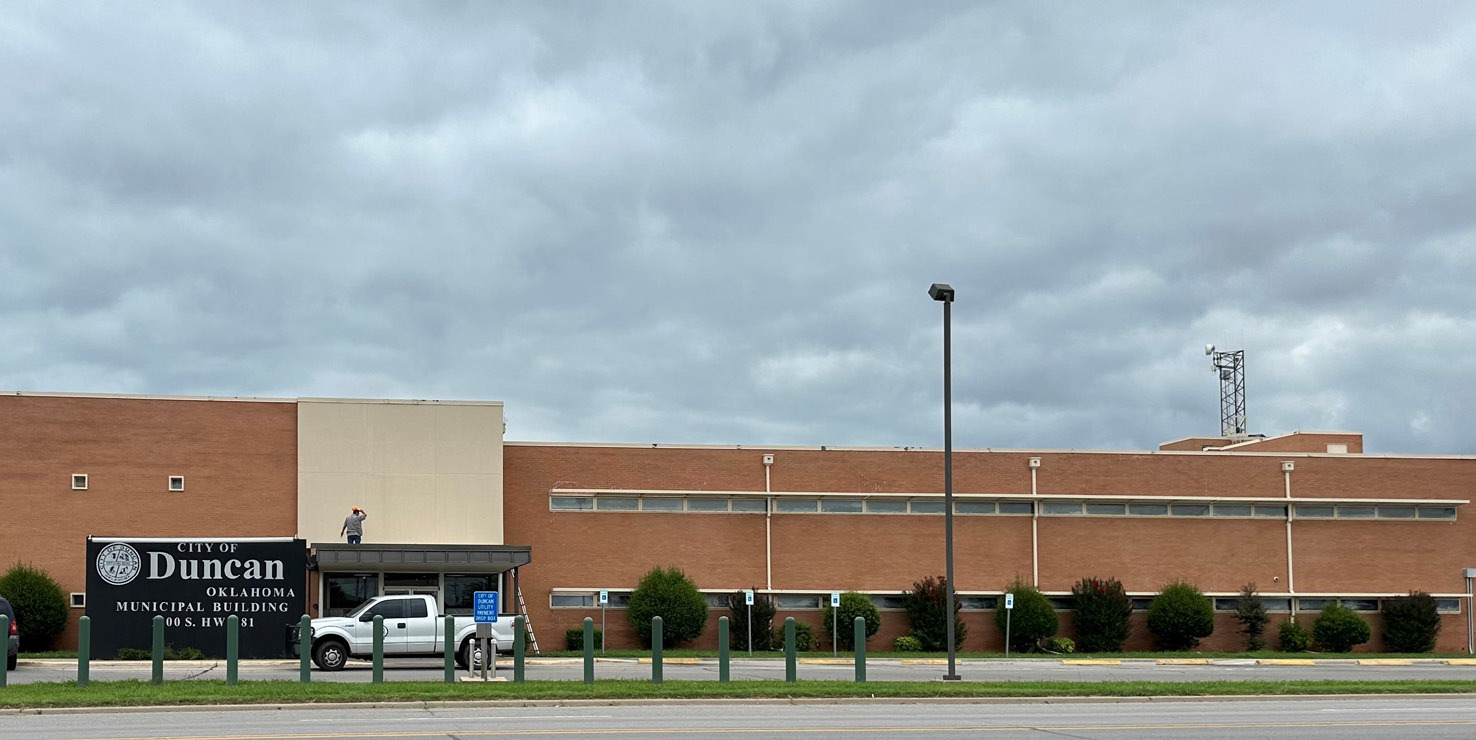
DUNCAN – In less than a week, Duncan voters will decide whether to renew the city’s quarter- cent sales tax for economic development and infrastructure projects for another five years.
But there’s a major change this year: If voters approve the measure, the Duncan Area Economic Development Foundation will no longer automatically receive part of the proceeds from the tax. Instead, the money will go to another entity, the Duncan Area Economic Development Trust, for economic development projects.
The upcoming vote highlights a rift between the city and DAEDF, which currently receives half of the revenue from the tax for economic development projects. The rest goes to the city, which uses its share of the money for street repairs and other public improvements.
The sales tax is currently set at one-half of 1%. If voters decide to keep the tax in place, the amount would remain the same and the city would still receive part of the proceeds for infrastructure projects.
None of the proceeds from the tax would be legally obligated to DAEDF if the measure passes, city officials said in a June 4 news release. However, they said the foundation could still request funds from the Duncan Economic Development Trust Authority, which is made up of the five Duncan City Council members.
City officials said they were rethinking their approach to economic development to better serve the citizens and boost transparency around how those dollars are spent.
“The change is significant in that it will provide greater oversight into how citizen tax dollars are spent,” officials said. “From 1994 through 2022, DAEDF received $45.57 million in sales tax dollars from the city of Duncan with limited accountability to taxpayers.”
Mayor Robert Armstrong said city leaders are committed to conducting economic development in a way that’s transparent, efficient and beneficial to everyone.
“It is clear that DAEDF doesn't share that commitment,” he said in the news release.
But Lyle Roggow, president and CEO of the foundation, said the organization takes pains to ensure it is transparent and accountable.
“All funding, including sales tax dollars, undergoes a rigorous annual audit, consistently receiving clean reports,” he said in a June 6 statement. “A system of checks and balances was established alongside the sales tax to ensure the responsible use of these funds for economic development projects.”
Roggow said the city’s decision to take DAEDF off the ballot was an attempt to control the city’s economic-development funds.
“Although the removal of DAEDF from the upcoming sales tax ballot is a regrettable downturn in our relationship with the city, the economic development work we are dedicated to doing will continue because DAEDF is a private, self-sustaining entity and can weather this unexpected change by modifying the scope, scale, and timelines of our upcoming projects,” he said.
A nonprofit organization, DAEDF receives funding from a variety of sources. Those include income from leasing real estate, grants, gifts, membership dues and a portion of the city’s sales tax revenue. Legal battle The dispute over the sales tax is taking place amid a legal fight between the city and DAEDF over the community’s economic-development dollars.
That battle began in February 2023, when the Duncan Economic Development Trust Authority questioned whether the foundation’s contract with the city was valid under state law, the foundation said in a lawsuit against the city and the trust authority. The foundation sued the city and the authority in May 2023, seeking a declaratory judgment on the contract’s validity.
Associate District Judge Dennis Gay issued a partial summary judgment in November 2023, saying the contract was valid.
“Any appropriation and expenditures of public funds by the City or Trust to the Foundation for services rendered under the current contract caused those funds to cease to be public funds,” Gay wrote. “Any real estate purchased by the foundation using funds paid to the Foundation by the City or Trust pursuant to the terms of the current contract and held in the name of the Foundation is owned by the Foundation.”
The judge also said neither the city nor the trust have any property interest in real estate that the foundation purchased with money it received from either of those entities.
The judge said the controversy concerning all other requests for declaratory judgment by either side continued, and the court did not have enough evidence to grant further relief.
The city filed a separate lawsuit against the foundation and another entity, the Duncan Industrial Authority, earlier this year. That lawsuit, which centers on the Industrial Authority’s land donations to the foundation in 2018 and 2021, is still in its early stages.
The current dispute stems from the city’s attempt to seize DAEDF’s assets by challenging the validity of the foundation’s contract with the city, said Roggow.
“However, this challenge holds little legal merit and ultimately hinders economic development in our community,” he said.
Models for economic development In addition to questioning DAEDF’s commitment to transparency and efficiency, Mayor Armstrong said the city and the foundation have different visions for economic development.
Armstrong said the foundation’s model for economic development focuses on manufacturing and recruiting out-of-town businesses to Duncan, but the Duncan City Council’s vision is bigger than that.
“Other communities have used economic development dollars to fund quality of life initiatives to move their city forward using those funds to support retail, restaurants and small local businesses,” he said in the June 4 news release. “We want to support those initiatives, and it doesn’t make sense for the citizens to be locked into DAEDF’s my way or the highway model.”
But Roggow said he disagreed with Armstrong’s characterization of DAEDF’s approach to economic development.
“I don’t really see that it’s a ‘my way or the highway’ approach here,” he said in a June 7 phone interview. “You don’t always get to pick the businesses that are looking at your community, and that’s just the nature of economic development as a whole.”
City officials said the decision to remove DAEDF from the ballot was not related to the legal dispute between the city and DAEDF.