

OKLAHOMA CITY – When it comes to generating energy in the state, solar power is not at the top of the list. Oklahoma, after all, is a major producer of natural gas and crude oil.
The U.S. Energy Information Administration reported last month that the state produces almost three times more energy than it consumes, with a considerable amount sent to other states over a regional grid. And then, of course, there’s the wind.
Statistics from the EIA report show that natural gas is still at the top of the list. Some of the largest natural gas fields in the country are in Oklahoma, which ranks 28th in population. When it comes to energy use per capita, however, the state ranks 11th in the nation. The industrial sector accounts for about two-fifths of the state’s energy consumption and the transportation sector makes up three-tenths of energy use. One-sixth of total energy consumption goes to the state’s residential sector.
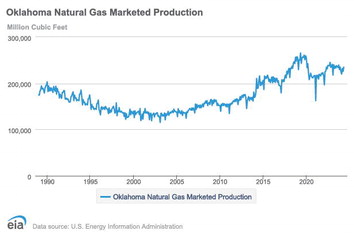
Marketed production of natural gas was more than 2.8 trillion cubic feet in 2023, which was less than an all-time high of 3 trillion cubic feet in 2019. The report also stated that the electric power sector accounts for 52% of the natural gas delivered to end-use consumers in the state. About half of Oklahoma homes heat with natural gas.
It’s no secret that the state’s economy was transformed by the discovery of oil. At statehood in 1907, Oklahoma was the largest crude oil producer in the nation. Statistics from last month’s EIA report show that almost 1 in 15 Oklahoma homes use petroleum products - predominantly propane - to heat their homes. The state is among the top one-fourth of the state in per capita petroleum consumption.
In 2023, natural gas combined with wind energy made up about ninetenths of Oklahoma’s total in-state electricity net generation. While natural gas still accounted for the lion’s share at about 50%, wind energy came in close at about 42%. The state ranks third in the U.S., behind Texas and Iowa, in electricity production from the wind. The same report stated that, in the same year (2023), Oklahoma accounted for about 9% of the nation’s wind-powered electricity net generation.
In comparison, in 2001, coal fueled 63% of in-state generation. In 2023, this dipped to 6%, according to the EIA. Eastern Oklahoma has historically been a coal-mining region. Ranked behind natural gas, petroleum and wind energy production, hydroelectric power is on the list. No nuclear power plants are located in the state.
Solar power potential does exist and, as far as potential is considered, Oklahoma is ranked sixth in the nation. In June, the North Fork Solar Farm located in southwest Oklahoma’s Kiowa County, was dedicated on 1,012 acres. The 120-megawatt solar farm is now the largest in the Southwest Power Pool (SPP) 14-state area, according to an Oklahoma Municipal Power Authority press release. It went online about three weeks before the dedication ceremony.
The SPP is a regional transmission organization and is a nonprofit corporation mandated by the Federal Energy Regulatory Commission.