

Emphasizing long-term recovery over punishment
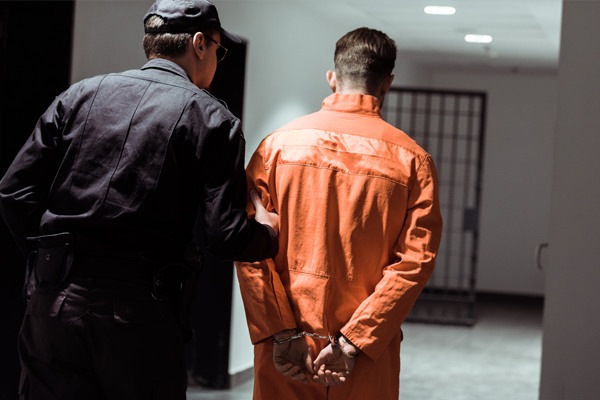
Despite being the highest in the nation, Oklahoma’s incarceration rate could be even higher were it not for the alternative routes available through specialty courts. In 2018, Oklahoma’s incarceration rate led the nation with 1,079 inmates for every 100,000 residents. The state saw the country’s largest sentence commutation in November with 462 nonviolent inmates released, but incarceration rates are still among the nation’s highest.
Speaking at a November interim study hearing before the House of Representatives’ Public Safety Committee, Ray Aldridge with the Fraternal Order of Police encouraged lawmakers to consider additional ideas and reforms that would lower the prison population.
“Doing the same thing over and over to address a problem and expecting different outcomes is not a good thing,” he said. “It’s insane.”
DRUG COURTS
Although Oklahomans voted in 2016 to reclassify possession and other low level nonviolent drug-related crimes as misdemeanors, the state has offered another route for defendants with controlled substance issues since 1995. An alternative to jail time, drug courts are specialized docket programs for nonviolent defendants with a history of drug or alcohol abuse. Nationally, there are more than 4,000 treatment courts.
The voluntary programs last anywhere from six months to two years. Along with regularly appearing in court, participants must undergo substance abuse counseling and be subjected to random drug screenings. Substance abuse relapses are addressed through additional sanctions or incentives rather than automatic jail time. According to data published by the Oklahoma Department of Mental Health and Substance Abuse Services, the rearrest rates for drug court participants is 7.9 percent. By comparison, people who were incarcerated for similar charges have a rearrest rate of 23.4 percent. State-funded drug court programs are available in all but four counties: Pawnee, Texas, Cimarron and Beaver. A few counties share programs, including Cotton County’s cases coming over to Lawton, Jefferson County cases going through Stephens County and Tillman County cases going to Harmon County.
MENTAL HEALTH COURTS
With an estimated 15 percent of incarcerated men and 30 percent of incarcerated women dealing with a mental illness, one growing alternative route for criminal offenders is mental health court. Although mental health courts have been around since the 1990s, the approaches and eligibility criteria vary among jurisdictions, making nationwide data comparison points few and far between. Generally, they are similar to drug courts in that they attempt to address the underlying problems that led to criminal offenses and incorporate counseling, individual treatment plans and mandatory court check-ins.
According to a database maintained by the Substance Abuse and Mental Health Services Administration’s GAINS Center, there are fewer than 500 mental health courts nationally. In Oklahoma, the number of mental health courts is even smaller. Statewide, there are 14 mental health courts listed in the SAMHSA database, with annual case loads ranging from five in Pototoc County to 172 in Oklahoma County.
One of the state’s larger mental health court programs, the Mental Health Association, has partnered with the City of Tulsa since 2014 to offer a monthly Special Services Docket that allows individuals affected by mental illness, substance use, and homelessness who have committed low-level municipal offenses to be paired with a case manager rather than serve jail time and struggle with fines and court costs.
In an email, docket coordinator Jacob Beaumont said the court is still compiling its 2019 participation statistics, but the demand has spiked since 2018 to the point its case load could easily expand from one day a month to two or three. Participants are referred to the docket by an attorney or a case manager within the municipal court system, then given the opportunity to opt-in. In order to complete the six-month program, a participant has to show that they are showing up to court each month and actively working with their case manager to access community resources, such as counseling or reliable transportation. Upon graduation, the jail time is waived, as are the court costs and fines.
“This sets it apart from what we traditionally envision when we think about the criminal justice system,” Beaumont wrote. “Instead of retribution, the Special Services Docket is a force for restoration and empowerment.”
VETERANS COURTS
First launched in 2008 in Buffalo, New York, veterans courts are modeled after drug courts and established to specifically address the challenges facing veterans with criminal charges. Nationally, veterans account for an estimated 8 percent of all inmates.
These courts are operated separately from the Department of Veterans Affairs but do receive support through an outreach program funded by the VA. Eligibility criteria varies by jurisdiction, with two-thirds nationally taking both misdemeanor and felony cases.Veterans who do participate in the voluntary program are screened and their specific needs are addressed in an individualized treatment plan. As is the case with drug courts and mental health courts, veterans court participants are also required to regularly appear before a judge.
Upon successful completion, a participant’s sentence can either be reduced or completely dropped. As of October, 461 veterans courts are operating nationwide, including one each in Tulsa and Oklahoma counties. According to data published in March 2018 by the U.S. Department of Health and Human Services, 7,931 veterans have participated in one of the programs nationally.