

Everybody who receives electricity at his/her residence or business experiences a power outage at one time or another. A new report from the U.S. Energy Information Administration compares outage durations among U.S. power providers in 2021.
As a general rule, Oklahoma electric companies did not log the lengthiest power disruptions last year.
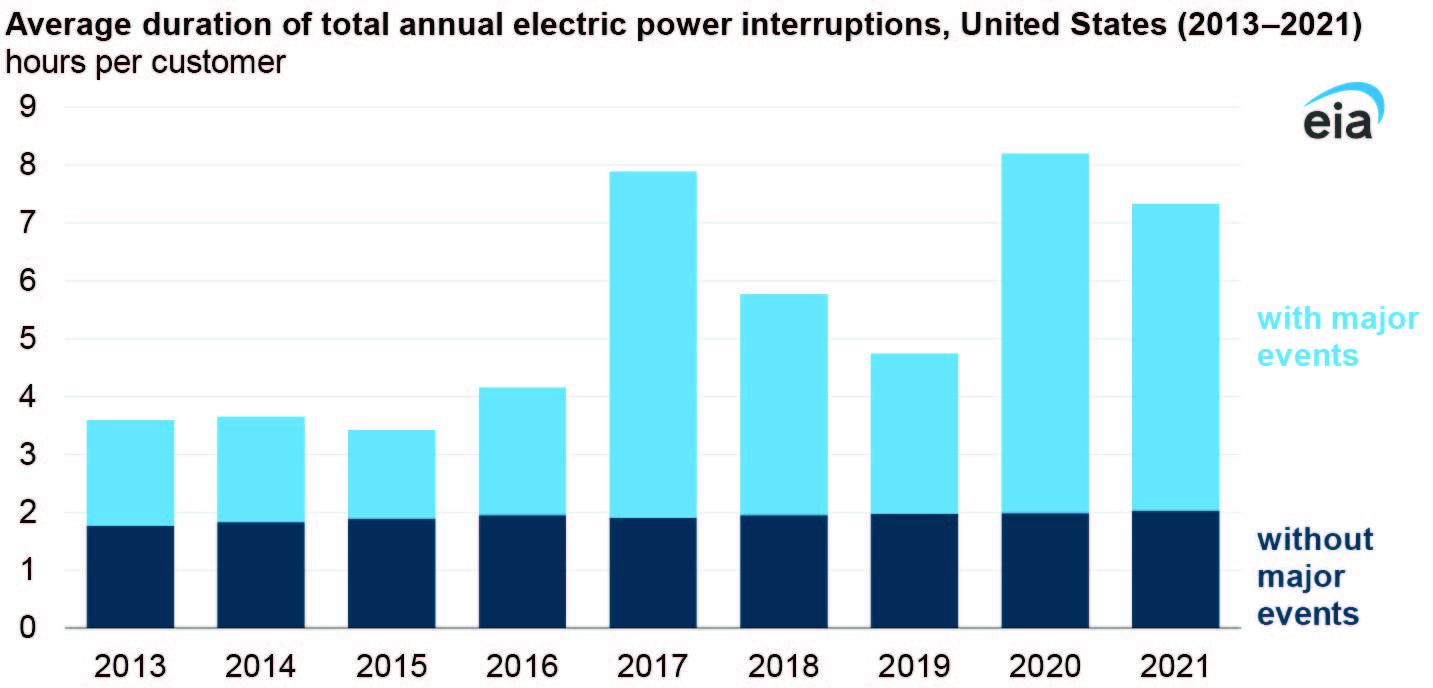
On average, U.S. electricity customers experienced just over seven hours of electric power interruptions in 2021, almost an hour less than in 2020, the EIA reported.
When major events – including snowstorms, hurricanes, and wildfires – are excluded, the average duration of interruptions remained consistently at around two hours per year from 2013 to 2021.
Various factors cause power interruptions, including weather (tornadoes, hurricanes, snow and ice), interference from vegetation (chiefly tree limbs) near power lines, wildlife (primarily squirrels and birds), and utility practices.
One metric employed to establish the reliability of U.S. electric utilities is the System Average Interruption Duration Index, which measures the total time, on average, that a customer experiences non-momentary power interruptions in a one-year period; a non-momentary power interruption is defined as one lasting more than five minutes. SAIDI is often paired with the System Average Interruption Frequency Index, which measures the frequency of interruptions.
Electricity customers in the District of Columbia, Delaware, Florida, North Dakota, and Nevada had the shortest total time of electricity interruptions in 2021, ranging from 52 minutes in the District of Columbia to 102 minutes in Nevada.
Power outages in Oklahoma in 2021 ranged from a total of 40.2 minutes for customers of the Stillwater Utilities Authority and 44 minutes for customers of Cimarron Electric Co-operative, to 647.5 minutes – almost 11 hours – for customers of Kiamichi Electric Co-operative, EIA ledgers reflect.
Results for Oklahoma electricity providers
The EIA listed measurements for 26 Oklahoma investor-owned utilities, co-ops and municipal power companies.
Public Service Co. of Oklahoma averaged 113 total minutes of electric disruptions in 2021, while Oklahoma Gas & Electric Co. customers experienced an average of 160.1 total minutes of power outages last year.
Others were Arkansas Valley Electric Co-op Corp., 151.6 total minutes of power outages; Alfalfa Electric Co-op, 72.2 minutes; Canadian Valley Electric Co-op, 189.4 minutes (a little over 3 hours); Central Rural Electric Co-operative, 109.6 minutes; Choctaw Electric Co-op, 199.4 minutes; City of Claremore, 165.3 minutes; Cookson Hills Electric Co-op, 106.6 minutes; Cotton Electric Co-op, 167.5 minutes;
East Central Oklahoma Electric Co-op, 197.5 total minutes (3 hours, 17.5 minutes); Empire District Electric Co., 63.5 minutes; Indian Electric Co-op, 72.3 minutes; Lake Region Electric Co-op, 115.5 minutes; Oklahoma Electric Co-operative, 70.6 minutes; Ozarks Electric Co-op Corp., 53.1 minutes; People’s Electric Co-op, 165.3 minutes; City of Ponca City, 88.9 minutes (just under 1.5 hours); Rural Electric Co-operative, 232.2 minutes (almost 4 hours); Southeastern Electric Co-op, 211.6 minutes; Tri-County Electric Co-operative, 355.9 minutes (almost 6 hours), Verdigris Valley Electric Co-op, 200.8 minutes, and CK Energy Electric Co-op, 305.2 minutes (a little over 5 hours).
Customers in Louisiana, Oregon, Texas, Mississippi, and West Virginia experienced the most time with interrupted power in 2021, ranging from almost 19 hours in West Virginia to more than 80 hours in Louisiana.
Louisiana also had the highest number of power interruptions, followed by Texas.
Extreme weather caused lengthy power disruptions
Long power interruptions last year were largely because of extreme weather events. The U.S. experienced 21 named storms in 2021, the third-most active Atlantic weather season on record. In addition to four major hurricanes in 2021, a winter storm affected the central United States with Arctic air as far south as Texas.
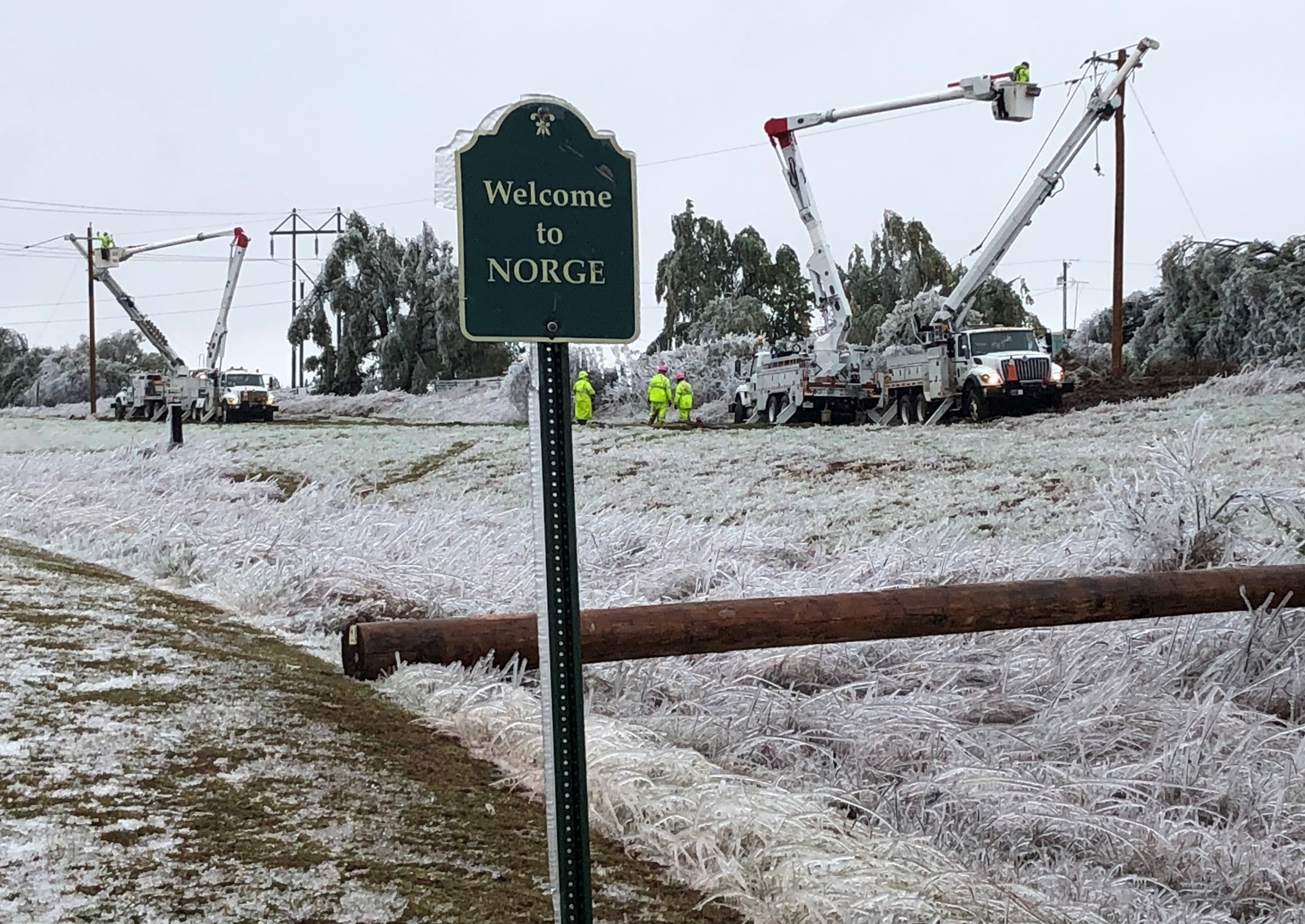
In February 2021, Winter Storm Uri hit Texas, where about four and a half million customers lost power, along with almost half a million customers in Louisiana and in Oklahoma, which had massive tree damage from ice and snow.
The storm moved into the mid-Atlantic region, knocking out power in West Virginia and Kentucky. Both West Virginia and Kentucky are heavily forested, so power interruptions resulting from falling tree branches are common, especially as a result of winter ice and snowstorms that weigh down tree limbs and power lines.
Oregon had both extreme heat and cold weather events in 2021, including a historic ice storm in February and the Bootleg wildfire in August.
In late August 2021, Hurricane Ida left 1.2 million customers in Louisiana without power, some for over two weeks, and it left almost 150,000 customers in Mississippi without power.
Hurricane Nicholas followed about two weeks later, leaving half a million customers without power in Texas as well as parts of Mississippi and Louisiana.