

OKLAHOMA CITY – An Alfalfa County man pleaded guilty this month to having negligently discharged oil into a water body of the United States during an “alcohol-fueled vandalism spree.” Former Fairview resident Dakota Brennan Gray, 30, of Carmen, was charged in Western District Federal Court here with violating the Clean Water Act.
Gray and an accomplice, Joshua Christopher England, pleaded guilty to discharging crude oil into Cottonwood Creek in Major County.
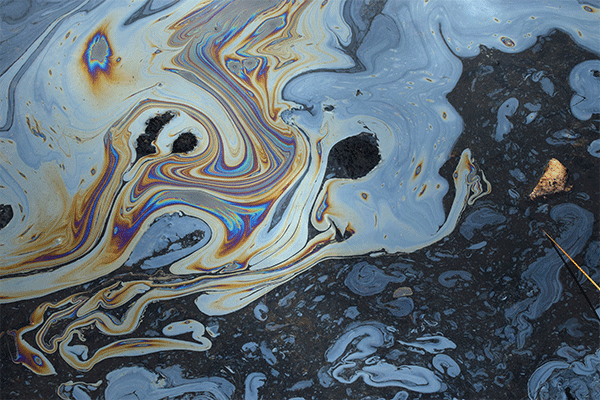
Gray admitted that in May 2017 he opened the valves on a tank battery that contained approximately 129 barrels (5,400 gallons) of crude oil. The oil poured onto the ground and most of it eventually spilled into Cottonwood Creek, which is a tributary stream that flows approximately 22 miles from its headwaters in Major County northeast to its confluence with the Cimarron River near Orienta. The Cimarron River flows to the Arkansas River, the Mississippi River, and ultimately into the Gulf of Mexico.
A response team from the Environmental Protection Agency (EPA), along with the tank battery’s owners, participated in the cleanup and recovery operation. Response actions included the placement of rigid booms, sorbent pads, and an underflow dam to recover and remove the crude oil from Cottonwood Creek and the accompanying shoreline. Due to the prompt response and cleanup efforts, inspectors did not observe any permanent contamination of the affected area during follow-up inspections.
Gray and England, along with a male juvenile suspect, were arrested after a three-week investigation by the Major County Sheriff’s Department, the Oklahoma State Bureau of Investigation, the Oklahoma Highway Patrol, and the U.S. Environmental Protection Agency’s Criminal Investigation Division.
Major County deputies said the three set numerous hay bales on fire at two locations, then went to a rural oil lease road near Fairview, where they took turns opening valves to four tank batteries and releasing crude oil and several barrels of saltwater.
Gray and England were charged in Major County District Court on June 6, 2017, each with four counts of theft of oil, two counts of arson, one charge of conspiracy, one count of contributing to the delinquency of a minor, and five misdemeanor charges of trespassing.
He received a 10-year prison sentence and $2,000 in fines plus court costs.
Gray also was charged in Major County with second-degree burglary and contributing to the delinquency of a minor. On those charges he was given a seven-year prison sentence to run concurrently with the 10-year sentence.
The trespassing charges were dismissed. So were other charges against Gray of possessing an implement of burglary, unlawful wearing of a mask, and obtaining cash or merchandise with a bogus check.
In a sentencing recommendation, a public defender noted that Gray’s “alcohol-fueled vandalism spree” occurred nearly four years ago, and that as punishment for his state crimes Gray was incarcerated in prison for two years and five months, from April 20, 2018, until Sept. 21, 2020. The federal charge was filed on Dec. 2, 2020.
U.S. Magistrate Judge Suzanne Mitchell granted leniency and placed Gray on probation for three years.
Meanwhile, Gray was notified by the Major County Court Clerk that he owed $23,884 in fines and court costs associated with his criminal cases.
His accomplice, England, pleaded guilty in September 2017 to the eight charges arising from the vandalism spree.
England was sentenced to 343 days in the custody of the state Corrections Department and was admitted to the Delayed Sentencing Program for Young Adults; his sentence was to be revisited a year later. However, he died at the age of 21 on May 29, 2018, from a ruptured appendix while incarcerated at the Joseph Harp Correctional Center at Lexington.
Disposition of the case against the minor(s) in those cases is unknown because those records are sealed by the court.
The Clean Water Act was enacted by Congress to restore and maintain the chemical, physical, and biological quality of this nation’s waters.
In addition, the Clean Water Act was enacted to prevent, reduce and eliminate water pollution in the United States and to conserve the waters of the U.S. for the protection and propagation of fish and aquatic life and wildlife, for recreational purposes, and for public drinking water, agricultural, and industrial purposes. Among other offenses, the Clean Water Act prohibits the negligent discharge of oil or a hazardous substance in harmful quantities into a water of the United States.
“Enforcement of the Clean Water Act protects public health and the environment,” said Acting U.S. Attorney Robert J. Troester. “I commend the dedicated efforts of the U.S. Environmental Protection Agency for their investigative efforts and rapid response to mitigate the impact of the pollution.”
“Our nation’s environmental laws are designed to protect our communities and our natural resources,” said Special Agent in Charge Christopher Brooks of EPA’s Southwest Area Office. “EPA will continue to hold individuals responsible for their environmental crimes and the resulting harm.”