

Mark Twain purportedly once said that “whiskey is for drinking, water is for fighting.”
Whether he did or didn’t is uncertain, but the maxim certainly applies to southeastern Oklahoma.
The region’s water has been the subject of lawsuits from Pushmataha County District Court to the United States Supreme Court. And it started a quarter of a century ago over the state’s failure to pay a bill due on Sardis Lake.
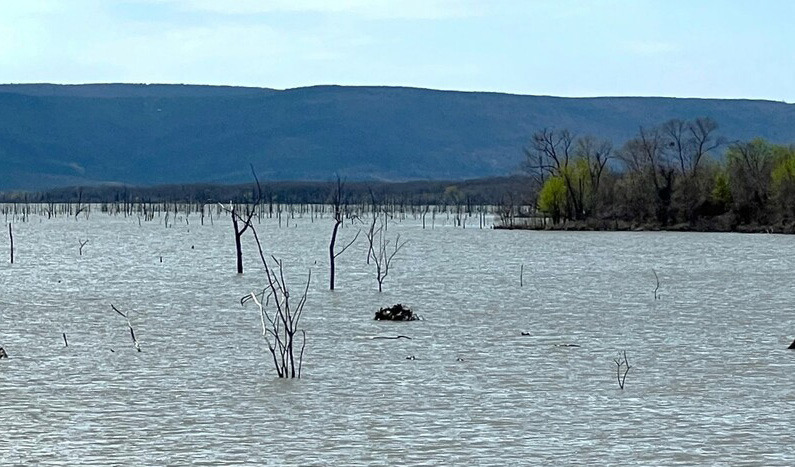
The U.S. Army Corps of Engineers constructed Sardis dam and lake in 1977-82 under a contract negotiated with the State of Oklahoma in 1974, for the purpose of selling water to municipalities and industrial customers in the Sooner State.
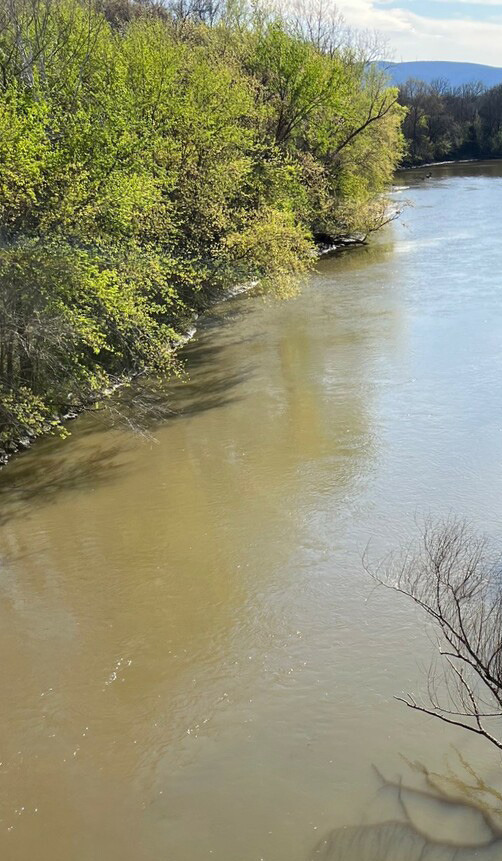
The lake lies in Pushmataha and Latimer counties, and was created by impounding Jackfork Creek, a tributary of the Kiamichi River.
The State of Oklahoma agreed to make 50 annual payments and to pay the costs of operating the Sardis dam and lake. However, the state Legislature discontinued making payments on Sardis Lake to the Corps of Engineers in 1997.
The federal government sued the State of Oklahoma in 1998 for failure to pay the debt. In 2009 the U.S. District Court for the Northern District of Oklahoma ordered the state to pay $21.8 million in pastdue obligations and more than $38 million, plus compound interest, on its future use obligations along with current and future-use operation and maintenance charges.
The issue was resolved during a special meeting of the Oklahoma Water Resources Board on June 11, 2010, records reflect. OKC agrees to pay debt for lake storage rights A “transfer agreement” required Oklahoma City to pay approximately $27.8 million to the Corps of Engineers for accrued storage obligations of the State of Oklahoma. In exchange, the Oklahoma Water Resources Board transferred its interest in Sardis Lake to the Oklahoma City Water Utilities Trust.
Oklahoma City also agreed to pay $15 million to reimburse the State of Oklahoma for all past payments made to the Corps of Engineers.
Minutes of the meeting showed that Oklahoma City also agreed to pay $79 million plus interest over a 50-year period for “future water obligation costs,” and to make annual payments to the Corps of Engineers for Sardis Lake operation and maintenance expenses that average $140,000 per year.
State, OKC, tribes settle lawsuit Two Native American tribes sued Oklahoma City and its Water Utilities Trust, the OWRB and then-Gov. Mary Fallin in 2011 over the Water Board’s action, alleging that water would be diverted from historically tribal lands.
An 88-page agreement governing disposition of water in Sardis Lake and in the 1,821 square-mile Kiamichi River basin was inked in August 2016 by representatives of the State of Oklahoma, the Choctaw and Chickasaw Nations, the City of Oklahoma City, and the U.S. Department of the Interior. (Ironically, an Oklahoma City newspaper headline from October 1996 – 20 years earlier – declared, “City Closer to Buying Sardis Lake Water”.)
At the time of the state/tribal pact, then-OKC City Manager Jim Couch mentioned Oklahoma City’s previous payment of $27.8 million and said the city would pay the other $15 million after its water storage rights were perfected.
On Dec. 16, 2016, President Obama signed the Water Infrastructure Improvements for the Nation Act, which formally ended the years-long feud between the State of Oklahoma and the Choctaw and Chickasaw Nations over control of water in southeastern Oklahoma and Sardis Lake.
Hearing examiner supports OKC water-use permit In 2017 a Water Resources Board hearing examiner submitted “findings of fact and conclusions of law” that recommended approval of Oklahoma City’s application for a water-use permit. (OKC first applied for a permit to draw water from the Kiamichi River basin a decade earlier, in 2007.)
Oklahoma City proposed to take 115,000 acre-feet of water from Sardis Lake and the Kiamichi River at a diversion point “in the general vicinity” of Moyers Crossing, which is on the river about 30 miles south of the lake and approximately eight miles northwest of Antlers.
In its amended permit application, Oklahoma City claimed its withdrawals from Sardis Lake would not start until 2035 and would amount to just 8,000 acre-feet initially. The pumping would increase incrementally over the next 30 years until reaching the maximum 115,000 acre-feet in 2065.
A “holding” reservoir would be built at or near Moyers, along with a waterline that would extend to a billion-dollar second pipeline Oklahoma City intends to build parallel to the 60-inch, 100-mile pipeline that transports water from Lake Atoka and McGee Creek reservoirs to Lake Stanley Draper in Oklahoma City.
OKC’s application was protested by more than 80 individuals and entities; the hearing examiner dismissed 62 of them as parties to the action but did allow them to offer their opinions and objections against the permit application.
Protestants dismissed from the case for lack of standing included the U.S. Dept. of Interior Fish & Wildlife Service, Oklahomans for Responsible Water Policy, the Poteau Valley Improvement Authority, and the boards of county commissioners of Atoka, Choctaw, Latimer, LeFlore, Marshall, McCurtain and Pushmataha counties.
OWRB approves permit; SE Okla. residents sue The state Water Resources Board accepted the recommendation of its hearing examiner and approved the water- use permit on Oct. 10, 2017.
A month later opponents of the action challenged the OWRB decision. A lawsuit was filed Nov. 8, 2017, in Pushmataha County District Court by seven individuals who own land or businesses along the Kiamichi River.
The plaintiffs included Debbie Leo doing business as Miller Lake Retreat, Moyers; and Kenneth Roberts of Claremore, a Tulsa University professor of chemistry and biochemistry who was born and reared along the Kiamichi River.
The petitioners asked the court to “overturn, set aside or reverse” the Water Resources Board’s decision to grant Oklahoma City a permit to take water from the Kiamichi River basin, or to send the case back to the Water Board for reconsideration.
Then-District Judge Michael DeBerry ruled on May 28, 2020, that “the order and decision of the OWRB was free from prejudicial error and the order and decision of the OWRB is found to be valid.” DeBerry’s opinion was affirmed by the Oklahoma Supreme Court on Oct. 3, 2023.
Federal lawsuit fails, too A separate lawsuit was filed in Muskogee’s Eastern District Federal Court on April 4, 2019, by the Kiamichi River Legacy Alliance and eight owners of property along the river, including Kenneth Roberts, brothers Johnny and Weldon Robbins, and Bill Redman.
They sued in an attempt to prevent Oklahoma City from diverting almost 37.5 billion gallons of water from the Kiamichi River basin in violation of the federal Endangered Species Act.
Defendants in the case included Bill Anoatubby, Governor of the Chickasaw Nation; Gary Batton, Chief of the Choctaw Nation of Oklahoma; OKC Mayor David Holt; Julie Cunningham, executive director of the OWRB; Gov. Kevin Stitt; the chairman of the board of trustees of the Oklahoma City Water Utilities Trust; and the Secretary of the U.S. Department of the Interior.
A federal judge ruled in February 2020 that tribal sovereignty trumps the Endangered Species Act.
The Choctaw and Chickasaw Nations are “sovereign political entities possessed of sovereign authority not derived from the United States, which they predate,” U.S. District Judge Ronald A. White ruled. Consequently, the tribes and their leaders are immune from the lawsuit filed against them and the state and federal officials.
Since the Choctaws and Chickasaws are federally recognized tribes, they are not subject to a lawsuit “unless the tribe’s sovereignty has been either abro-gated by Congress or waived by the tribe.” Furthermore, a waiver of tribal sovereign immunity “cannot be implied but must be unequivocally expressed.”
“Congress did not unequivocally express a waiver of tribal immunity here,” Judge White ruled. Therefore, Anoatubby and Batton “are immune from this suit and must be dismissed for lack of jurisdiction.” The tribes are “indispensable parties” to the federal lawsuit.
Since the tribes were excluded, the federal court dismissed the suit because “all parties who may be affected by the determination of the action are indispensable.”
Texans eyed water in southeast Okla.
The Oklahoma Legislature imposed a ban on out-of-state sales or exportation of water, and the U.S. Supreme Court unanimously upheld the ban on June 13, 2013, in a lawsuit brought by the Tarrant Regional Water District in north Texas, which wanted to buy 150 billion gallons of Oklahoma stream water annually.
The litigation centered on the conflict between Oklahoma statutes which, among other things, prevent state entities from selling water for out-of-state use, and the Red River Compact among Oklahoma, Texas, Arkansas and Louisiana, which allocates the water in the Red River Basin among those states and was ratified by the U.S. Congress in 1980.
Tarrant Regional Water District argued that the Oklahoma statutes violated the Commerce and Supremacy Clauses of the U.S. Constitution. However, both the trial court and the 10th Circuit Court of Appeals dismissed Tarrant Regional’s claims, and the Supreme Court declared that the Oklahoma statutes are not pre-empted by the Red River Compact.