

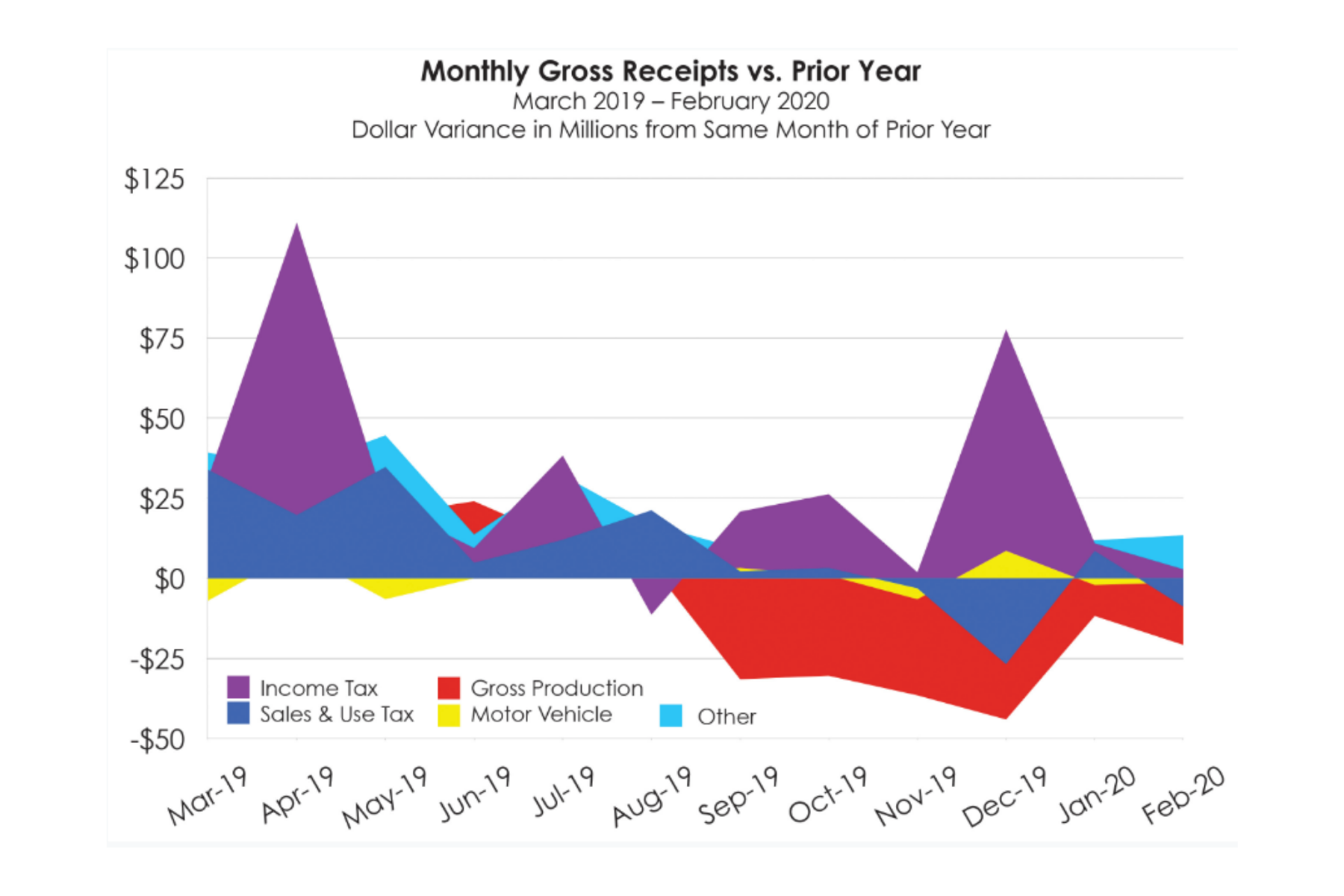

OKLAHOMA CITY – After recording modest growth for two months, total gross receipts to the Treasury returned to negative territory in February, pushed down by shrinking sales, gross production and motor vehicle tax collections, State Treasurer Randy McDaniel announced.
February's total monthly collections were $956.8 million, down by $14.7 million from February 2019. Collections from individual and corporate income taxes, and use taxes, were greater than those of the prior year but not enough to offset the downturn in the other sources, McDaniel said. Sales tax collections in February totaled $356.3 million, down by 3.4% from the same month last year, while gross production taxes on oil and natural gas totaled $84.9 million in February, off by almost 20%. February marks the sixth consecutive month of contraction in both revenue sources. Motor vehicle taxes produced $56 million in February, down by 2.2%, below the prior year for a second consecutive month.
“Through the end of last month, we have seen a downward trend spurred by low oil and gas prices,” McDaniel said. “In the coming months, we will be closely monitoring national and international developments relating to the coronavirus and the resulting economic impact.” Total monthly gross receipts were last reported as below the same month of the prior year in November, which ended a 32-month streak of growth. The growth rate of 12-month gross receipts also continues to decline. Twelve-month receipts through February are $13.71 billion, up by 4.2%. In February 2019, the 12-month growth rate was 12.3%.
BUSINESS CONDITIONS
The Oklahoma Business Conditions Index for February was listed above growth neutral for only the second month since October 2019. February’s rate of 51.5 is down from 52.2 in January. Numbers above 50 indicate economic growth is anticipated during the following three to six months.
ABOUT GROSS RECEIPTS
The monthly Gross Receipts to the Treasury report, developed by the state treasurer’s office, provides a timely and broad view of the state’s economy. It is released in conjunction with the General Revenue Fund report from the Office of Management and Enterprise Services, which provides information to state agencies for budgetary planning purposes. The General Revenue Fund, the state’s main operating account, receives less than half of the state’s gross receipts with the remainder paid in rebates and refunds, remitted to cities and counties, and apportioned to other state funds.