


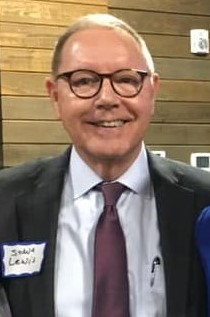
Steve Lewis
If the goal is confusion, it has been attained. Shortly after taking office, Governor Stitt announced that he is working with a wide range of Oklahomans to develop an Oklahoma plan for better health care.
Then last summer, a joint committee of the House and Senate, together with members of the governor’s administration, held a series of meetings to develop ways to improve health care in Oklahoma.
One would have to assume that Medicaid expansion would be a topic of the committee’s report since it would make health insurance coverage available to more than 200,000 currently uninsured Oklahomans.
It also would provide coverage for mental health and substance use disorder treatment to those in need.
However, despite months of effort by the governor and the committee, no report was forthcoming and no plan was offered. In the meantime, tired of nearly a decade of inaction by state government – during which health programs and provider rates were cut, waiting lists for mental health and substance abuse treatment grew, and the state’s corrections system became the primary residence for thousands suffering mental illness and addiction – the people took matters into their own hands.
A record 313,000 Oklahomans signed the SQ 802 petition to put Medicaid expansion on the ballot. After overcoming the usual legal obstructions by opponents, the courts have ruled and expansion is ready to be voted on.
But instead of setting the election date, with the first month of a four-month legislative session already gone, the governor filed a request with the federal government for full Medicaid expansion effective July 1 of this year.
At the same time, he announced that in April he will file a waiver request calling for work requirements, premium payments, block grants and private management of Medicaid by a managed care organization.
None of these are new ideas. They’ve been floating around for years and they are all controversial. Some are of questionable legality, which will certainly be tested, probably for years, in court. In addition, the governor’s proposal to tax hospitals to pay for the state’s match didn’t even get a hearing in a legislative committee.
Now legislative leaders are wrestling with a way to pay for Medicaid expansion scheduled to begin July 1. People keep throwing around the cost figure of $150 million. No one can be certain of the actual cost, but that number is almost certainly wrong.
Back in 2013, Governor Fallin’s Leavitt Report said Medicaid expansion would, over a 10-year period, add money to the state coffers.
This would happen by lowering the costs of medical and other services now fully funded by state dollars, better medical outcomes, and additional revenue from the creation of between 12,000 and 15,000 new jobs with a total economic impact between $14.2 and $17.9 billion.
Medicaid expansion has proved to be a net benefit for state budgets. Undoubtedly some funding will be needed to start the program, which surely will not be fully under way by July 1, but the amount needed is just another aspect of the overall confusion.
One wonders why so much effort is being made to try to blunt resources for health care and thwart what even the governor acknowledges is something the people want. State Sen. Ron Sharp probably explained it best in speaking about the hospital tax.
“In a Republican primary, I’d be placing my name on a Medicaid expansion, which the conservative faction of the Republican Party has been adamantly against for years,” Sharp said. “I’ve got two Republican opponents already, and no telling how many others will jump in if they start to smell blood.”
There’s an easy antidote to the gubernatorial and legislative anxieties: Let the people vote. Put Medicaid expansion in the state Constitution so politicians don’t have to worry about messing with it in the future.
Steve Lewis served as Speaker of the Oklahoma House of Representatives in 1989-90. He now practices law in Tulsa and represents clients at the State Capitol.