

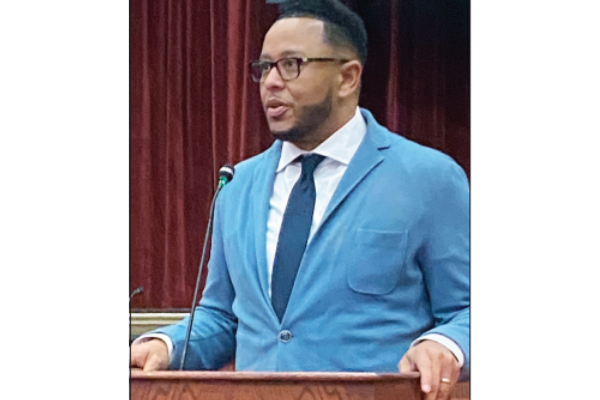
When Oklahoma lawmakers redraw the state’s congressional districts this fall, they must ensure that Fort Sill and Tinker Air Force Base remain in the 4th Congressional District, said veteran and native Oklahoman James Taylor.
“We have jobs. We have high-tech jobs. We have the capability to be able to sustain those within the current district with the support that we have,” said Taylor. “To change that is not going to benefit that district.”
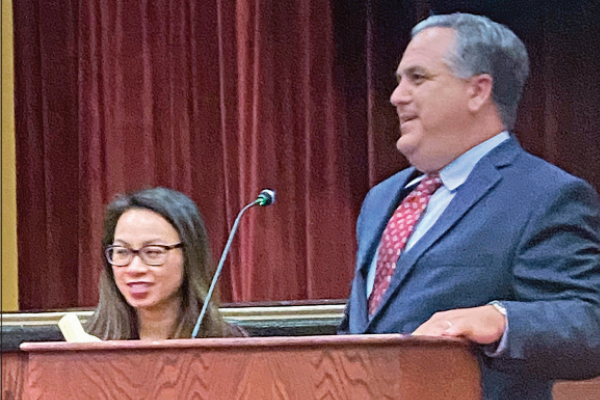
Taylor voiced his concerns during a July 29 meeting at Lawton City Hall to discuss the Legislature’s redistricting project. A handful of people attended the meeting, hosted by the redistricting coordinators from the Oklahoma House and Senate.
The Legislature must redraw Oklahoma’s legislative and congressional districts once a decade, based on population shifts in the state. Ideally, each district will have the same number of people to satisfy the constitutional standard of “one person, one vote.”
“That ‘one person, one vote’ is really the overarching theme,” said former House Speaker T.W. Shannon, a consultant on the House redistricting effort.
Oklahoma’s total population is key to determining the size of each district to meet constitutional requirements. Lawmakers start with the total population and divide it by the number of districts to arrive at the ideal size for each district.
Oklahoma has 48 Senate districts and 101 House districts, and the state will retain its five congressional seats, Shannon said.
“Because the state’s population has grown, each district type will represent more constituents than before,” he said. “And furthermore, because growth was not proportionate across the state, some districts will need to grow in size and population; some districts will actually need to shrink in order to maintain that ideal population size.”
Based on Oklahoma’s current population of about 3.95 million people, the ideal population for each state House district is about 39,202 constituents, Shannon said. The ideal population for state Senate districts is approximately 82,487 people per district.
Congressional district sizes will grow to about 791,871 people per district.
Lawmakers normally use the most recent Census data to guide them in drawing new districts. But the 2020 Census was delayed due to the COVID-19 pandemic, so the final numbers were not available when lawmakers began working on redrawing state House and Senate districts.
“The normal time frame is usually, they’re available by now – by April 1,” Shannon said. “But the state is actually not expected to receive the data until Aug. 16.”
Shannon said since lawmakers could not use Census data, they relied on population estimates from the 2015-2019 American Community Survey. Based on those numbers, lawmakers submitted a proposal for new legislative districts to Governor Kevin Stitt, who signed the measure into law in May.
After the final Census data arrives, lawmakers will return to the state Capitol this fall to approve a congressional redistricting plan and tweak legislative district boundaries if necessary. The new districts will be used for congressional and legislative elections starting in 2022 and continuing through 2030.
Voters who want to try their hand at redistricting may use the free Dave’s Redistricting App to draw their own congressional maps. Participants who have GIS software may download block-level Census data directly from the U.S. Census Bureau’s website when it is released in mid-August.
The process is open only to Oklahoma residents, who may not submit more than one map per person. Submissions must include the following information:
• Name.
• Organization, if applicable.
• Contact information.
• A statement summarizing the values and standards that formed the basis for the map.
• A URL link to the map from Dave’s Redistricting App, a block assignment file and any other supporting documents.
The maps are due in September, and participants may present their maps to the Legislature’s joint redistricting committee in October.