

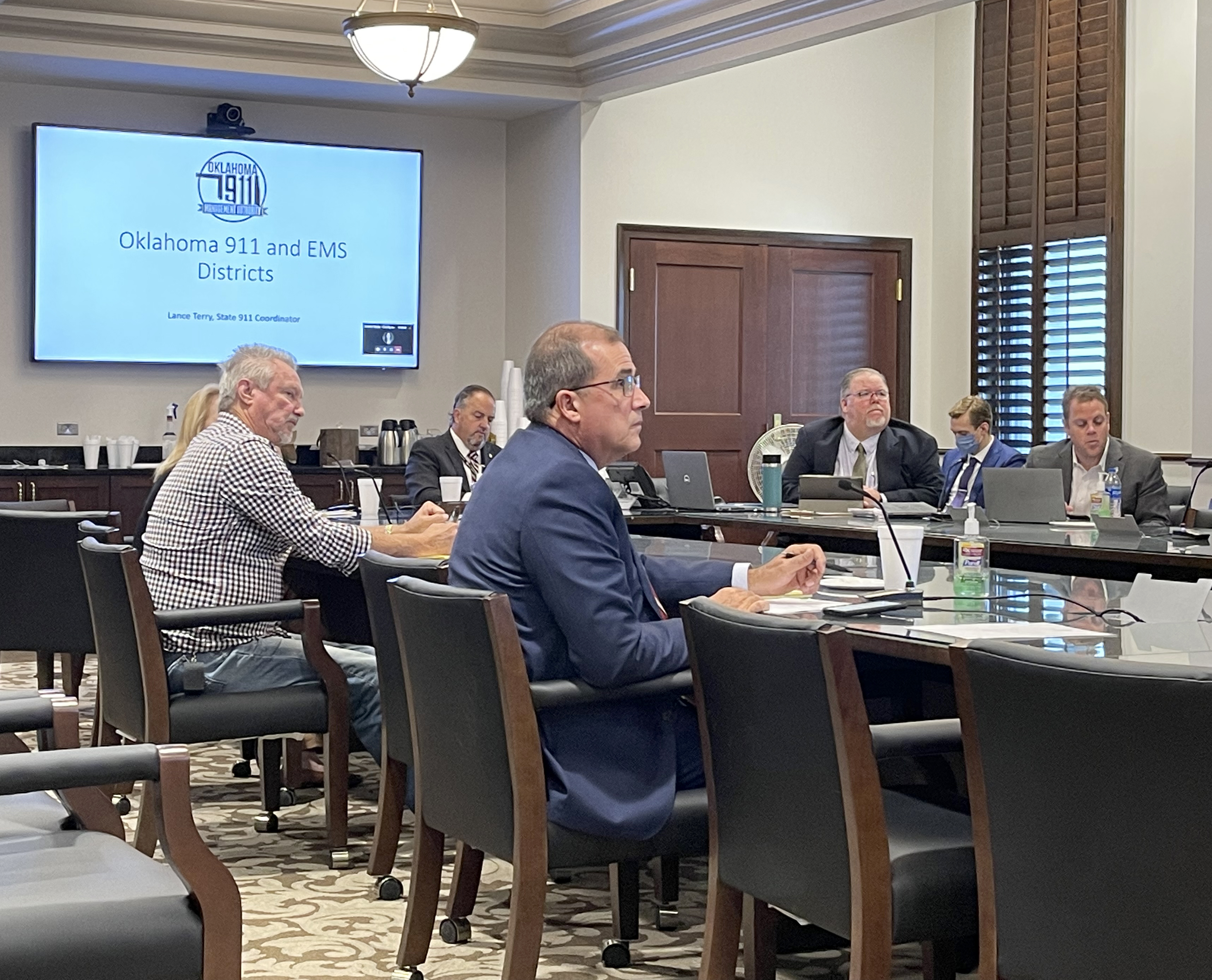
OKLAHOMA CITY — Gaps in cell phone service throughout much of rural Oklahoma is causing problems for public safety and ambulance providers responding to 911 calls, a state lawmaker said.
State Rep. Jim Grego (R-Wilburton) said an interim study held in October discovered the problem is widespread and is hampering emergency crews from arriving at 911 calls in the appropriate amount of time.
“A lot of people are calling in on their cell phones and they (first responders) can’t find them because there are gaps out there even Google Earth can’t find,” he said. “What we did with this study was identify the problem, but there is no solution without more funding.”
In too many instances, the 911 calls ping off the nearest cell phone towers, but that tower may not be the closest one to the caller. About 20% of the calls have some issues causing a delay of two to three minutes, Grego said.
“There are numerous areas in Oklahoma where this is the case,” he said. “Sentinel doesn’t have a 911 center that takes their calls so it goes to whatever 911 operator that answers.”
In other cases, people who live along county lines may have their 911 calls routed to the wrong county 911 center, creating a delay as the call is sent back to the correct 911 call center, Grego said.
Lance Terry, state 911 coordinator for the 911 Management Authority, said the problems can be solved with a Next Generation 911 system and a preliminary cost estimate of about $13 million. That figure would cover the statewide or regional network that serves and routes the 911 calls. The $13 million would not include local costs, Terry said. The 911 Management Authority should have a more definitive cost estimate by January, he said.
“We want to know how much it will cost before we go to the legislature and ask for money,” Terry said.
The Oklahoma Legislature will convene for its 2022 session on Feb. 7.
The state currently spends about $2.5 million each year on its Enhanced 911 system.
Some states such as California, Texas and Kansas have already implemented the Next Gen 911 system. Currently, Oklahoma uses a 911 system that was built in the 1960s and modified in the 1990s “to do what it does today.”
Oklahoma’s Enhanced 911 system initially uses a tower location to determine where the call is coming from. After 15-20 seconds, the 911 system zooms in on the caller’s location based on the cell tower’s location. However, the Next Generation system will deliver a more immediate and precise location of the caller. The call goes to the proper 911 center and the caller’s location is quickly dispatched to emergency crews without delay.
In addition, the Next Generation 911 system can use information from a caller’s cell phone to locate the caller, Terry said.