

By James W. Finck
Upon taking office, vice presidents, like presidents, may decorate their new offices by choosing portraits of former leaders. While President Trump chose Andrew Jackson, Mike Pence chose two former VPs that he admired, Teddy Roosevelt and Calvin Coolidge.
Both leaders chose their portraits perfectly. Jackson the rash, emotional demagogue is the president most compared to Trump.
While TR was a boisterous president, more aligned with Trump than Pence, as VP he was much quieter. And Coolidge earned the nickname Silent Cal, not because of his soft tones but because of his views on small government.
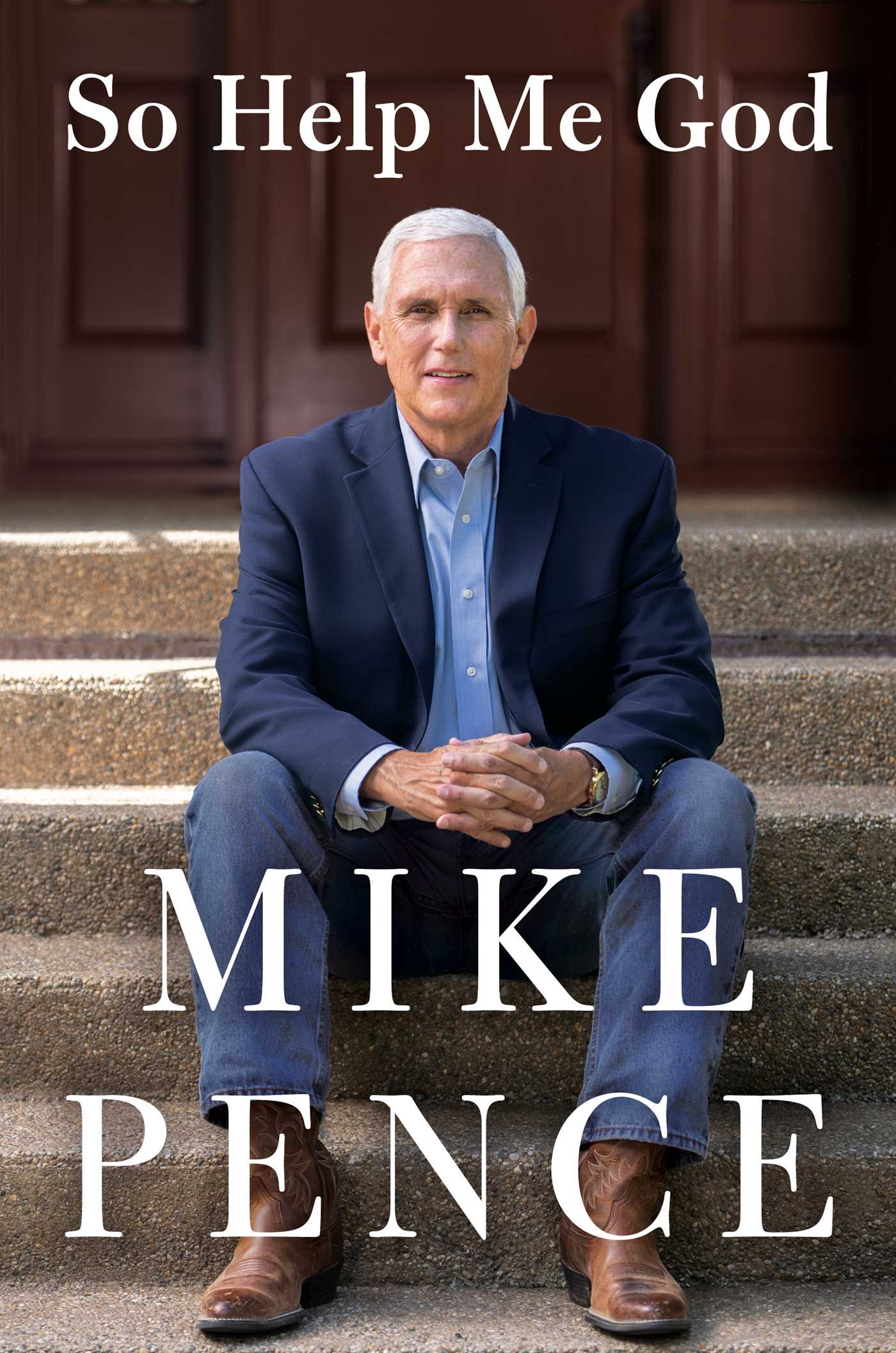
While TR and Coolidge do not have much in common, what they do both share is their ascension to the highest office in the land, an ascension Pence would like to share. While Pence has not declared his intentions to run for president, his memoir can be seen as the start of his campaign.
In an extensive 542-page memoir, Pence takes on the task of unifying his party. Throughout the pages, he lobbies Trump supporters by showing them his overwhelming support of the president while also showing Trumps detractors that he would have done a few things differently, most notably in the wake of the 2020 election.
The memoir begins where it ends, with the Jan. 6 Capitol riot, a day where Pence put his loyalty to the Constitution above his party and his friendship with Donald Trump. A day when a mob stormed the American Capitol with the purpose of stopping him.
His memory of that day was poignant: “I was not afraid; I was angry. I was angry at what I saw, how it desecrated the seat of our democracy and dishonored the patriotism of millions of our supporters, who would never do such a thing here or anywhere else. To see fellow Americans ransacking the Capitol left me with a simmering indignation and the thought: Not here, not this … not in America.”
The narrative then backtracks to a simpler time where we are reintroduced to Mike Pence, not VP Pence. The Pence who wants his readers to know more than anything else that he is “A Christian, a conservative, and a Republican, in that order.”
Pence grew up in an idyllic middle-class background in a small Indiana town. The one thing that made him stand out was his strong Irish Catholic roots in a predominantly Protestant area. Most of his early narrative, including his two failed runs for Congress, is to explain the three great changes in his life.
He was brought up as a JFK liberal and a Catholic. Yet over the years, especially during his time at Hanover College in Indiana, he became a born-again Christian, found the love of his life and became a Reagan conservative.
He gave up on politics after his two attempts, but not conservativism, and for years worked for the Indiana Policy Review Foundation and later a call-in radio show where he learned and honed his conservatism, while also growing his family. Yet he could not forget his desire for public service and concern for the direction of the nation. In the late 1990s, he decided to run once more for Congress and won.
Two immediate events in Congress shaped him for the future and foreshadowed what was to come. Pence’s 2000 congressional victory coincided with George W. Bush’s presidential one in one of the most controversial elections up to that that time.
Pence sat in the House Chamber and watched as VP Al Gore, who still believed he had won the election, certified the election results.
Pence wrote, “The fact that the vice president discharged his duty that day despite the fact that many in his party believed he had won the election made an indelible impression on me about the resilience of our institutions when our leaders are willing to keep the faith with the Constitution.” It was an important lesson that he clearly learned and respected, as 20 years later to the day he would be sitting in that same seat.
For the rest of the Congress years, his main emphases were the relationships he made with colleagues on both sides of the aisle but also his refusal to bend his conservative beliefs. Pence had a great deal of respect for President Bush but also found himself at odds with the president over many issues. Pence was a solid Reagan Republican and believed the party began to stray under Bush as it became the party of big-government conservatism.
In 2012, Pence decided to leave Washington when he ran and won the governorship of Indiana. He continued to fight for conservative principles and spent several chapters defending his stance on education, health care and religious liberties. In 2016 while running for re-election, he met with Donald Trump, who was campaigning for president.
Pence understood why Trump had won the Republican nomination, writing, “it was a recognition of a movement under way that rejected politics as usual, that was ready for the United States to move in a different direction at home and abroad.” What Trump was doing was “giving a voice to the desperation and frustration caused by decades of government mismanagement and neglect.” Then, even after Pence publicly criticized Trump during his campaign, Trump chose Pence as his VP.
If you are hoping for any large revelations during the four years of Trump’s presidency, you will be disappointed. The brunt of the memoir is a thorough recounting and justification of Trump’s policies.
As for his role in the White House, while he was given important assignments, Pence followed a quote from Walter Mondale: “A vice president’s job, he said, is to give the president his honest opinion, in private and only once. The American people do not elect two presidents or copresidents. Whatever his ambitions, a vice president should remember that. Carter was an unpopular president. But Mondale stayed loyal, never fled from his side. To a man with higher ambitions, such loyalty is not an easy task. But that is the vice president’s duty; the only great one is to God and the Constitution.”
Pence did not feel it was his job to question the president, then or now, and his job was to be informed, be of service and be prepared. It was Trump’s job to lead, and Pence’s response whenever asked was “I am here to serve.”
If Pence had issues with Trump during their time together, those are not revealed. There were even only a few times where Pence expressed a difference of opinion, most notably the handling of Charlottesville, Virginia; leaving troops in the Middle East (Trumped wanted to pull them all out, while Pence wanted to keep the region secure); Putin (Trump hoped they could work together, while Pence never believed it possible); Nancy Pelosi (after the Democrats won back the House, Trump believed his deal-making abilities would allow them to work together, while Pence reserved his harshest criticism in the book for Pelosi, whom he saw as harmful and beyond civil compromise); and the firing of some personnel. Besides these, Pence walked the party line, even if he did not always believe in Trump’s tactics. That is, until Jan. 6.
Pence clearly wants readers to know his role on the days leading up to and on Jan. 6. This was where Pence finally parted ways with Trump.
While Pence never denied Trump’s view of a stolen election, he completely disagreed that he had a legal right to throw out or deny certifying the Electoral College votes. It is here where he details their falling-out and Trump’s insistence that Pence needed to do something or would go down in history as a coward.
Pence accomplished his goal with his memoirs. He shows his readers that he is a solid conservative with integrity. It was important that he included his early years as governor and congressman. He showed he can work with all walks of life but also not compromise his values. Most importantly, he shows he has a vison for America and can lead.
During the VP years, he did not believe it was his place to show too much leadership. It was Trump’s presidency.
However, I was left with major questions left unsatisfied. How could a man with so much faith and integrity work so well with Trump? When Pence did mention scandals like the Access Hollywood tape, Pence dismissed it with his belief in repentance. He dismissed Trump’s personal attacks and rude comments as those of a fighter.
Normally I am fine with this type of omission — it’s politics — but Pence also made religion a major theme of the memoirs, and the two issues do not fit together. I was left unsatisfied wondering how Pence could, time and again, ignore Trump’s behavior when the two clearly had opposing moral compasses. Yet the memoir leaves a valuable record for historians for years to come and shows that Pence can unite his party and lead them in years to come.