

OKLAHOMA CITY — Legislators have filed nine bills that would require the state of Oklahoma and its subdivisions to refuse to do business with any company that engages in “economic boycotts.”
And a related bill would forbid investment of public funds in any company based in a communist country.
All of those measures mimic House Bill 2034, the Energy Discrimination Elimination Act, which became law on Nov. 1, 2022. The new statute directs the state treasurer and any state agency or subdivision (such as counties, municipalities and schools) to divest from any financial company that boycotts an energy company.
HB 2034 will “ensure the state of Oklahoma
is free from discrimination against the fossil fuel industry and does not support corporations that put political ideology ahead of the interests of taxpayers, shareholders and residents,” said Sen. Mark Allen, R-Spiro, the Senate sponsor of HB 2034. “Oil and gas is the backbone of our state’s economy, and it’s crucial that we do all in our power to fully support this industry.”
Former State Treasurer Randy McDaniel said: “The oil and gas industry plays a critical role in the state’s economy. The Energy Discrimination Elimination Act of 2022 was designed to support the men and women who work and invest in this important industry.”
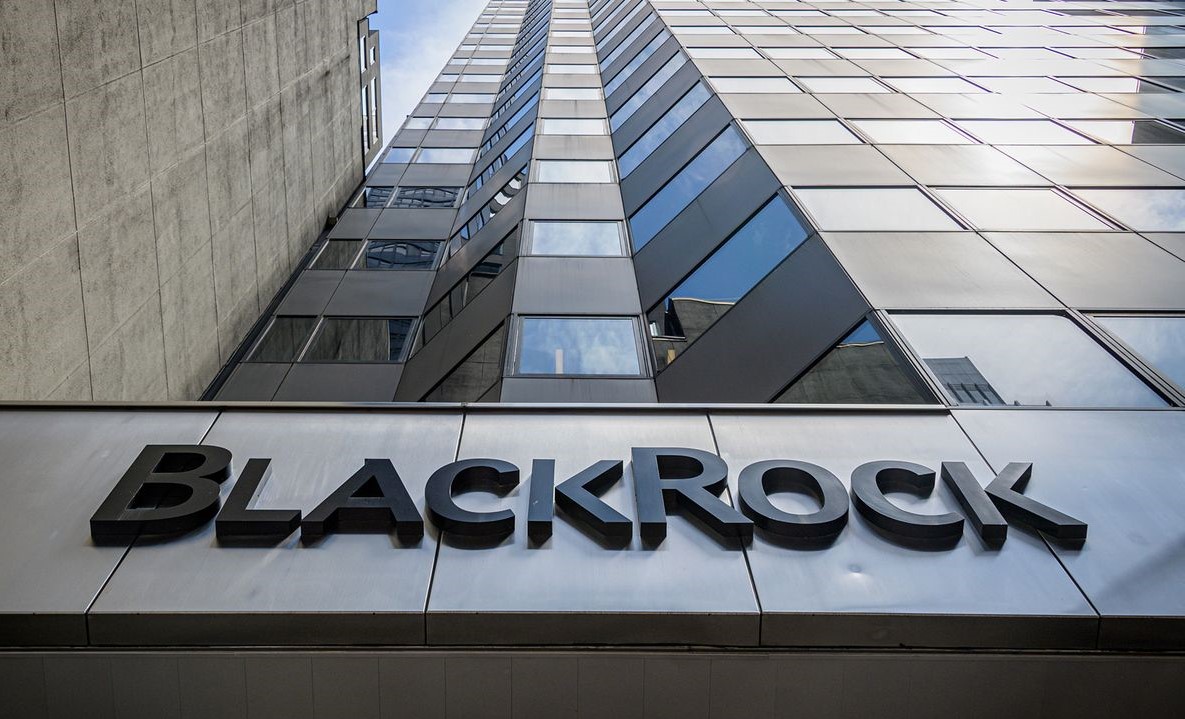
Some observers are watching for any blowback that might materialize from the legislation, with a focus on BlackRock Inc., reportedly the world’s largest investment management company. BlackRock has come under fire from environmental supporters for investing in conventional energy and from states claiming they perceive a boycott of the U.S. energy industry.
However, asked last October if BlackRock supports a net-zero scenario in which “no new investment is needed in coal, oil, and gas,” an asset manager responded, “No.”
BlackRock’s role is “as a fiduciary to our clients – it is not to engineer a specific decarbonization outcome in the real economy,” the asset manager said.
Multiple U.S. states (Texas, Arkansas, Arizona, Indiana, Louisiana, Florida, South Carolina, Missouri and Utah) have threatened to withdraw state funds from BlackRock’s management, or have already done so, because they disapprove of its ESG (environmental, corporate and social governance) investment policies.
All of those state measures, including legislation filed in Oklahoma last year and again this year, are patterned after model legislation promoted by the American Legislative Exchange Council. ALEC is a corporate-funded organization that writes legislation for Republican-controlled states.
At least one Oklahoma utility company has a lot at stake in the divestiture issue: New York-based BlackRock – the world’s top asset manager with $8 trillion in assets – is a major investor in Tulsa-based ONEOK and ONE Gas.
In Jan. 23 filings with the Securities and Exchange Commission, BlackRock disclosed it owns 10.8% of ONEOK, based on sole voting power of 44, 741,511 shares, and 6.7 million shares, or 12.6%, of ONE Gas.
ONE Gas is a regulated natural-gas utility comprising three operating companies: Oklahoma Natural Gas Co., Kansas Gas Service and Texas Gas Service.
ONG has more than 1,100 employees and serves 905,000 residential, commercial and industrial customers in Oklahoma, including Elgin, Fletcher, Fort Sill, Duncan, Comanche, Cyril, Apache, Cement, Carnegie, Fort Cobb, Rush Springs, Marlow, Eldorado, Duke, Hobart, Gotebo, Snyder, Mountain Park, Lone Wolf, Mountain View, Waurika, Davidson, Frederick, Grandfield, Manitou, Tipton, Gould and Hollis.
ONEOK, also based in Tulsa, is a Fortune 500 company involved in the natural gas and natural gas liquids businesses. ONEOK owns/operates 1,500 miles of interstate natural gas pipelines, 5,100 miles of state-regulated intrastate natural-gas transmission pipelines and six underground natural-gas storage facilities. It had 2,847 employees in 2021, records reflect.