

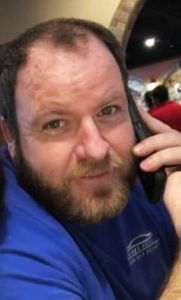
OKLAHOMA CITY — After consuming at least 17 alcoholic drinks over a seven-hour period at a restaurant in Weatherford, David Anthony “Carl” MeGee accepted a $200 bet from one or more of the waiters that he could not meet them at a bar in Oklahoma City by a designated time later that night.
He lost the bet – and his life.
Totally inebriated, MeGee staggered out of the El Patio restaurant, crawled into his car and headed for OKC, hitting speeds of 97 miles per hour on Interstate 40. A little over halfway there, near El Reno, he plowed into the back of a tractor trailer rig and was ejected from his vehicle and subsequently run over by another vehicle.
MeGee, 39, a lifelong resident of Weatherford, was pronounced dead at the scene.
His mother, Nancy Carol MeGee, sued the restaurant and one of its waiters in Custer County District Court on Jan. 19, 2021, two years to the day after the fatal mishap.
She alleged her son was “negligently overserved alcohol” – at least 12 beers and five shots of tequila – by at least four waiters, and the restaurant allowed its employees to bet an intoxicated patron to drive “in reckless disregard” for his life.
She also sued waiter Dylan Scott Welch, who served MeGee “his last six beers and at least four tequila shots.”
A district court judge dismissed the lawsuit two months later, and the Oklahoma Supreme Court upheld that ruling in a split decision Feb. 14.
A majority of the justices reaffirmed the precedent that a dram shop is liable only if a drunk driver injures someone else, not himself/herself.
Nancy MeGee argued that the court should make an exception to the law because of “the egregious facts of the case” and because “betting an intoxicated person to drive is actionable.”
A commercial vendor’s statutory and common-law duty not to serve an intoxicated individual “is to protect innocent third parties, not to protect the voluntarily intoxicated adult from injuring himself,” the Supreme Court wrote. “If we were to create a cause of action against the tavern owner, the inebriate could be rewarded for his own immoderation.”
El Patio employees “may have had a duty not to bet MeGee to drive … but they did not have a duty to protect MeGee from injuring himself,” Chief Justice John Kane wrote for the majority.
A voluntarily intoxicated adult “is responsible for his condition and must be accountable for his own injuries,” even if they are fatal.
In a concurring opinion, Vice Chief Justice Dustin Rowe asserted that “as callous as the actions of the employees were, we should not deviate from our principles of judicial restraint.” The responsibility for imposing civil liability “where none existed before … rests with the Legislature.”
In dissent, Justice Noma Gurich wrote that Oklahoma’s Constitution and statutes “impose a broad duty to refrain from selling or furnishing alcohol to an intoxicated person.” Drunk drivers “are a constant threat to the law-abiding users of our roads and highways.” Sellers of alcohol encouraging a “noticeably” inebriated person to drive “should be actionable.”
Gurich was joined in her dissent by Justices Yvonne Kauger, James Edmondson and Richard Darby.
Darby asserted that Nancy MeGee should have been allowed to pursue her lawsuit, “which alleges near unbelievable facts that demonstrate reckless conduct” by El Patio and its employees “in total disregard” of David Anthony MeGee’s life “and the life of third parties.”
Welch, 30, pleaded guilty in 2020 to a misdemeanor charge of knowingly selling alcohol to an intoxicated person. He received a suspended one-year county jail sentence, was fined $100, paid $150 to Mothers Against Drunk Driving and surrendered his bartender’s license. Welch was living in Clinton in 2019 but later moved to Canadian County, court records indicate.
“Carl” MeGee’s obituary related that he was a lifelong resident of Weatherford and graduated from high school there. He was a jack of all trades and was employed as an automotive repair technician.
“He loved NASCAR, car shows, traveling and hanging out with his friends,” the obituary stated.