

OKLAHOMA CITY — Sending balloons aloft, allegedly to spy on the United States, trafficking in illicit fentanyl, and Chinese nationals buying large tracts of land for marijuana farming operations.
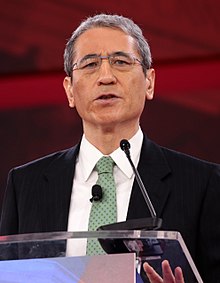
Oklahoma is “in the front line of what’s happening now” with an emerging China that’s flexing its military and political muscles, Gordon Guthrie Chang said recently during an interview with the Radio Oklahoma Network during the Conservative Political Action Conference in Washington D.C.
Chang, 71, is a specialist on Chinese/American relations. The Cornell University graduate lived in mainland China and Hong Kong for nearly two decades.
“We should be worried” about Chinese acquisition of Oklahoma farmland, Chang said.
“We know Chinese have come into Oklahoma and bought large tracts of land and let it lay fallow,” he said. “Normally that wouldn’t be a big deal, but as the world approaches a food crisis it’s becoming more important.”
He also recalled the incident last November in which a Chinese national killed four other Chinese “gangland style” at a marijuana farm near Hennessey.
The Oklahoma Bureau of Narcotics and Dangerous Drugs Control has linked sex trafficking, prostitution and drug trafficking to multiple medical marijuana farms in Oklahoma.
Agency spokesman Mark Woodward said the OBN investigation has focused on activities of an Asian organized crime network.
The criminal gang also has been linked to trafficking of the drug ketamine, which is used as a recreational street drug, Woodward said.
“Over the past two years, my agency has shut down more than 800 medical marijuana farms tied to organized crime in Oklahoma, seized more than 600,000 pounds of illegal marijuana and made nearly 200 arrests,” OBN Director Donnie Anderson said in February. “Many of the farms obtained their license by fraud, grow for the black markets around the United States and launder the illicit proceeds worldwide. They also have been linked to homicides, labor trafficking, sex trafficking and other crimes.”
Chang maintains, “No Chinese national or entity should be allowed to own any land in Oklahoma,”
Chinese property law stipulates that foreigners can buy only one property at a time and they have to either study or work in China for a full year before being able to do so.
Furthermore, Chinese property law decrees that if you are a foreigner or expatriate living in China, you can buy property only for dwelling purposes. You can’t buy a house or a condo to rent out the place; owning property in China to manage as a landlord in the mainland is out of the question.
In contrast, “We have an open system; anyone can buy land here,” Chang noted.
“We’ve had this notion, going back for decades, that we need to integrate with China,” he said.
As an illustration, the Biden administration “believes we need to cooperate with China on issues such as climate change,” Chang said. “I think climate change is important. But the most important thing is protecting ourselves from attacks that are occurring today. That’s critical; that’s urgent. Climate change is something in the future.”
A couple of years ago, the Chinese “were sending seeds of an invasive species into the U.S.,” Chang said. “Obviously, that could poison our land. They can undermine our agriculture and create diseases, especially if they own land in which they plant dangerous species.”
Other states, such as Texas, are considering legislation to prohibit Chinese land acquisition in the U.S., Chang said.
“I think it should be a complete prohibition against Chinese ownership of land in Oklahoma,” he said.
‘Food security is national security’
China believes that “food security is national security,” he said.
“We Americans need to come to the same conclusion.”
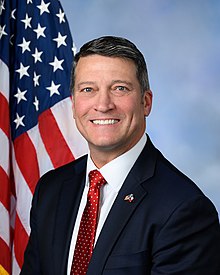
Dr. Ronny Jackson, a congressman from Amarillo, Texas, concurs with Chang.
“Agriculture is a national security issue,” Jackson said during an interview with Radio Oklahoma Network.
His congressional district comprises 41 counties, most of them along the Red River border with Oklahoma, extending to just north of the Dallas-Fort Worth area.
Chinese are “buying hundreds of thousands of acres, spending billions of dollars to buy farmland every year, and a lot of it is in close proximity to military bases,” he said. “But more important than that, they’re trying to control our supply chain from the inside out.”
Many Americans “don’t know where their food comes from,” Jackson lamented. “They just go to the grocery store and buy it. They don’t really care where it came from.”
Jackson said he’s focusing on exports, too.
“I have a lot of export issues in my district,” he said. “We export a lot of beef, for example. I’m worried about what happens if China tries to take Taiwan and the whole world sanctions China.”
If that were to occur, “What happens to the overwhelming volume of our exports to China?” he wonders. “Are we working on alternative markets? We should be looking at Southeast Asia and Africa, and growing alternative markets so that we’re not suddenly in a bad spot if our primary trading partner is no longer available.”
Chang said the Communist Party of China “views the United States as an existential threat, not because of anything we say or do but because of who we are.”
The “insecure regime… is worried about the inspirational impact of our values and our form of governance on the Chinese people.”
Consequently, the Chinese leadership “believe they must destroy the United States in order to maintain themselves,” Chang said. Americans “want to get along with China, but you can’t get along with a regime that’s killing our citizens with fentanyl and COVID-19, and which wants to destroy our way of governance.”
Collectively, Americans “view China as just another government but need to understand the maliciousness of the Chinese regime.”
The United States needs to elect leaders “who are willing to defend us from the Chinese attack,” said Chang, an attorney, columnist and author of “The Great U.S.-China Tech War,” published in 2020.
Jackson, 55, graduated from the University of Texas Medical Branch and is a U.S. Navy veteran. He retired in December 2019 at the rank of rear admiral after a 25-year military career. He led the White House Medical Unit as physician to the president during the Obama and Trump administrations.
Jackson was elected to Congress in 2020 and was re-elected in 2022.