

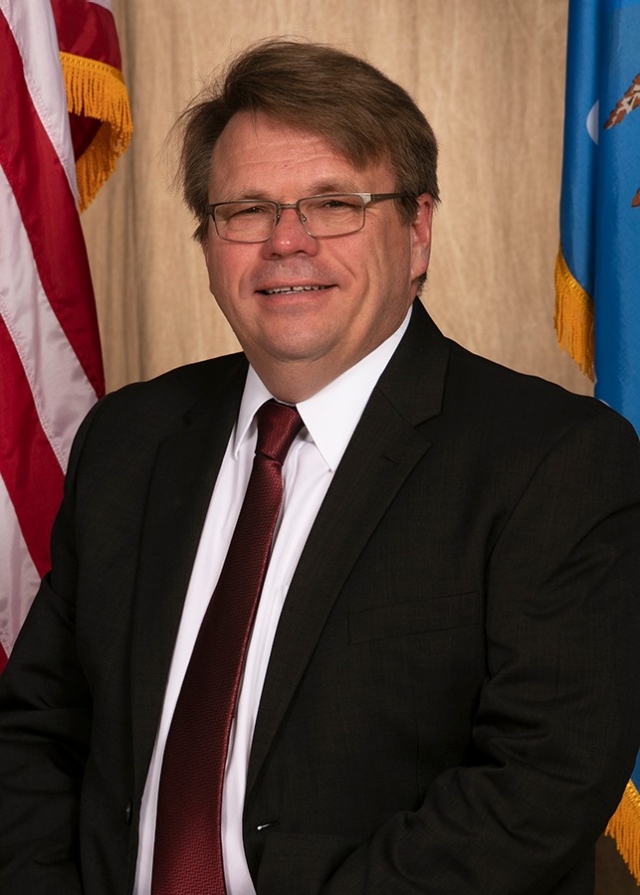
James Grimsley
By James Grimsley | Okla. Transportation Commission
The majority of my professional career has involved aviation technology. In aviation, safety is paramount. Aviation-related fatalities are not tolerated either by industry or society. Any aviation fatality triggers an investigation to determine root causes to ensure that mistakes are not repeated.
However, there is a disparity between the safety records of aviation and ground transportation. Aviation is becoming much safer; ground transportation is not.
One of the more somber parts of working with transportation safety is addressing what is referred to as the ‘statistical value of a life’ or ‘SVL’. Although it can seem macabre, the SVL can be an important tool for assessing costs and addressing the economics of transportation safety as well as the economic justification for avoiding fatalities.
In 2021, the U.S. Department of Transportation updated the SVL to $11.8 million per life, which is the ‘cost’ that society realizes with a fatality.
In recent years, Oklahoma highway fatalities have averaged more than 600 per year. Last year, the Oklahoma Department of Transportation reported that 65% of Oklahoma’s traffic fatalities occur on rural roadways. Approximately 400+ fatalities occur on rural roadways each year in Oklahoma. The realized cost to society of these rural fatalities in Oklahoma is more than $4.7 billion each year.
Oklahoma’s annual state transportation budget is less than $2 billion. Our state highways face a significant backlog of deferred and delayed maintenance. However, our rural highways are particularly problematic since many of these are narrow, two-lane roadways with no shoulders.
Oklahoma’s current transportation funding allocation formula and process, which is used for the allocation of funds between transportation districts, does not account for the conditions of our highways, the disproportionate fatality rates between urban and rural areas, or the regional economic growth and expansion within individual districts.
The current funding allocation formula is based on three factors: 1.) the population of the district; 2.) the number of center-lane miles of state highways in the district; and 3.) the history of funding for the individual district.
After serving four years as an Oklahoma Transportation Commissioner for District 2, I am convinced our current funding allocation formula will never enable our state to overcome the safety disparity between our urban and rural highways. In fact, our current district allocation formula will likely worsen the disparity over time.
My transportation district has experienced significant increased traffic loads and traffic counts over the past few years. My district borders north Texas and is directly influenced by the phenomenal economic growth of the Dallas/Fort Worth metroplex. The population of that area is now more than seven million people. That is larger than the entire state populations of Oklahoma and Arkansas combined. That economic growth is moving steadily north.
Unfortunately, our current highway funding process does not address the increased traffic loads that we are experiencing. I am opposed to building any new state highways until we have an actionable plan and strategy in place to manage the safety of our existing highways.
James Grimsley is an Oklahoma Transportation Commissioner for District 2, which is comprised of the nine counties in southeastern Oklahoma.
Grimsley, of Calera, is the executive director of Advanced Technology Initiatives for the Choctaw Nation of Oklahoma. He also is a founder of successful technology company startups and is a former associate vice president for research at the University of Oklahoma, Norman Campus.
Grimsley has a Bachelor of Science in Aerospace Engineering and a Master of Science in Mechanical Engineering from the University of Oklahoma.