

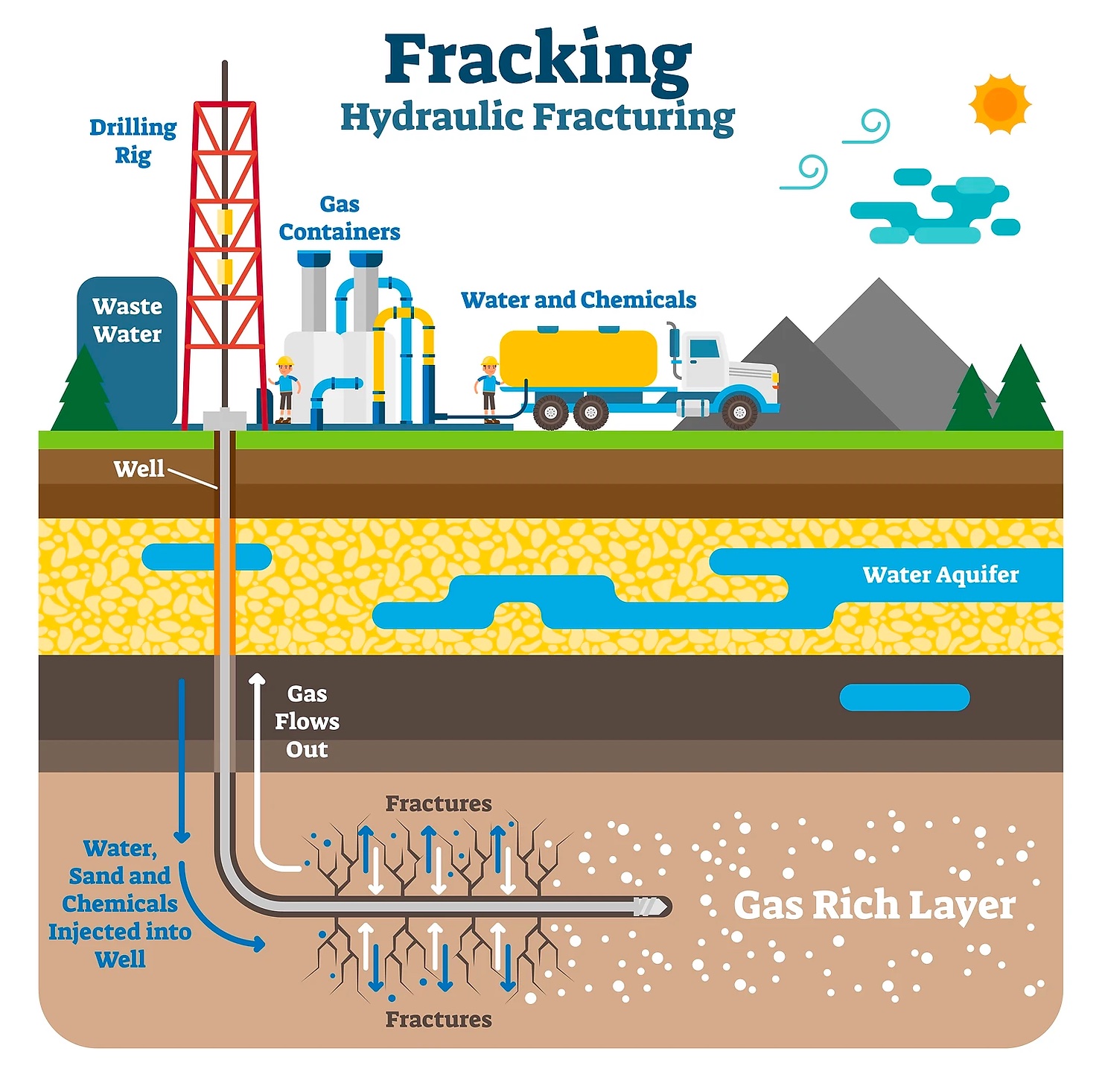
WASHINGTON, D.C. — The top Democrat on the House of Representatives’ Energy, Climate and Grid Security subcommittee introduced legislation recently to give the U.S. Environmental Protection Agency authority to regulate an oil drilling practice known as hydraulic fracturing, a/k/a “fracking.”
The legislation – known as the Fracturing Responsibility and Awareness of Chemicals Act of 2023, or FRAC Act – would close a loophole in the Safe Drinking Water Act that prevents EPA from regulating the drilling process that involves injecting huge volumes of toxic chemicals deep into the ground to recover oil and natural gas, “potentially contaminating the nation’s water supply and putting the public’s health at risk,” said the author, U.S. Rep. Diana DeGette (D-Colo.).
If approved, her legislation would not only give EPA the authority to regulate the process going forward, it also would – for the first time – require U.S. fracking companies to publicly disclose the chemicals they are using at sites across the country.
“The American people have a right to know precisely what chemicals these companies are pumping into our nation’s water supply and what, if any, harm they pose to people’s health,” DeGette said.
“For far too long, America’s oil and gas industry has been allowed to operate with impunity, with little regard for how their activities impact the air we breathe and the water we drink. Congress can, and must, do more to protect our communities from the threat they face from this practice.”
A study published recently by researchers at the University of Chicago found that states that require fracking companies to disclose the chemicals they use in the process had less pollution from the activity, higher water quality and fewer wells drilled as a result, DeGette said.
Named after the company that invented the fracking process, the so-called “Halliburton loophole” – which exempted chemicals used in the fracking process from EPA regulation – was included in the Safe Drinking Water Act, which President George W. Bush signed into law in 2005 at the behest of then-Vice President Dick Cheney, who previously served as CEO of Halliburton before taking office.
The FRAC Act was one of five bills introduced in the House last month to address environmental and public health concerns related to the fracking process. Collectively the five bills have been dubbed the Frack Pack and, in addition to DeGette’s FRAC Act, include:
• The CLEANER Act, which would close a loophole in the Resource Conservation and Recovery Act that allows oil and gas companies to avoid responsibility for the hazardous waste they create.
• The FRESHER Act, which would create a study to better understand the effect of stormwater runoff from oil and gas operations.
• The CLOSE Act, which would eliminate the aggregation exemption that allows oil and gas companies to emit a range of hazardous pollutants while producing, processing, storing, and transmitting fossil fuels without meaningful regulation by the EPA.
• The SHARED Act, which would require increased testing and reporting of water contamination near fracking sites.