

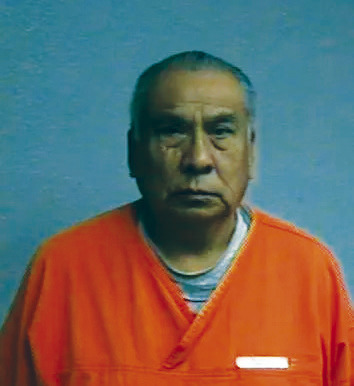
MUSKOGEE – Jimcy McGirt, whose handwritten petition for post-conviction relief led to a landmark U.S. Supreme Court ruling that overturned more than a century of jurisprudence in Oklahoma, has been released from prison after serving 26 years for aggravated sexual abuse of a child in Indian Country.
Judge John F. Heil III, of Oklahoma’s Eastern District federal court here, signed off May 2 on a plea agreement federal prosecutors reached with McGirt’s legal advisers, Rex Earl Starr of Stilwell and Richard O’Carroll of Tulsa.
McGirt, 75, of Holdenville, pleaded guilty last December to one felony abuse charge and two other counts were dismissed. Accordingly, Heil sentenced McGirt to 360 months – 30 years – in federal prison.
However, in a document filed in federal court last December, McGirt was advised by one of his attorneys that, “According to BOP [Bureau of Prisons], this deal allows for credit for time served and based upon my research, in my opinion you have already discharged 30 years.”
He will be on probation for five years, must register as a sex offender, and is forbidden from having any contact with his victim, who is now an adult woman.
McGirt was transferred out of the Muskogee County jail in Muskogee last Thursday, and a BOP website indicated Friday that he was no longer in their custody.
Initially it was thought McGirt would live with his daughter, but probation officials “expressed some concerns because some adult family members had misdemeanor convictions.”
Although McGirt’s whereabouts were not known last weekend, a sentencing memo in the court record indicates he will settle at “remote acreage in the care of ” a half-brother in Spaulding, a tiny rural community about five miles south of Holdenville in Hughes County.
“This location, which includes a travel trailer and fishing shack, is on private property which can/will be deeded to Mr. McGirt,” the memo states. “It is also adjacent to a community of sexual offenders.”
McGirt maintained that his BOP evaluation after his f irst conviction “places him at a low risk of recidivism…” His release from custody was a remarkable turnaround for a man initially destined to die in prison.
In 1997 he was convicted by a Wagoner County jury of first-degree rape by instrumentation, lewd molestation and forcible sodomy of a 4-yearold girl at a residence in that county. He was sentenced to 500 years’ imprisonment on the first two charges and life without parole on the third – in part because of his conviction in 1989 on two counts of forcible sodomy of two children in Oklahoma County.
In his appeal to the U.S. Supreme Court, McGirt’s attorney pointed out that his client and the victim both are citizens of the Seminole Nation and the crimes in Wagoner County occurred at a residence within the boundaries of the Muscogee (Creek) tribal reservation.
McGirt’s appeal led to a 5-4 Supreme Court ruling July 9, 2020, that reshaped the criminal justice system in Oklahoma. The Supreme Court decreed that the Creek Nation reservation in eastern Oklahoma was never disestablished by Congress.
State courts subsequently affirmed that eight other reservations in eastern Oklahoma – including the Cherokee, Chickasaw, Choctaw, Ottawa, Peoria, Quapaw, Wyandotte, and Seminole tribes – were never dissolved, either.
As a direct result, Native Americans accused of committing serious crimes anywhere in “Indian Country” must be prosecuted in federal or tribal courts.
McGirt was retried in federal court in November 2020 and convicted again. And again on appeal his conviction was overturned, this time by the 10th U.S. Circuit Court of Appeals.
On Dec. 5, 2023, he pleaded guilty in Muskogee’s Eastern District federal court to one count of aggravated sexual abuse in Indian Country. He confessed to sexually abusing a child.
The victim, who is now 31, testified at his retrial that McGirt sexually molested her three times in August 1996 while she was staying with her grandmother and McGirt, who was then married to the grandmother.
“Today’s sentence closes a chapter on a perpetrator who has attempted to evade the legal consequences of his actions at every turn,” said U.S. Attorney Christopher J. Wilson. “For the victim, we hope it is but a beginning. To go into a courtroom – to fight to be heard and to be believed – that takes courage. To do so over three decades requires unimaginable fortitude of spirit.”
Despite the Supreme Court’s ruling in McGirt v. Oklahoma, it did not affect all of Oklahoma – a Choctaw term for “red people.”
State district courts and the Oklahoma Court of Criminal Appeals have determined that the Kickapoo, the Cheyenne-Arapaho, and the Kiowa Comanche and Apache reservations are “no longer Indian Country within the meaning of federal law.” The Kickapoo and the Cheyenne-Arapaho reservations were disestablished in 1891, and the KCA reservation was disestablished in 1900.