

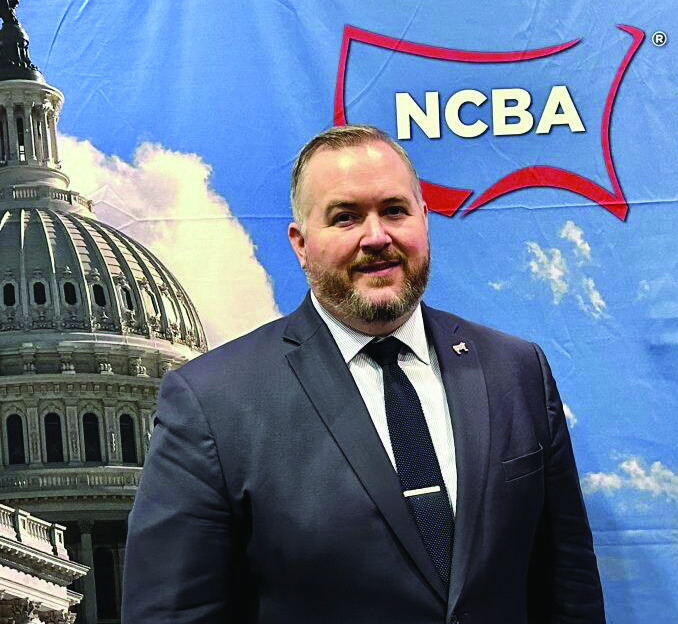
The National Cattlemen’s Association Executive Director of Government Affairs, Kent Bacus, is calling on the federal government to shift the way it engages in trade agreements.
“When you go back to previous administrations, from Bush and Clinton, all the way up to the Obama administration, you had a lot of traditional trade agreements that would have the approval of Congress and were negotiated by the executive branch,” Bacus said. “It helped open up a lot of export markets. Under Trump, you saw a lot of bilateral agreements merge, and you saw a lot of executive agreements that didn’t necessarily bypass Congress but were able to accomplish similar results with a different path forward.”
Bacus explained that the Biden administration has shifted from agreements to trade policy frameworks that focus on technical aspects such as non-tariff trade barriers. Those have resulted in significant gains in other markets, and the non-tariff barriers are addressed in a broader comprehensive trade agreement. However, without market access, it has been difficult to access new trade partners.
“For the cattle industry, that is huge,” he said. “Prior to the creation of a free trade agreement, we had a 40% markup on our products into Korea, into Japan, it was 38.5%, into Columbia, it was 80%. Because of trade agreements, we could move those barriers. Now we have much more competitive access into those markets.”
Bacus said he isn’t expecting a lot of action out of the (Biden) administration in the last part of 2024.
“Hopefully, we can get some technical access into Australia, and some other things across the finish line. But really, we need to see a whole government approach to reengage and have the United States lead in international trade policies. We stepped back and China filled the void. Without the U.S. truly engaging and trying to build stronger relationships, it will be very difficult for us moving forward.”
Bacus added that no matter which administration wins in November, that administration will need to garner the support of Congress and reengage in international trade.