

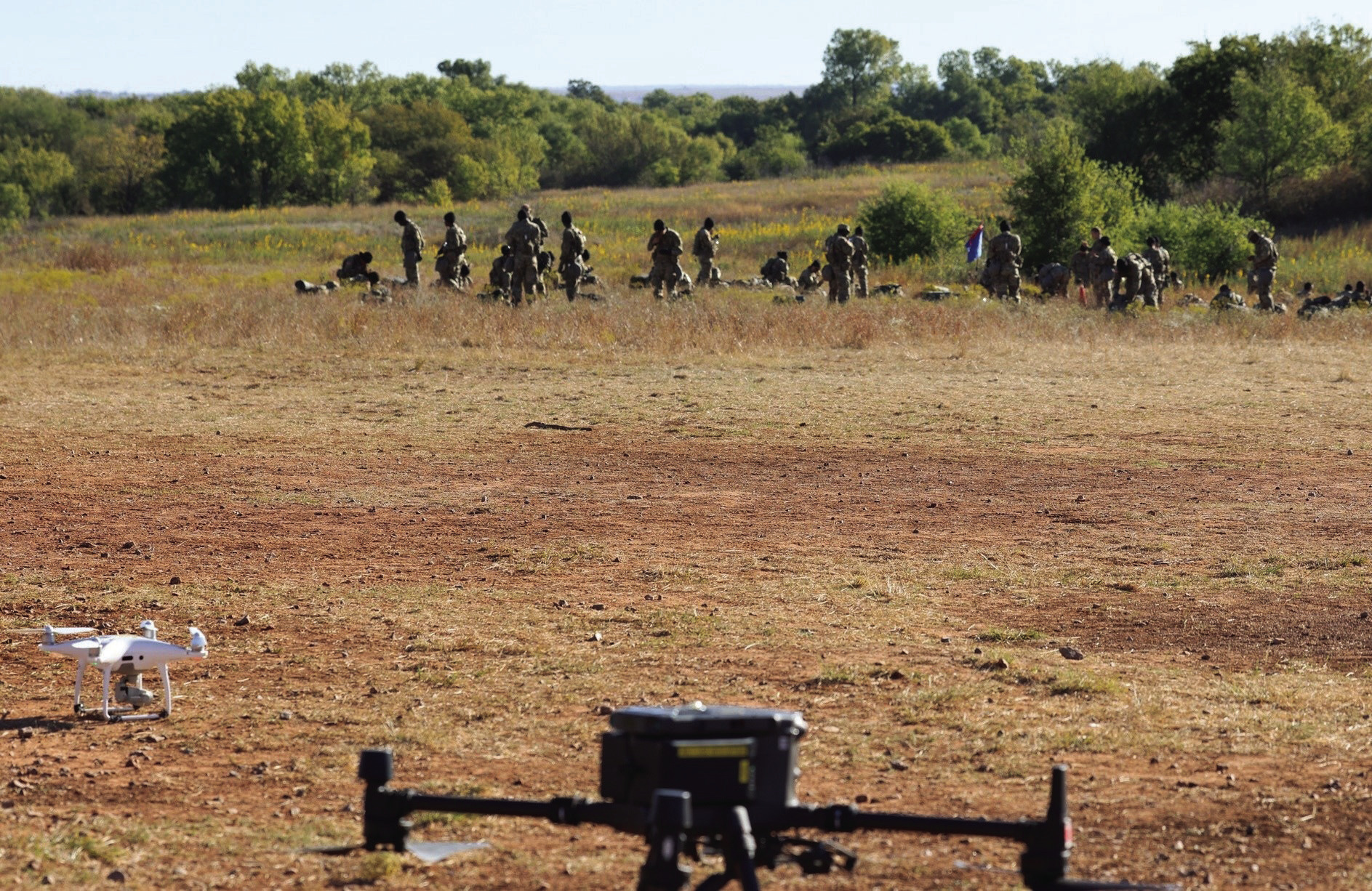
From staff reports FORT SILL - To ensure soldiers are equipped with the tactical skills necessary to face the growing use of unmanned systems in combat, Fort Sill recently introduced counter- unmanned aircraft systems training to new recruits.
As part of “The Forge,” which is the capstone field training exercise of Basic Combat Training, recruits are now able to gain hands-on experience in identifying and responding to drone threats and will be better prepared to face the challenges of modern warfare, said a U.S. Army press release.
“The Forge takes all the skills these trainees have learned up until now and puts them together over the course of a three-day FTX (Field Training Exercise), which concludes with a 10-mile ruck march,” said Capt. Malachi Leece, commander of Alpha Battery, 1st Battalion, 40th Field Artillery. “What’s different this year is the inclusion of live UAS assets, something these trainees will encounter in future conflicts. It improves their reaction time, and that could save lives in a real combat scenario.”
Fort Sill, home to the Army’s Joint Counter- small Unmanned Aircraft Systems University, took the lead in integrating the counter- drone training, which is a critical component for soldiers, due to the use of unmanned aircraft systems in modern warfare.
“Every war is different, and we have to be adaptable,” said 1st Sgt. Daniel Campbell of Alpha Battery, 1st Battalion, 434th Field Artillery. He emphasized the importance of this training for both recruits and cadre members.
“Introducing counter- UAS and drone operations at the basic training level gives our soldiers a taste of what they will face in the future. Even for cadre members, gaining this experience makes us more effective when we return to our units.”
The live UAS scenarios introduced during The Forge offer a more realistic training environment, reflecting the type of warfare seen in ongoing global conflicts. According to Capt. Leece, this realism is critical.
“It’s one thing to simulate drone threats, but having live systems in play makes a world of difference,” he explained. “The trainees are able to experience firsthand the difficulty of tracking and engaging drones, from mini quadcopters to larger systems.”
Fort Sill’s role as a leader in C-UAS training will continue to grow as the U.S. Army faces evolving threats from drone technology. Future Soldiers will not only be proficient in traditional skills but also well-prepared to counter the aerial threats they will face on battlefields.