

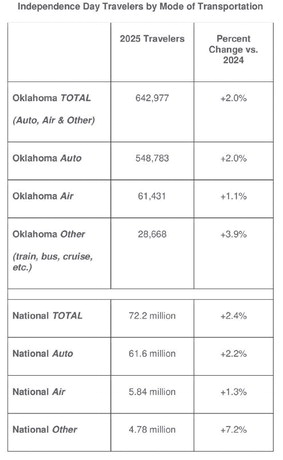
From staff reports From the Panhandle to Broken Bow, AAA projects strong travel volume for the upcoming Independence Day holiday. Nearly 643,000 Oklahomans among 72.2 million Americans are expected to travel for the July 4 holiday.
“Travelers are gearing up for a busy Fourth of July travel period across the Sooner State,” said Shawn Steward, public affairs manager for AAA Oklahoma.
“With a wide majority of travelers going by car, AAA reminds Oklahomans to follow the rules of the road, always stay sober behind the wheel, be courteous to other road users, and remember to buckle up – everyone, every time, every trip – before heading down the highway.”
AAA also urges drivers not to be distracted. “Phones should be set to ‘do not disturb,’” reminded Steward. “Set the navigation, climate control and infotainment controls before leaving the driveway. Instead of going through a fast-food drive-through, take a break from the roadway and go inside the restaurant to eat. Not only will that cut down on driving fatigue, but it will also keep food and beverage from becoming a distraction.”
Last summer, AAA Emergency Roadside Service crews responded to nearly 59,000 calls for assistance in Oklahoma alone. Drivers are reminded to be sure their vehicle is up to date on regular maintenance or bring it to a AAA-approved car care center before hitting the road. Get the battery checked by a qualified technician and check tire pressure and tread. “Tires and batteries are some of the most common problems that interrupt summer travel,” Steward added.
Here’s a quick look at some of the numbers, trends and tips from AAA for Independence Day 2025:
• 642,977: Number of Oklahomans expected to travel 50 miles or more from home for the Independence Day holiday travel period (June 28 – July 6), an increase of 2% from 2024.
• 85.4%: Percentage of Oklahoma travelers who will drive to their Independence Day holiday destination. The nearly 549,000 road trippers represent a 2% increase from last year.
• 61,431: Number of Oklahomans expected to take to the skies, a 1.1% increase compared to last year.
• 4.5%: Percentage of Oklahomans opting to travel by train, bus, cruise and other modes of transportation for the Fourth of July holiday period.
“While a majority of Oklahomans are traveling by car, airports will be busy as well. Those planning to take to fly should download their airline’s app ahead of time so they can stay on top of any flight or gate changes,” Steward said. “Get to the airport in plenty of time ahead of your boarding time. Expect airport security lines to be longer over the Fourth of July travel period.
“And don’t forget your Real ID-compliant form of identification, most often a Real ID or passport, to avoid problems moving through security.”
Road Travel Trends, Tips, Safety Reminders
• $2.82: Oklahoma average cost per gallon of regular unleaded gasoline, as of June 24, 2025, which is 17 cents less than the average one year ago.
• Second: Oklahoma’s national ranking in lowest state average gas prices as of June 24. (only Mississippi had a cheaper average gas price).
• $3.22: National average gas price (as of June 24).
• 2,653: Number of traffic crash fatalities nationwide during the 2019-2023 Independence Day holiday travel period. Of those, 1,679 of them were the driver and 38% were drunk.
“In addition to avoiding distractions, drivers should pack their patience,” Steward recommended. “There’s no place for aggression behind the wheel. Keep anger in check. If you see another driver being discourteous, don’t take matters into your own hands. It’s not your job to correct the driving behaviors of others. Save the fireworks for the community celebration.” Best/Worst Times to Drive INRIX, a provider of transportation data and insights, expects Wednesday, July 2, and Sunday, July 6, to be the busiest days on the road. Afternoon hours will be the most congested. Drivers should hit the road in the morning to avoid the worst traffic, but keep in mind construction, crashes or severe weather could impact travel times. Watch for stopped vehicles and “Slow Down, Move Over” for emergency responders.