

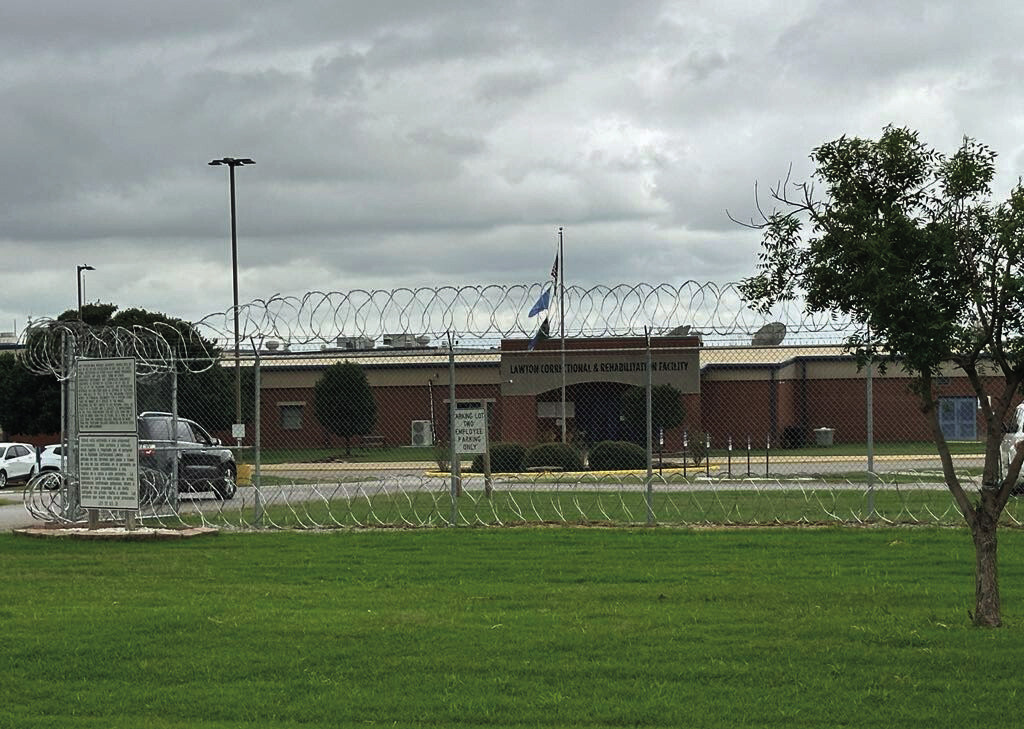
From staff reports The Oklahoma Department of Corrections has announced its support for a Federal Communications Commission proposal that would allow state correctional facilities to jam signals from contraband cellphones smuggled into prisons. The measure, scheduled for a vote on Sept. 30 before the Federal Communications Commission, aims to bolster security and curb crimes organized from behind bars.
Contraband cellphones remain a persistent problem in Oklahoma prisons, including facilities in the southwest region. So far in 2025, corrections staff have seized more than 4,000 illegal devices through searches, intelligence operations and interdiction efforts. Officials say phones are used for drug trafficking, extortion and orchestrating violence both inside and outside prison.
According to ODOC, implementation of cellphone-jamming technology would significantly tighten security in local prisons such as Red Rock Correctional Center in Lawton and North Fork Correctional Center in Sayre. Both institutions have faced persistent problems with contraband phones being used to coordinate criminal activities that extend well beyond prison boundaries.
ODOC stated in a Sept. 17 press release that contraband cellphones and illicit inmate communications can facilitate criminal activity that sometimes spills over into neighboring communities.
According to the ODOC and the Oklahoma Bureau of Narcotics and Dangerous Drug Control, technology used to counter cellphone use and cut off major communication tools for inmates makes it more difficult to organize crimes that destabilize neighborhoods and endanger families across Oklahoma and other communities in close proximity to local prisons.
“OBNDD is grateful to ODOC for their proactive security strategies targeting new and emerging cellphone trends by inmates,” said OBNDD Director Donnie Anderson. “The deployment of these measures to cut off outside communications has prevented numerous defendants in OBNDD drug trafficking investigations from continuing to seamlessly operate their criminal organizations while behind prison walls. Additionally, these steps have allowed OBNDD and ODOC to identify and stop several homicides, human trafficking, and other violent acts ordered by inmates through contraband cellular devices.”
In 2023, a coordinated investigation involving the FBI, DEA, IRS Criminal Investigation, ATF, the U.S. Marshals Service, Oklahoma Department of Corrections’ Office of Inspector General, the OBNDD and local police and task forces revealed the scope of the issue. That effort led to the conviction of 275 people involved in drug trafficking networks directed from Oklahoma prisons using contraband cellphones. Authorities seized more than 1,000 pounds of methamphetamine, heroin and cocaine and 393 firearms as part of the case, highlighting what officials call a “severe impact of illicit communications from within correctional facilities.”
ODOC leaders say the proposed rule would give them a vital tool to enhance security. According to the department, the measure would help:
• “Disrupt criminal networks” by preventing inmates from using contraband cellphones to coordinate illegal activities.
• “Enhance safety” by reducing threats and violence inside prison walls.
• “Support law enforcement” in dismantling organized crime groups operating from behind bars.
ODOC interim Director Justin Farris said the proposal represents a major step forward in prison security.
“Contraband cellphones undermine order, compromise investigations and put lives at risk,” Farris said. “We believe the FCC’s proposal is a historic and necessary step to help secure our facilities effectively.”
As the FCC prepares to vote, ODOC says it remains committed to working with public safety partners to put the new tools into practice. Officials believe the measure could “significantly reduce violence, diminish illicit criminal networks operating from within prison walls and help ensure Oklahoma is safer for everyone.”