

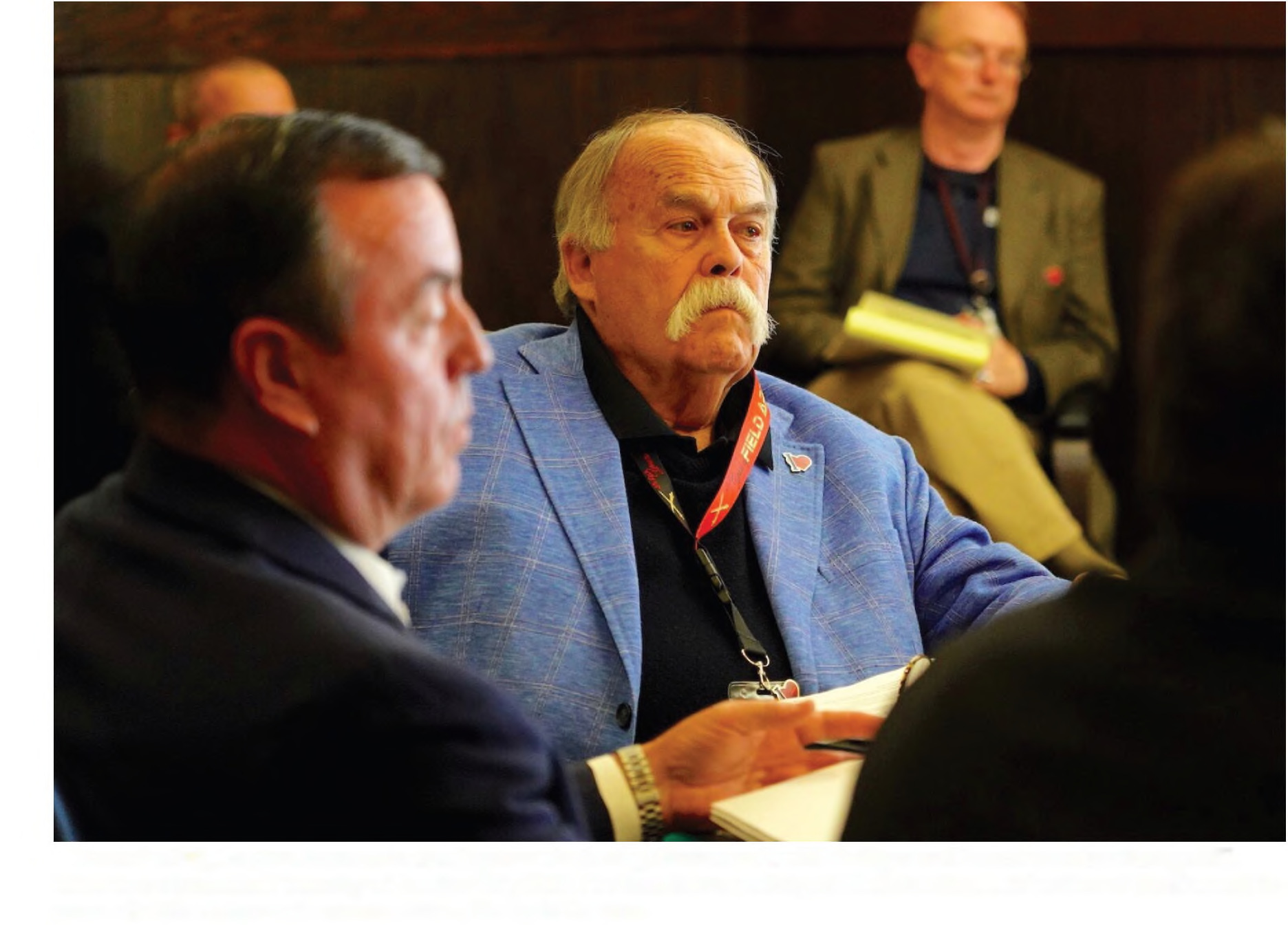
Logistical problems were the main reasons why Westwin Elements decided against building a large-scale commercial nickel refinery in Lawton, said Richard Rogalski, executive director of the Lawton Economic Development Authority.
“It was primarily logistics, meaning the cost to truck (materials) to Lawton and out,” he said in a phone interview Friday “They saw it as an insurmountable issue for Lawton.”
Rogalski said Westwin’s redevelopment agreement with LEDA, the city and the Comanche County Industrial Development Authority did not require the company to build a commercial plant in Lawton.
On Thursday, LEDA approved a joint resolution with the City of Lawton, the Comanche County Industrial Development Authority and Westwin that acknowledged the company’s decision not to proceed with a commercial refinery here. The resolution also terminates all obligations under Part II of the amended redevelopment agreement among the three entities.
Under that section of the redevelopment agreement, Westwin will have to repay a $2.7 million loan from LEDA. The company will also have to pay $400,000 for the purchase price of the site where Westwin’s pilot plant is located.
The Lawton Economic Development Corp., which is a separate entity, will return 4,000 shares of Westwin stock.
Now that LEDA has approved the joint resolution, the CCIDA and the Lawton City Council must sign off on it, Rogalski said. He said the council will likely consider the resolution at the board’s first meeting of the new year, set for Jan. 13.
“We expect CCIDA to meet before that, but that meeting hasn’t been set yet,” Rogalski said.
Feasibility study
The first part of the redevelopment agreement with Westwin involves the company’s small-scale nickel refinery, also known as a pilot plant, located one mile south of the Goodyear facility in southwest Lawton. The pilot plant was designed to bolster Westwin’s refining capability as the company moves toward commercial production.
The pilot plant, which opened in August 2024, also furnishes data for a bankable feasibility study. The study, which has not been completed yet, is a tool bankers and investors will use to determine whether they should put money into the project.
While they were working on the feasibility study, Westwin officials realized that a largescale nickel refinery in Lawton would have logistical and supply problems, Rogalski said during Thursday’s LEDA meeting.
“The purpose of the feasibility study is to show that it’s feasible, and there were some logistical problems they were looking at and trying to overcome,” he said. “And they were, even to this date, unable to overcome them.”
Fluctuations in the value of nickel were another factor in Westwin’s decision not to build its commercial refinery in Lawton, Rogalski said.
Westwin has until May 31, 2026, to satisfy its obligations under Part 1 of the redevelopment agreement, which include continuing to operate the pilot plant and meeting certain employment goals. If the company fails to fulfill those requirements, the lease for the pilot plant’s site will expire and Westwin will have to repay its loan immediately.
Since Westwin has decided it will not build its commercial refinery in Lawton, the city is not required to provide financial assistance for that project.
Searching for site
Westwin officials are continuing to search for a site that could accommodate a major nickel refinery, founder and CEO Ka-Leigh Long said in a Thursday news release.
“At this stage, Westwin is still assessing the most competitive site options for commercial scaleup, including our existing operational assets,” she said. “This is a complex and deliberative process, one that reflects the magnitude of the project and our commitment to building the most advanced nickel refining operation in the country.”
Long said the company is expected to make its final site selection in the first quarter of 2026. She added that Westwin is still operating its pilot plant in Lawton, which plays a key role in advancing Westwin’s refining capability and operational readiness as the company prepares for commercial production.
“We are grateful to the city of Lawton and the broader community for their support as we established our demonstration facility, and we value that partnership as we continue to be contributing members of the Lawton community,” she said.
Rogalski said he was disappointed to learn that Westwin is not planning to build its commercial plant in Lawton, but he wasn’t unhappy about the company’s decision.
“When someone sits down and says, ‘Look, we’ve been trying very hard, and we just can’t make it work,’ you’re not upset at them,” he said. “I would rather they do the due diligence ahead of time, rather than open a plant that can’t work.”
[Related story page 5]