

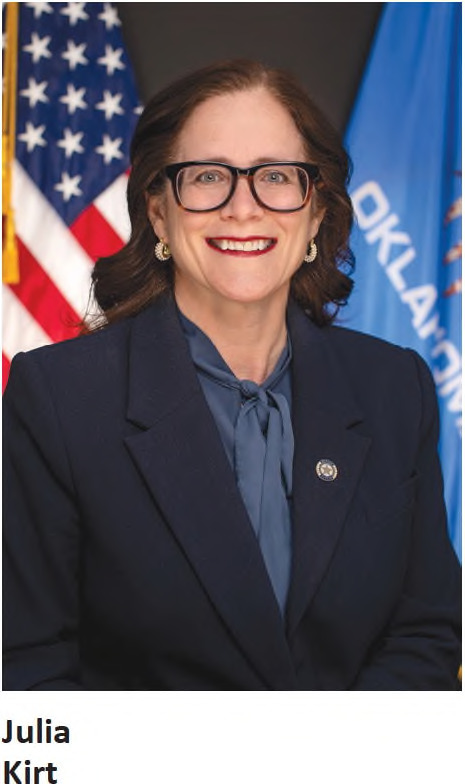
OKLAHOMA CITY - Senate Democratic Leader Julia Kirt has introduced a group of bills aimed at increasing affordable housing across Oklahoma. According to a Jan. 15 Senate press release, the state faces a large shortage of homes that working people can afford.
According to the release, Oklahoma is short about 77,000 housing units for its current workforce, even without population growth. Nearly one-third of residents spend too much of their income on rent or mortgage payments, a problem that slows economic growth and puts added strain on families.
Oklahoma has long been viewed as a relatively affordable place to live, with median rents ranking among the lowest in the nation. However, recent studies show the state still faces a severe shortage of homes for residents with the lowest incomes. There are about 38 affordable and available rental homes for every 100 extremely low-income households, and more than 7 in 10 of those renters spend more than half of their income on housing, according to a report from the National Low Income Housing Coalition and data on the national affordability gap.
Kirt filed three bills intended to expand housing options, lower costs, and reduce homelessness by increasing the overall supply of housing.
One proposal, Senate Bill 1393, would create the RESTORE Program Revitalizing Empty Structures Through Ownership, Renovation and Enterprise. The bill would offer an income tax credit to encourage developers to convert abandoned or deteriorating buildings into affordable and workforce housing. According to state data and local reports from late 2025, there are an estimated 200,000 abandoned or unoccupied buildings across Oklahoma. These range from old houses to empty main-street shops and offices. In Oklahoma City, the city estimates it has about 12,000 vacant or abandoned buildings within its limits alone.
Many of these buildings have been empty for years. Senate Bill 1393 specifically targets structures that are at least 50 years old and have been vacant for at least three years.
While there are 200,000 empty structures, the RESTORE Program is designed as a targeted start rather than a total fix.
• The Funding Limit: The bill sets a limit of $5 million in tax credits per year.
• The Goal: Because the program pays for up to 50% of the cost to fix a building, it is meant to “jumpstart” projects that are currently too expensive for developers to touch.
• The Impact: If the full $5 million is used each year, it could help create hundreds of new apartments annually. While that may not fix the 77,000-unit shortage overnight, it focuses on “recycling” buildings that already exist in neighborhoods where people want to live.
Another measure, Senate Bill 1332, would establish the THRIVE Program, Targeted Housing and Responsible Infrastructure for Vital Economies. The program would provide zero-interest loans to cities, towns, and counties to help fund water lines and sewers needed for new housing developments.
The third proposal, Senate Bill 1545, known as YIGBY, Yes in God’s Backyard, would allow faith-based organizations to develop affordable housing on their property without additional zoning approvals.
Oklahoma has faced a housing shortage for more than 20 years. While the state was once known for being affordable, the gap between what people earn and what they pay for housing has grown quickly since 2000.
Between 2010 and 2020, home prices in Oklahoma jumped by 68%. During that same time, average salaries only grew by 30%. This means housing costs rose more than twice as fast as paychecks and continue to rise.
Housing experts say fixing old buildings is better for the wallet and the planet. The National Trust for Historic Preservation reports that it is often 12% to 15% cheaper to fix an old building than to build a new one.
The Preservation Green Lab also notes that reusing a building creates 50% to 75% less carbon waste than new construction. This is because builders do not have to create new bricks, steel, or concrete.
Housing experts say that bringing people back into underused areas does more than just provide a place to sleep; it acts as a “spark” for the whole community.
A study from the Federal Reserve Bank of New York shows that when a neighborhood’s population density doubles, the area’s productivity goes up by as much as 4%. More people living in a small area means more customers for local grocery stores, coffee shops, and mechanics.
The Urban Land Institute reports that moving residents into downtown buildings helps local businesses stay open later. In cities like Cleveland, Ohio, turning empty offices into homes led to more vibrant streets and a stronger local economy.
Revitalizing these areas can also make them safer. Research from Stanford University found that building affordable housing in low-income areas increased surrounding home prices by 6.5% and reduced crime. Experts say this is because increased activity with more neighbors walking and living in an area can discourage criminal activity.
There is also a benefit for city budgets. According to The Builders Institute, multifamily buildings like the ones Kirt’s bills support generate more tax revenue per acre than traditional single-family homes. This extra money may help cities pay for better parks, schools, and roads.
The real power comes from combining these bills. For example, a developer could use the RESTORE tax credit to fix an old warehouse, while the city uses a THRIVE loan to upgrade the old water lines on that street. Under these rules, at least 20% of the units in these renovated buildings must remain affordable for at least 10 years. This ensures the new homes are available to the workers who need them most.
Kirt’s office says using buildings that already exist is the fastest way to get results. The National Trust for Historic Preservation found it is often 15% less expensive and creates much less waste than building new.
Kirt said the bills are designed to reduce barriers to housing development while strengthening families, neighborhoods, and the state’s economy. Stable housing, she said, helps people stay in the workforce and gives children a better chance to succeed in school.
The measures are expected to be considered when the Oklahoma Legislature begins its 2026 session in February.
Secrett Taylor is a freelance journalist covering education, business, state and local politics that affect Oklahoma. Her background in education and special education has earned her many awards, including Teacher of the Year for 2024-2025from Oklahoma Virtual Charter Academy. She can be reached at commonground405@gmail. com.