

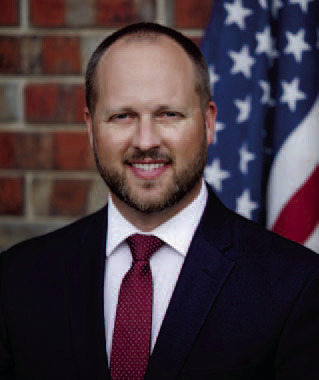
I thought I knew what a District Attorney did, and then I became one.
Most people learn what a District Attorney does from television.
The camera finds the dramatic trial, the closing argument, the verdict read to a packed courtroom. That picture is true on rare days. It is also the smallest part of the work.
The larger part happens in offices and hallways, with case files and phone calls, long before any judge or juror walks into a courtroom. A prosecutor decides which cases the State will bring and which it will set down. That single decision carries more weight than any argument to a jury, because it settles whose liberty is at stake and whose is left alone.
Most prosecutors think about that weight every day. The oath I took binds me to one standard above all others: a prosecutor’s job is to see that justice is done, not just to win.
From the outside, those can look like the same thing and sometimes they are. However, they can also be very different. Justice may mean a person getting convicted and going to prison. However, sometimes justice means declining to file a case when the evidence cannot carry, dismissing a case at the request of the victim, or telling a family that the proof falls short of what the law demands.
Those are the hardest conversations I have.
They are also the ones that keep the office honest.
Most of the work performed by my office never makes the news. For every case that draws a headline, this office handles hundreds that do not: the burglary that emptied a retiree’s savings, the drunk driver who ran a red light, the argument that started over nothing and ended with someone in the hospital. Each one matters to the people living it. Each one gets the same attention, whether it makes the front page or not.
The District Attorney’s office works closely with local and state police, but also independently of them. Police investigate and collect evidence.
Prosecutors decide whether that same evidence meets the burden the Constitution sets. That separation protects each one of us. The question is never simply whether someone was arrested, the arrest is usually the easy part. The question is whether the State can prove its case beyond a reasonable doubt, to a judge or perhaps even a jury of your neighbors, friends or family, under rules written to guard the innocent as carefully as they convict the guilty. The job carries a duty that runs in two directions. I answer to the standard that protects everyone accused, because a system that convicts the wrong person fails twice: an innocent person pays, and the guilty one stays free. I also answer to victims, who deserve to be heard, kept informed, and treated as people rather than evidence.
This column begins a monthly conversation about that work. Each month I will take one piece of public safety and prosecution and explain how it actually functions, from this office and from District Attorneys across Oklahoma. Some months I will write about hard subjects: domestic violence, the fentanyl trade, crimes against children. Other months I will explain the machinery most people never see, like why a case takes the time it does, or what a jury is really being asked to decide.
The criminal justice system is a system of many parts; my office is just one part. The citizens of Comanche and Cotton County hold up their end every time you report a crime, answer a jury summons, or stand by a neighbor who has been hurt. Public safety is a shared project. I am excited to begin explaining my part of it.
Kyle Cabelka is the District Attorney for the fifth district serving Comanche and Cotton counties.