


OKLAHOMA CITY – Terral Ellis, 26, voluntarily surrendered at the Ottawa County Jail in Miami, in far northeastern Oklahoma, on Oct. 10, 2015, in response to an outstanding arrest warrant. He would be dead before Halloween.
According to District Attorney-elect Ben Loring and to the 10th Circuit U.S. Court of Appeals, during the following week Ellis’ health deteriorated drastically and he began to plead for medical help. His calls for assistance were ignored – even other inmates told the jail staff that Ellis was in bad shape – but, for the most part, “he was ignored, ridiculed and tormented.”
Ellis – a pre-trial detainee who had not been convicted of anything – reportedly suffered a seizure on Oct. 21 and was moved to an administrative segregation cell for medical observation. He died in custody the next day from his medical condition – septic shock due to acute bronchopneumonia – and “lack of appropriate care,” Loring wrote. Ellis is survived by a 2-year-old son.
Ellis’ family filed suit in 2017 in Tulsa’s Northern District federal court against Terry Durborow, Ottawa County Sheriff during Ellis’ custody, arguing the jail violated Terral Ellis’ Eighth Amendment constitutional rights by cutting corners on medical care to save money and telling staff to never trust the inmates.
Others named in the lawsuit included Jeremy Floyd, Ottawa County sheriff at the time of the complaint; the Ottawa County Board of Commissioners; the jail’s nurse and three jail employees; two paramedics and Baptist Healthcare of Oklahoma, a/k/a Integris Miami EMS.
The district court dismissed the county commissioners from the lawsuit, and the parties stipulated to dismissal of the other defendants, too, leaving the sheriff of Ottawa County, “in his official capacity,” as the sole defendant.
The jury trial began Aug. 15, 2023, and lasted eight days – during which the plaintiffs claimed the jail’s assistant administrator and nurse tried to stage Ellis’ death as a suicide, fabricating a story that he hanged himself with his blanket. The response to Ellis’ situation “on the part of some of the county staff was nothing short of criminal,” Loring wrote on Facebook.
At the conclusion of the trial, a jury awarded Ellis’ family $33 million in compensatory damages. While punitive damages were not an available remedy, the family’s attorneys urged the jury to consider an amount that would deter future behavior.
The jurors “were obviously outraged,” Loring wrote. “I … believe that a large part of their anger was because no disciplinary or criminal action was taken against any of the county employees involved in the matter.”
Nevertheless, “It doesn’t matter now,” he pointed out. “The judgment has been entered and the statute of limitations has run… We can talk about what should have happened, but that ship sailed long ago.”
On appeal, the sheriff asked for a new trial and argued the family’s closing argument amounted to pervasive misconduct.
“The district court found the emotional displays and reference to deterrence in closing argument ‘did not rise to the level of pervasive [misconduct]’,” 10th Circuit Court of Appeals Judge Veronica S. Rossman wrote April 21 in an 87-page opinion affirming the jury verdict. “We agree. At most, Ottawa [County] has alleged three instances of misconduct, amounting to just one transcript page of the Estate’s 30-page closing argument. This is not pervasive.”
Furthermore, the appellate judges concluded that “substantial evidence, both direct and circumstantial, shows Ottawa [County] knew of a substantial risk of harm” to Ellis, yet “failed to take reasonable measures to abate that risk,” Rossman wrote.
6 similar lawsuits are pending in Comanche Co.
Why should this be of interest to Comanche County residents?
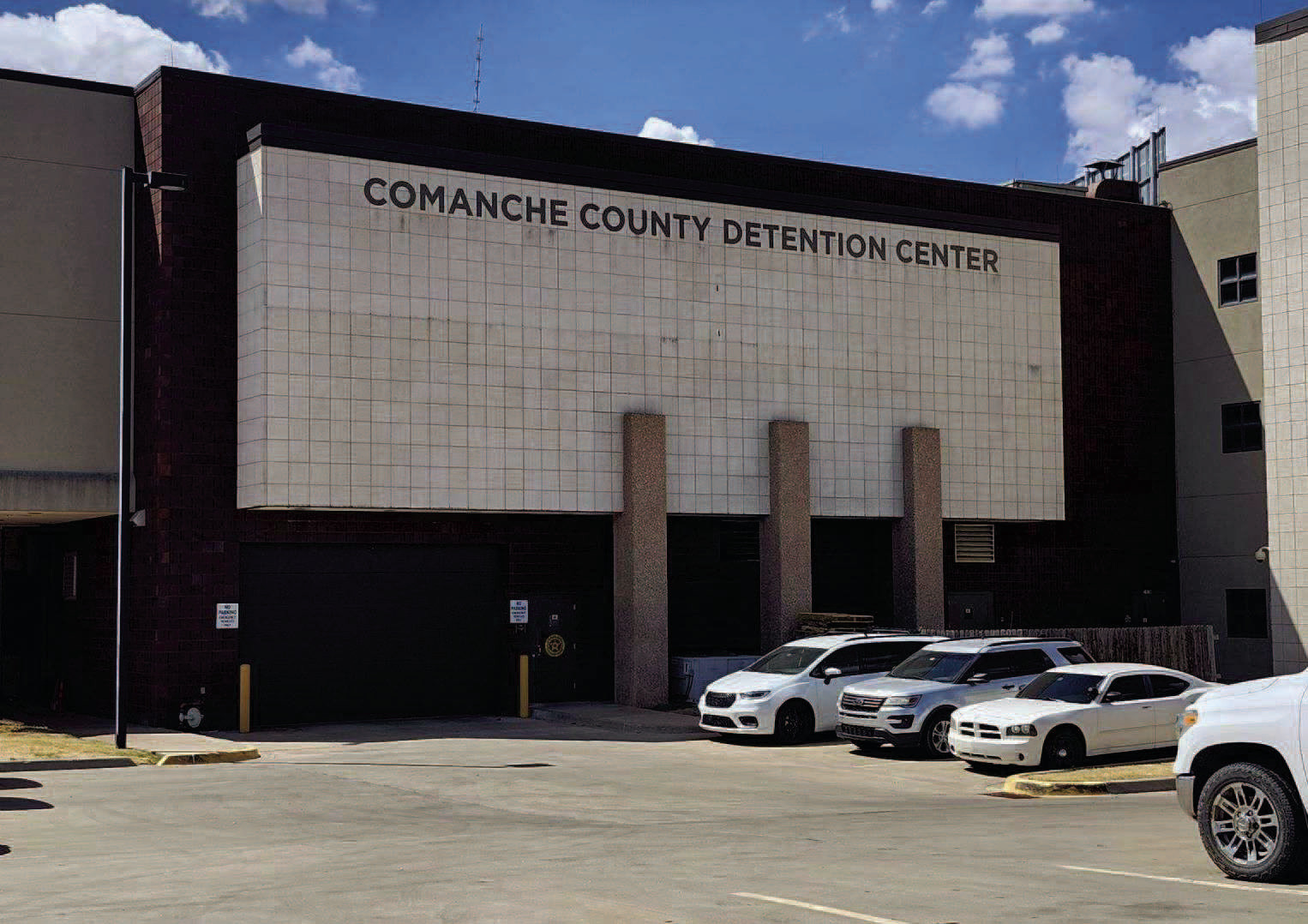
Because six lawsuits of this nature are pending against the Comanche County Board of Commissioners and the Comanche County Facilities Authority, which manages the Comanche County Detention Center. And the CCDC is not insured for anything that happens inside its walls – such as the death of an inmate.
Wagoner County’s sheriff and county commissioners reached a $13.5 million outof- court settlement in August 2024 in an Eastern District federal court lawsuit arising from the death of a 41-yearold diabetic woman who died in the Wagoner County jail in 2021 after 16 days of agony, “bizarre and psychotic behavior,” and negligence on the part of jail personnel.
The Association of County Commissioners of Oklahoma – Self Insurance Group paid out $483,156, leaving Wagoner County taxpayers on the hook for the $13,016,843 balance.
That sum is to be paid in 10 annual installments that began May 1, 2026, and continue through May 1, 2035, a court document shows. Interest on the balance will be charged at the rate of 4.96% each of the first three years and 6% each of the next seven years.
Wagoner County residents voted overwhelmingly in favor of a sales tax of onefourth of a penny per dollar and will be levied for 15 years, “or until the debt has been satisfied in full, whichever occurs first.” If the sales tax proposal had been rejected, the settlement would have been paid off with a property tax assessment collected over a 10-year period.
Ottawa County to vote Tuesday on payment plan
Loring – a former state representative who earned his law degree at the University of Oklahoma, served as district attorney for Ottawa and Delaware counties in 1991-99 and also as an assistant prosecutor – wrote on Facebook that an election is scheduled Tuesday on a proposal that will decide how the judgment and the accumulating attorneys’ fees and interest “get paid.”
There are two possibilities “and both raise our taxes,” Loring lamented.
The county’s proposed solution is to “increase the county sales tax in order to issue bonds and use the bond proceeds to pay off the judgment.”
If approved, Ottawa County’s 1.35% sales tax would increase by 1% from Jan. 1, 2027, until the bonds were paid in full, but no later than Dec. 31, 2042, a period of 16 years.
The bonds would “undoubtedly carry a lower interest rate than the judgment will (and therefore we save on interest) and everyone, including visitors to Ottawa County, help pay the judgment,” he wrote.
If the sales tax proposal fails, property taxes will be raised for 10 years to retire the federal court judgment. And by now that amount is “about $40 million,” Loring wrote.
He said some county residents have asserted that the federal courts “can’t force us to pay.”
Whoever said that apparently has no knowledge of what the late U.S. District Judge Luther Bohanon did in Oklahoma in the 1970s.
In March 1974, eight months after a violent McAlester prison riot, Bohanon heard the case of Bobby Battle, a prisoner who alleged severe mistreatment in Oklahoma’s prison system.
In a 60 page opinion listing 43 specific orders, Bohanon ruled in Battle’s favor and mandated sweeping reforms, including improvements in prison security and supervision, better medical care and mental health services, enhanced inmate rights and grievance procedures, and structural changes to reduce overcrowding and unsafe conditions.
Bohanon’s decision was one of the most extensive – and costly – judicial orders in U.S. prison law and effectively overhauled Oklahoma’s prison system for years to come.