

I am going to confess upfront that this has been a difficult piece to write. Over the past 25 years, I have written about 9/11 many times, and I have pondered what I could say that would be different? What would add some new thought or perspective?
So much has changed since I wrote about 9/11 on its 10th anniversary and honestly even since its 20th. Then I began thinking about something that feels increasingly strange. For those of us who remember Sept. 11, 2001, it remains a day we can recall almost instantly. We remember where we were.
We remember the television images, the phone calls, the confusion, the fear. We remember what it felt like to watch the world we thought we understood suddenly become something else.
Yet for anyone under 25 today, 9/11 is history.
For them, it is like Pearl Harbor is for me. I know Pearl Harbor was a defining moment in American history. I know the photographs and the stories.
I have visited the site and seen the sunken Arizona still resting on the ocean floor.
I understand its enormous consequences. But I don’t remember the world before it or the shock of discovering that the country was under attack. I inherited that history; I did not experience it.
That distinction matters.
For those of us who lived through 9/11, the story has always been divided into a before and an after. There was the world of Sept. 10, and then there was the world of Sept. 12. We knew something fundamental had happened, even if we had no idea what the consequences would be.
Twenty-five years later, we know much more about those consequences. We know about the wars and the lives lost overseas. We know about the political divisions that followed. We know how profoundly the attacks changed travel, national security, American politics, and geopolitics. We know that some of the promises and fears of those first years came true, while others did not.
What we cannot know is what the next generation will make of it all.
I will not have a single student in class this semester who was alive then. And as I look at what this generation considers important right now, I realize that 9/11 is becoming less important to them. My students have told me that one reason they don’t enjoy learning about 9/11 is that every year in school they had to watch the same video of the event repeatedly, to the point that it became mundane.
Perhaps that is why this anniversary feels different to me.
On the 10th anniversary, the wounds were still relatively fresh. On the 20th, there was still a large enough group of Americans who had direct memories of that morning that the country can collectively return to them. Twenty-five years feels like a threshold.
We are beginning to cross from remembering 9/11 to teaching it. In fact, I know of at least four teachers at the local high school who were not alive when it happened.
Their students are learning about it secondhand.
And teaching history is different than remembering it.
History has a way of compressing complicated events into a handful of facts. Nineteen terrorists.
Four hijacked planes. The World Trade Center. The Pentagon. Shanksville.
Nearly 3,000 people killed.
Two wars. A changed America. All of those things are true. But none of them fully explains what it was like to live through it.
That is why we cannot forget. And that is why I feel the need to keep writing about it at each anniversary.
Our responsibility is simply to tell the story honestly enough that the next generation understands why it mattered, not only what happened, but what it felt like to live through a moment when the future suddenly became unknowable.
I do fear that we are forgetting and that the rising generation cannot fully understand the weight of it. Recent events suggest this may be true. I am sure past generations who fought against fascism and communism felt similarly when they watched the nation embrace ideas they believed they defeat. My generation feels something similar when we watch young people celebrate groups like Hamas.
I want to ask, “Don’t you remember?” But then I have to realize, they don’t.
I suppose eventually every historical event reaches this point. The people who witnessed it grow old. The people who remember it become fewer. Personal stories become family stories. Family stories become history books.
Twenty-five years after Sept. 11, we are not quite there yet. But we are getting closer. This may be the last major anniversary when most Americans can still remember that day firsthand. Hopefully, I will be around when I am 78 for the 50th anniversary.
Maybe I will still be writing then. But if I am not, at least I hope I can explain to my grandchildren what it was like that day, the fear, the sorrow, the pain, and the dread.
I want them to know what it was like to lie awake that night, knowing that the next morning, as a young graduate student at Virginia Tech, I had been asked by my professor to teach.
I had no idea what to say.
Especially knowing that some of the students’ parents worked at the Pentagon.
Others were in the Corps of Cadets who soon might be heading off to war now when they graduated. How could I comfort them when I did not know how to comfort myself? How could I stand in front of them and talk about the Civil War when we might be at war ourselves?
It was a class of 300 students, far too large to simply open a discussion, but I also could not just walk in and launch straight into the lesson as if nothing had happened. So, I did something I had never done before and have never done since. I shared a scripture that had brought me peace and told the class that if they believed in prayer, they should pray for our nation and for their fellow students who had been most directly affected.
I found out later that one of my students was. I knew what I was doing was against the rules. But I also knew that on that day, no one would care. For a little while, the rules were suspended.
I will also tell my grandchildren how, in the days after Sept. 11, we came together as a nation in a way I have rarely seen in my lifetime. I will tell them about everybody waving flags, flying them from their houses and their cars without the judgment that sometimes comes with displaying the same flag today. I remember the week after when football and baseball started back up. I remember the crowds cheering, “USA! USA! USA!” as athletes ran out of the tunnels carrying American flags high above their heads.
I will especially tell them how the greatest terrorist attack our nation had ever experienced did not stop us.
Yes, we were afraid. We were hurting. We were grieving.
But we kept going. I will always remember the towers coming down on Sept. 11.
But even more than that, I never want to forget Sept. 12.
May we truly never forget. And may God always bless the United States of America.
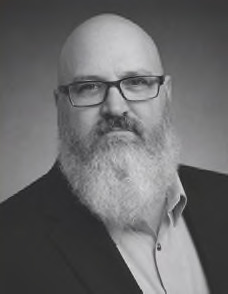
James Finck is a professor of American history at the University of Science and Arts of Oklahoma. He can be reached at james.finck@swoknews.com.