

SLOWDOWN
OKLAHOMA CITY – A wave of bankruptcies and layoffs among trucking companies across the nation apparently has had little, if any, effect on Oklahoma. But the slowdown in the oil patch has.
“A lot of our training is based around the oilfield business,” said Dale Lewis, director of the truck driving program at Caddo Kiowa Technology Center in Fort Cobb. Consequently, Halliburton’s announcement earlier this month that it was closing its operation in El Reno, laying off 800 employees – “that has affected us,” Lewis said. The Houston-based oilfield servicing company announced it was moving the majority of its operations in El Reno to Duncan.
Since the beginning of 2019, Halliburton reportedly has eliminated more than 1,400 jobs in Oklahoma, Colorado, Wyoming, New Mexico, and North Dakota. The shutdown in El Reno was not completely unexpected, Lewis indicated. “We have been a big trainer” for Halliburton, he said. “But they were slowing down before the layoff. They had quit sending students to us.” Nevertheless, he said, “Our open enrollment classes haven't fallen off, because of oilfield traffic.”
Big trucking companies “don’t send us any students, and they haven’t for several years,” Lewis said. “But a lot of them, such as Swift Transportation and Prime Trucking, still come by and recruit our students.” And independent companies that haul wastewater from energy exploration and production in Oklahoma “are still looking for drivers,” he said. Approximately 640 trucking companies ceased operations in the first half of this year, according to industry data from Broughton Capital. That was more than three times greater than the 175 trucking company closures during the same period last year, and more than double the total number of trucker failures in 2018,
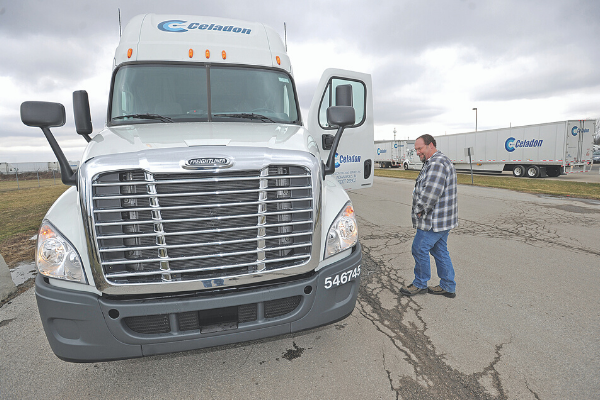
Broughton Capital reported. In what was reported to be the largest truckload bankruptcy in history, Celadon Group Inc. filed for bankruptcy earlier this month after two company executives were charged in a securities fraud scheme that cost shareholders $60 million; consequently, approximately 3,000 truck drivers lost their jobs two weeks before Christ-mas. Celadon grossed $1 billion as recently as 2015.
Industry publication FreightWaves reported that Celadon, an Indiana-based company founded in 1985, is the largest truckload carrier in history to file bankruptcy. The north-south truckload carrier had 2,695 trucks, including 2,000 in the United States, 360 in Canada and 335 in Mexico. The company was a dominant carrier on the Interstate 35 corridor, running freight from Laredo, Texas, to the Midwest, with a large concentration in the automotive sector.
Days later, Cummins, the largest manufacturer of Class 8 truck engines and also based in Indiana, announced it would reduce its global workforce of 62,610 employees by about 2,000 by the first quarter of 2020. Denver-based HVH Transportation Inc., which had 380 trucks, shut down abruptly in late August, stranding approximately 150 drivers and loads that were on the road. The former chief executive of HVH blamed soaring insurance costs, in part, for the carrier’s demise.
ACT Research said the U.S. trucking market has been in a recession since early 2019; freight volumes have declined for 11 consecutive months. According to the monthly jobs report released by the federal government, the industry slashed another 1,000 jobs in November.