

Homelessness is in the news again, and I welcome the conversation. Our community deserves to understand what the City is doing, why we’re doing it this way, and what role every citizen, organization, and level of government plays in the solution.
What We Will Not Do
Let me start with what the City of Lawton will not do. We will not build a city-run homeless shelter. We will not become an open-ended provider of housing, mental health treatment, or substance abuse rehabilitation.
And the reason is not a lack of compassion. The reason is that it doesn’t work.
Across this country, cities that have built and operated their own homeless shelters and housing programs have not solved homelessness — they have increased it. Shelters fill to capacity. Encampments form around them.
Waitlists grow into the hundreds. New individuals arrive from outside the community, drawn by the availability of services.
Cities spending multiple millions annually on these efforts have watched their homeless populations grow, not shrink. The pattern is consistent and well documented: cityrun shelter systems, without structure, accountability, and personal responsibility at their core, become magnets that attract more of the very problem they were designed to solve.
Lawton will not repeat that mistake.
And while we are having philosophical conversations about compassion and roles, our citizens are dealing with the real consequences right now. Business owners are having their property stolen in broad daylight.
Residents are being approached for money in parking lots.
Downtown workers don’t feel safe walking to their cars. These are not abstract policy debates — these are public safety problems happening on our streets today. And they will not be solved by misplaced compassion that prioritizes good intentions over accountability, structure, and the rule of law.
Define the Roles
At every Mayor’s retreat, at every municipal conference, and in direct conversations with Dr. A.J. Griffin — the Oklahoma Municipal League’s go-to expert on homelessness in our state — one principle rises above all others: define the roles. When roles are unclear, the public defaults to a single expectation: the City should fix it.
But the City of Lawton is not the designated authority for housing, mental health treatment, or substance abuse rehabilitation.
Each level of government has a defined responsibility.
The federal government, through the U.S.
Department of Housing and Urban Development (HUD), is responsible for housing programs and funding. It is worth noting that the Lawton Housing Authority operates under HUD — it is a federal entity, not a department of the City of Lawton. The City does not control, manage, or fund the Housing Authority.
The State of Oklahoma is responsible for mental health treatment and substance abuse rehabilitation services, administered through the Oklahoma Department of Mental Health and Substance Abuse Services and related state agencies.
The City’s role is public safety, infrastructure, community development, and local governance. That is what your tax dollars fund. And those dollars are already spoken for.
With What Money?
When someone says “the City should do more,” I always ask the same question: with what money?
Our budget serves this community’s core needs. Would we take it from our parks and recreation programs — the very programs that keep our kids active and off the streets? From the aquatics center? From youth sports leagues?
From the library?
Would we cut public safety wages and ask our police officers and firefighters to do more with less so we can operate a shelter that, based on every example in this country, will attract more homelessness than it resolves?
No one who demands the City do more has ever answered that question.
Because there is no good answer.
The money does not exist — and even if it did, spending it on city-run homeless services would take it directly from the children, families, and neighborhoods we are sworn to protect.
City and Community: Know the Difference
This is a distinction that too many people overlook, and it is at the heart of everything we are building.
The City is a government entity.
It is funded by your tax dollars to provide core services: public safety, infrastructure, governance, and community development. The City has a budget, a defined scope, and legal limitations on what it can and should do. The City is not the community. It serves the community.
The community is all of us. It is the nonprofits, the faith organizations, the service providers, the businesses, the employers, the churches, the volunteers, and the citizens who come together to respond to human needs.
And I want to take a moment to recognize the organizations that are already doing this work — and doing it well. Catalyst Behavioral Services.
Sonrise. The Salvation Army. C. Carter Crain Homeless Shelter.
Marie Detty Youth and Family Services.
Family Promise. The Yield Jobs Program.
Quest/Might. And our faith-based community, which shows up quietly and consistently when it matters most. These organizations and others like them are doing what the City cannot do — addressing the human need. They are providing recovery, rehabilitation, employment, shelter, reentry support, and hope. Their compassion, combined with accountability and structure, is what actually changes lives. We are proud of the work they do, and this City is committed to supporting them.
Homelessness is a human need. It belongs to the community. The City’s job is to lead, coordinate, enforce the law, and create conditions for the community to succeed — not to replace it.
When the City tries to become the community — building shelters, running programs, delivering services — it fails. Not because of a lack of effort, but because that is not what cities are built to do.
And every dollar the City diverts to that work is a dollar taken from the core services every citizen depends on.
When everyone understands their role and stays in their lane, the system works.
When roles blur, the City becomes the catchall — and everyone loses.
Personal Responsibility
The Kids First: Homeless Action Plan does not ignore adults.
It prioritizes children.
There is a difference.
Every child deserves to grow up in a safe and clean neighborhood — that is non-negotiable and it is the foundation of this plan. But prioritizing children does not mean turning our backs on adults in crisis. It means that every action we take, every dollar we direct, and every partnership we build is measured first by whether it protects the children and families of this community.
For adults experiencing homelessness, the expectation is clear: personal responsibility.
No program, no funding mechanism, and no government action can substitute for an individual’s decision to get back on their feet.
Personal responsibility is not just a requirement of our plan — it is a community standard.
It is the standard we hold for every citizen of Lawton Fort Sill, regardless of housing status.
For those who accept help, this community will walk beside them.
For those who refuse every pathway offered, the law will be enforced — fully and consistently. The rule of law applies equally to every person in this community.
Compassion does not require the suspension of law. Every refusal of services will be documented. Every offer will be recorded.
And every enforcement action that follows will be grounded in the fact that the individual was given a choice and made one.
Compassion and accountability are not in conflict — they depend on each other.
Everything on the Table
Let no one say we are not addressing the issues. Homelessness is not one problem — it is many. And every one of them will be on the table at the June 15th forum: Mental health treatment. Addiction and substance abuse recovery. Housing and affordable housing barriers. Employment and workforce development. Veterans services and the barriers they face accessing them. Domestic violence and survivor safety.
Youth aging out of foster care. Reentry and second-chance opportunities for individuals rebuilding after incarceration.
Prevention — keeping families from reaching crisis in the first place. Public safety and the protection of our children and neighborhoods. And the collaboration and coordination among every organization doing this work.
Nothing is off limits.
Nothing is being ignored. The difference is that we are addressing these issues through a structured, role-defined community plan — not by asking the City to write checks it cannot cash for programs it was never designed to run.
Leadership
That is what the Kids First: Homeless Action Plan is about. It protects our children and neighborhoods. It defines roles clearly. It demands results, not just activity. And it is grounded in the belief that Lawton does not solve homelessness — Lawton creates conditions where solutions can succeed. We have commissioned Dr. A.J. Griffin to guide the development of a community-wide homeless response plan.
She is not studying the problem from a distance. She is in the room with our service providers, our law enforcement, our community leaders, building a plan that reflects Lawton’s reality — though she is far too humble to say so herself, she is the expert Oklahoma cities turn to when they need real answers on homelessness.
The key to everything Dr. Griffin is building is collaboration. Every partner must be at the table, aligned, communicating, and working from the same plan. Real problems arise when organizations resist collaboration — when they work in silos, protect turf, or believe they alone have the answers. No one organization can solve this. But together, we can.
That is why I am inviting every citizen, every service provider, and every leader in this community to join us. On June 15th, from 9:00 AM to 4:00 PM at the Lawton Farmers Market, 77 SW 4th, we are hosting the KidsFirst Action Forum.
Dr. Griffin will facilitate.
Lunch will be provided.
This is your opportunity to be in the room where the community’s plan takes shape.
Pre-registration is encouraged. Register at https://www.eventbrite. com/e/1988441148001?aff =oddtdtcreator. For more information, contact Melissa Simms, RN, M.Ed., CCM at (580) 4805993 or melissa.simms@health.ok.gov. The event is supported through partnerships involving the Comanche County Health Department, the Potts Family Foundation, and the City of Lawton.
This is not the City’s plan alone. It is a community plan. But it will be grounded in defined roles, measurable results, personal responsibility, and the protection of our children.
Be Part of the solution
After June 15th, I will have much more to share with this community about our path forward.
The best ideas will come from that room. I look forward to telling you about them.
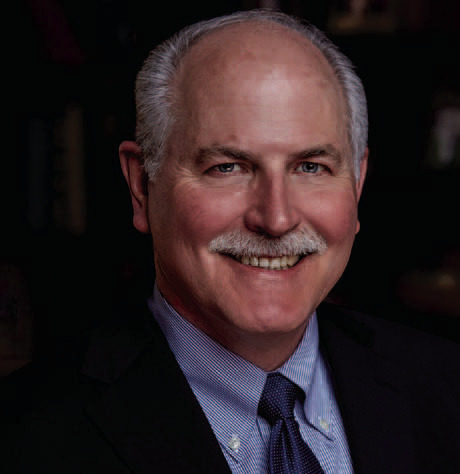
Stan Booker is the Mayor of the City of Lawton.