

OKLAHOMA CITY – The state Legislature is considering major changes to municipal auditing procedures in an effort to deter troubling behavior that has been uncovered in at least three investigations of small towns.
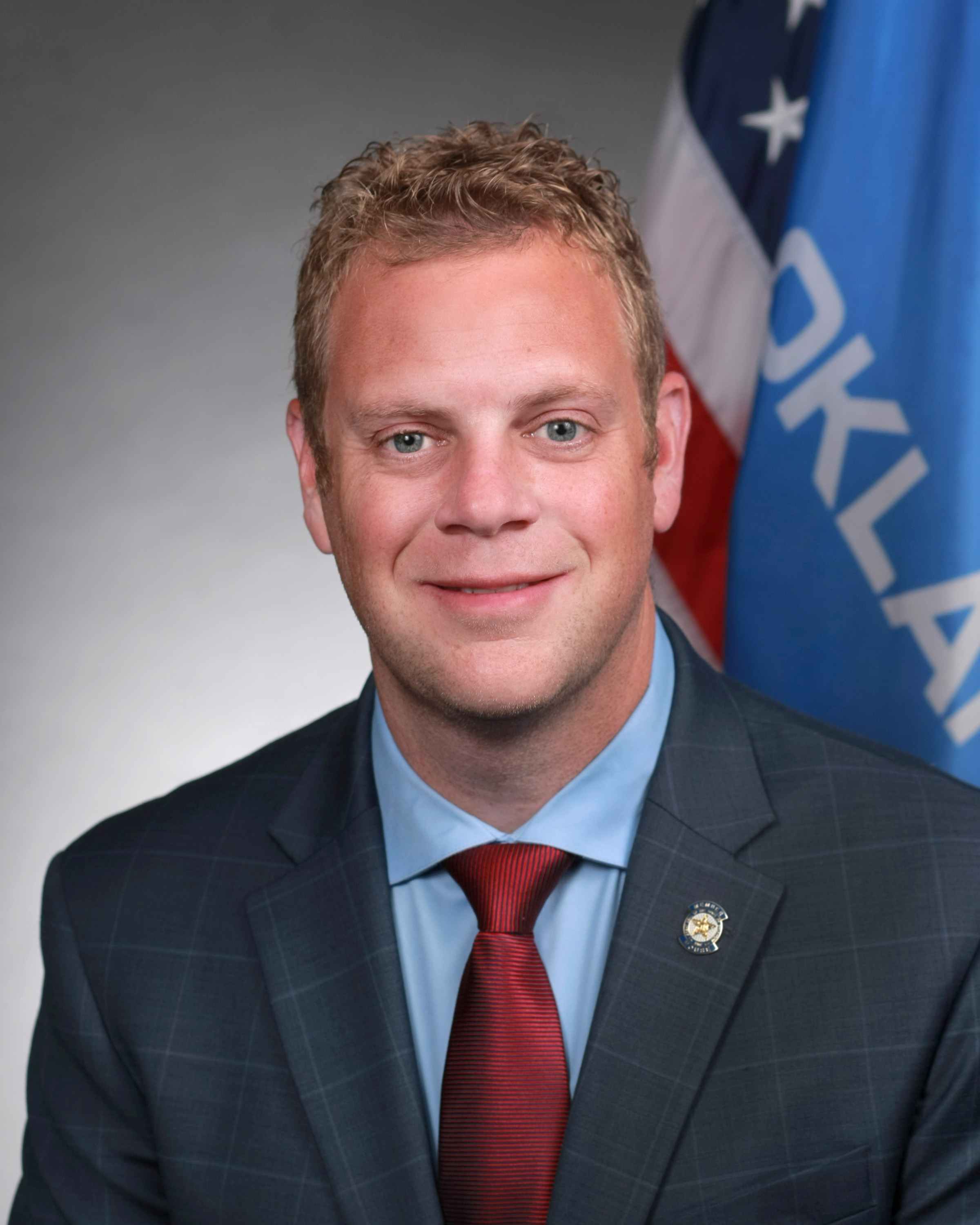
“I’ve worked with the State Auditor’s office on legislation that would tighten municipal audit requirements in small communities but not be punitive to them,” said Rep. Brad Boles. The Marlow Republican said his House Bill 1058 has been endorsed by the Oklahoma Municipal League and the state’s 11 Councils of Government (ASCOG, SWODA, etc.) as well as the State Auditor’s office.
HB 1058 breezed through the House of Representatives last year, 95-1, and is in the Senate’s General Government Committee, where it is sponsored by Sen. Zack Taylor, R-Seminole.
“Financial auditing reforms are needed for Oklahoma cities and towns,” and HB 1058 “would be a positive change regarding this process,” Boles told Southwest Ledger. Among the bill’s provisions:
Current statutory language requires an “annual financial statement audit” of any city or town that has a general fund that receives $25,000 or more. HB 1058 would double that amount to $50,000 in revenue from all funds, which would include utility receipts.
Any municipality with a population of less than 2,500 and total revenue of $50,000 from all funds, including “component units of which the municipality is a beneficiary,” would have a choice between a biennial (every other year) financial statement audit of the two preceding years performed by an independent licensed public accountant or a certified public accountant, or a biennial agreed-upon procedures engagement that covers the two preceding years. Seven specific detailed procedures are performed in an AUP engagement.
Existing state law decrees that when a municipality doesn’t file its audit or agreed-upon procedures report in a timely fashion, the State Auditor notifies the Oklahoma Tax Commission. The Tax Commission, in turn, is directed to withhold from that city or town its monthly allocations of gasoline taxes until the requisite report is filed. If the report is not filed within two years after the close of the fiscal year, those funds withheld by the Tax Commission are deposited in the county highway fund of the county in which the city is located.
Under HB 1058, the gas tax withheld from cities and towns that can’t or won’t comply with the state’s audit requirements would be deposited in a new Special Investigative Unit Auditing Fund, to offset expenses incurred “from special investigative audit activities relating to municipal government.”
The Special Investigative Unit “would like to educate boards of municipalities on finances and help the cities and towns that do not fall under any audit rule to have an AUP done,” Boles said. The proposed revolving fund “would help offset those costs.”
“I empathize with small towns,” Boles said. “Smaller communities have been left out of participating in grant and bond opportunities because they can’t meet the current annual audit requirement.” A biennial audit “would help relieve that burden and marginally reduce audit costs for our smaller cities and towns.”
It is “imperative” to move cities and towns from a financial “checklist” to a set of agreed-upon procedures that can evaluate internal controls, test disbursements, etc., that would indicate fraud, waste and abuse, Boles said.
That is why the seven AUPs listed in state statute would be repealed and the State Auditor’s office would put into place “procedures that a CPA can easily perform that will focus more on uncovering fraud,” such as misuse of city-issued credit cards, the lawmaker said.
State Auditor and Inspector Cindy Byrd “would like to see the newly prescribed, agreed-upon procedures become a prototype to a more proactive way to audit local governments and provide better oversight of public funds,” Boles said.