

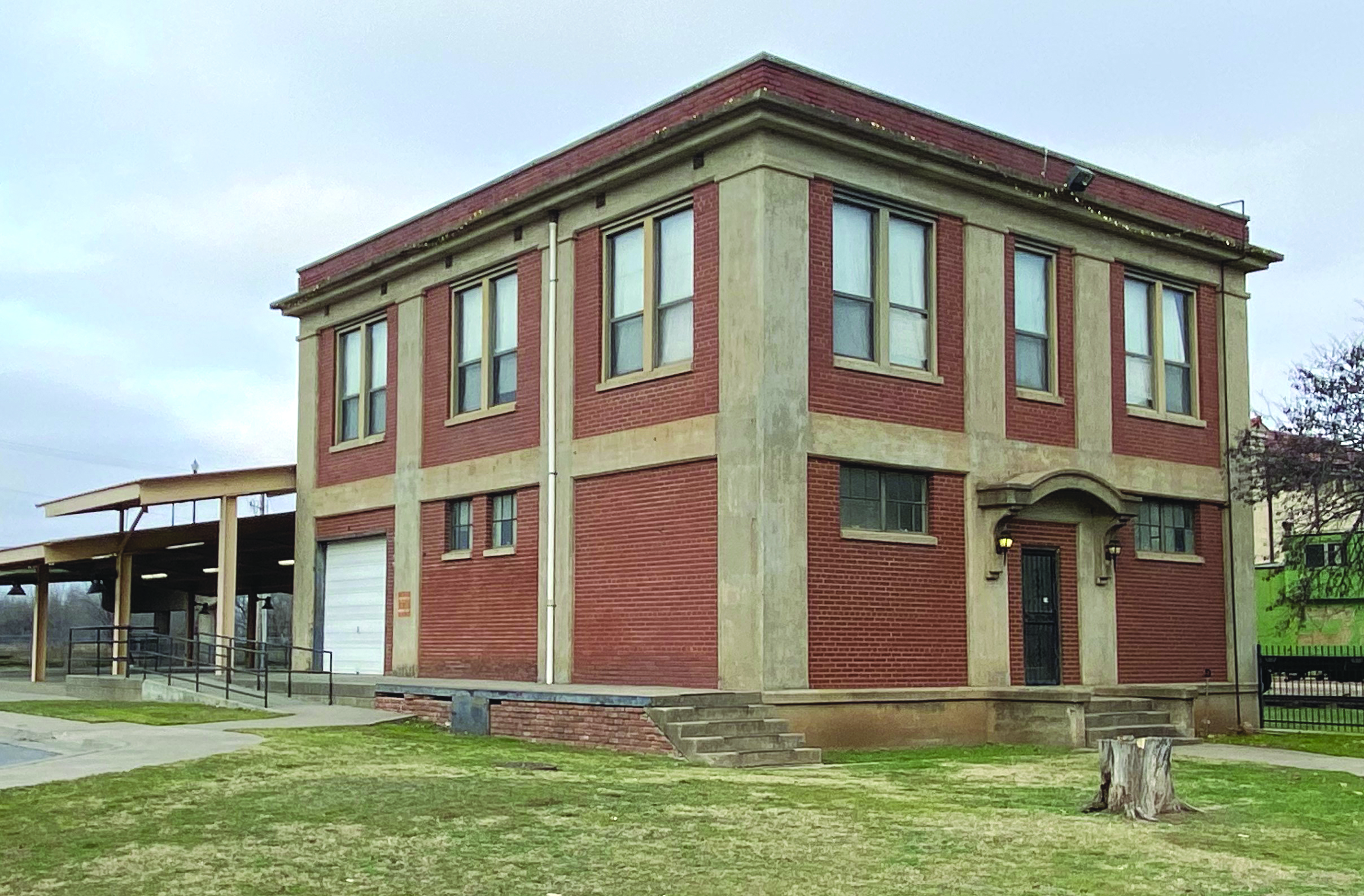
CHICKASHA – A California resident who attended high school at Anadarko proposes to invest as much as $5 million in development of several businesses in downtown Chickasha – if the city will sell him a vacant building.
Chet Hitt from Apple Valley, California, said he envisions a distillery, a souvenir shop, a restaurant and bar, a coffee house, a stage and a courtyard.
But the entire “revitalization” project is contingent on acquisition of the Mill Building, he said. “Everything hinges on that building,” he told the Southwest Ledger on Dec. 7. “If I don’t get the Mill Building, I won’t come to town.”
The “Town’s End” development would be located south of the U.S. 62/Choctaw Avenue viaduct in the vicinity of the new “Leg Lamp” statue.
“I want to be able to create excitement” in Chickasha, he told the city council. “We want to build something that makes a difference.”
Hitt said his plans would include:
• Construction of a building encompassing approximately 10,000 square feet next to the railroad depot to house the Town’s End Stillhouse & Grill, which would anchor the entire project. “It would be the heart of this project,” Hitt said.
The stillhouse would have a 1,000-liter copper still complete with mash cooking tanks, fermentation tanks, storage tanks, and alcohol filtration and blending tanks. The still would be “showcased in a brick, iron and glass tower for maximum exposure,” Hitt said.
The stillhouse would produce “a minimum” of half a million bottles of whiskey, bourbon, vodka and gin each year. The spirits would be distributed in the wholesale marketplace, including supermarkets, liquor stores and bars. The products also would be distributed “at the wholesale level and in the local and regional market.”
The distillery alone would cost $1 million, Hitt said.
“A lot” of the liquor “would be shipped back to California and to the Dallas/Fort Worth area,” Hitt said in response to a question from Mayor Chris Mosley.
The bar would have an area where “people can visit and enjoy” alcoholic beverages with their friends. Town’s End would work with local and regional micro-breweries and sell their craft beers “to promote the taste of Oklahoma.”
Hitt said he is searching for “an authentic, turn-of-the-century bar” that would be “a main feature” in the bar area.
• Buying and remodeling the Savoy, an “iconic” hotel “in the heart of old town” Chickasha. “We will try and bring it back to its original glory in the best way we can,” Hitt wrote in a slick, full-color, spiral-bound 12-page booklet he distributed to the council.
Essentially, Hitt said, the Savoy would be remodeled into “some sort of food and retail establishment” that would be called “The Savoy 1902”. Souvenirs, “artisan and other hand-crafted items” would be displayed.
• An indoor/outdoor “family friendly” restaurant “presenting a variety of Americana food options.” The facility would accommodate 300 to 400 people, he said.
“We also will build a large outdoor special events area, with an assortment of games such as bocce ball, cornhole, ax-throwing, etc.” The project also would include construction of “a small concert venue” to showcase local and regional musical talent.
• Acquisition of the historic Mill Building, which is owned by the City of Chickasha and is unoccupied.
Hitt said his Town’s End Company would establish the TE Coffee House “serving gourmet coffee” on the first floor.
The coffee house would feature “our special blend of roasted coffees, along with its own private label of coffee beans” for public sale. Other retail items would include clothing, soaps and miscellaneous items bearing the Town’s End and TE Coffee House brands.
• Leasing the Rock Island Railroad depot as a venue for special events, banquets, wedding and outdoor events “throughout the year.” It also would be used for “farmer’s markets and artisan craft fairs.”
Hitt said he wants to negotiate a long-term lease on the depot “with three primary goals:” to generate rental income, sales tax, and to deposit portions of the rental and lease income into a trust fund “for future long-term maintenance and upkeep” of the depot.
The entire Town’s End development would create “40 to 50 jobs initially,” he estimated.
Wants to be under construction soon
The proposal package was “put together in 30 to 45 days,” Hitt told the Ledger. “I like to work fast.” He brought a staff of eight with him to the Dec. 5 city council meeting.
He said he hadn’t heard from city officials as of Dec. 7, but added, “They’re trying to put together a special council meeting to discuss” his proposal. Buying the Mill Building would require the city to issue a Request for Proposals and advertise for competitive bids, Hitt said.
“I’d like to be under construction in six months to a year,” he said after the council meeting.
The issue of water quantity and quality would have to be explored in detail before the distillery would be developed, he acknowledged.
Chickasha gets its drinking water from Fort Cobb Reservoir, an impoundment of Cobb Creek in the Washita River basin.
The lake’s water is “hard” and it was not immediately known )1 if the Chickasha water treatment plant “softens” that water to any degree, if at all, and )2 whether the town’s water treatment plant could process enough water each day to meet the demands of a distillery producing 500,000 bottles a year of liquor – a little over 2,050 bottles per day.
Each of those bottles would contain 750 milliliters of alcoholic beverage, slightly more than the volume of two 12-ounce cans of soda.
“We use a reverse osmosis process” in the production of Town’s End liquors, Hitt said.
Development project arose from high-school reunion
Hitt said he first visited Chickasha “about five to six weeks ago” when he returned to Oklahoma to attend the 40th reunion of his Anadarko high school graduating class. “I was just driving through town and thought I might find an opportunity here.” The iconic leg lamp statue was “a selling point” for him.
He said he has lived in California for 55 years. Apple Valley is approximately 60 miles northeast of Los Angeles.
“California has changed a lot” over the years, Hitt said. “It’s not so business friendly.” A project such as what he proposes for Chickasha “would take five to seven years” to develop, he said.
Hitt said he has business interests in California and Arizona and employs 150 to 180 people “at any given time.” He said he created a company in southern California that included six funeral homes and two cemeteries, but sold them recently. He still operates a Town’s End Stillhouse and Grill in Apple Valley.